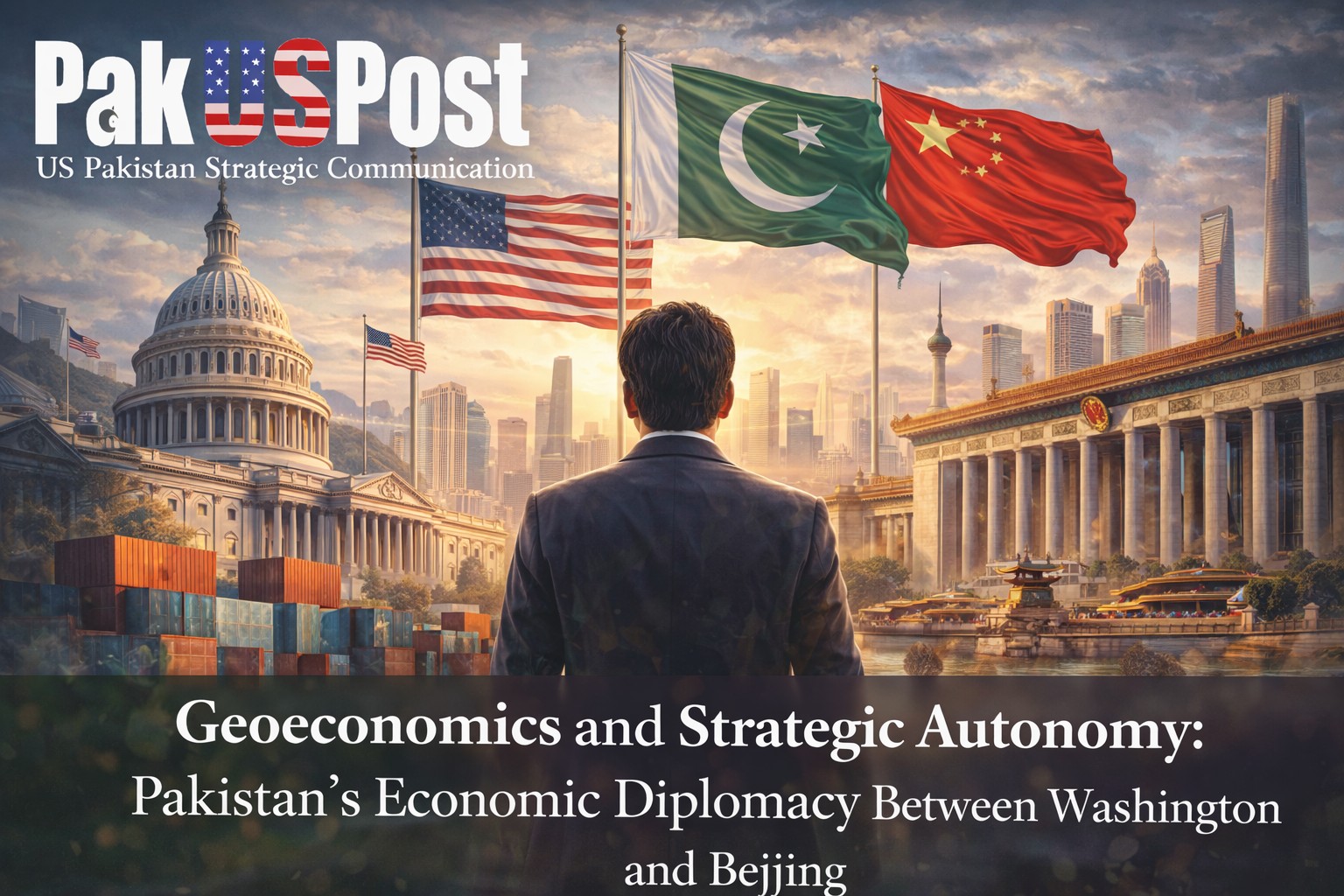

Markets as Battlefield Signals and the New Financial Governance of War and Peace


The relationship between global financial markets and geopolitical conflict has entered a phase of unprecedented interdependence in which economic indicators no longer merely reflect political events but actively influence their trajectory. In earlier eras war and peace were determined primarily through diplomatic calculation military capability and strategic doctrine. Today however financial markets operate as real time feedback systems that can amplify constrain or even redirect geopolitical decision making. Within this evolving structure markets are not passive observers of conflict but active participants in shaping its intensity duration and resolution. This transformation raises a fundamental question about whether financial systems are gradually becoming an informal governance layer over global security dynamics.
The United States occupies a central position in this evolving architecture due to the global dominance of its financial markets particularly equity indices bond yields and currency systems. Movements in these markets often function as immediate signals of global risk perception. Sudden volatility in indices such as the S&P 500 or rapid shifts in treasury yields are closely monitored by policymakers as indicators of systemic stress. In many cases financial reactions to geopolitical developments occur faster than formal diplomatic responses creating a situation in which market behavior effectively precedes policy adjustment. This temporal inversion is reshaping the relationship between economics and strategy.
The concept of markets as battlefield signals refers to the increasing tendency of financial systems to respond to geopolitical escalation in ways that influence strategic behavior. When conflict risks rise markets typically react through capital flight risk repricing and volatility spikes. These reactions do not remain confined to economic domains but feed back into political decision making by increasing domestic pressure on governments to de escalate tensions. In this sense financial markets function as distributed early warning systems that translate geopolitical risk into economic cost in real time.
Within this environment Pakistan’s relevance emerges indirectly through its positioning within broader geopolitical risk corridors that influence global investor sentiment. While Pakistan itself may not be a primary driver of global financial markets its proximity to strategic theaters and its involvement in regional security dynamics means that developments involving Pakistan can contribute to broader risk assessments. In highly interconnected financial systems even peripheral geopolitical actors can influence risk perception when they are linked to larger conflict narratives involving major powers.
The United States increasingly operates within a system where financial stability is inseparable from strategic stability. Policymakers must consider not only military and diplomatic consequences of geopolitical actions but also their potential impact on markets. A sudden escalation in conflict can trigger immediate economic repercussions including equity selloffs commodity price spikes and disruptions in energy markets. These financial consequences can in turn generate political pressure domestically influencing the strategic options available to decision makers. As a result markets have become an indirect but powerful constraint on the exercise of geopolitical power.
This dynamic represents a structural shift in the nature of global governance. Instead of a system where states independently determine foreign policy outcomes and markets respond ex post the relationship is increasingly bidirectional. Financial systems now act as accelerators or dampeners of geopolitical behavior depending on how they interpret risk signals. This creates a feedback loop in which markets influence policy and policy influences markets in continuous cycles of adjustment.
One of the most significant implications of this transformation is the emergence of what may be described as financial deterrence. Traditionally deterrence was a military concept based on the threat of retaliation. In the current environment economic markets contribute to deterrence by imposing immediate financial penalties on escalation. States are increasingly aware that aggressive geopolitical actions can result in rapid capital withdrawal currency instability and investment uncertainty. These economic consequences function as non military deterrents that shape strategic decision making alongside traditional security considerations.
For the United States this introduces both strategic advantage and constraint. On one hand financial dominance enhances Washington’s ability to shape global risk perception through its influence over capital markets and monetary systems. On the other hand it also exposes the United States to immediate domestic consequences when geopolitical instability triggers market volatility. This creates a situation where American foreign policy must constantly balance strategic objectives with financial stability considerations. In effect Wall Street becomes an informal stakeholder in decisions that were once exclusively the domain of security establishments.
The integration of financial signals into geopolitical decision making also accelerates the pace of crisis response. Markets react within seconds or minutes to geopolitical developments while diplomatic processes operate on significantly slower timelines. This temporal mismatch creates pressure for rapid de escalation or immediate clarification of intent by states involved in conflict scenarios. In some cases financial markets may even contribute to de escalation by forcing policymakers to reconsider actions that generate excessive economic instability.
However, the increasing influence of financial systems on geopolitics also introduces new vulnerabilities. Markets are inherently sensitive to perception and can overreact to incomplete or ambiguous information. This raises the risk of financial amplification where minor geopolitical events trigger disproportionate economic responses. Such overreactions can create feedback loops that intensify rather than stabilize crises. In extreme cases financial panic can constrain policy flexibility by narrowing the range of politically viable options.
Another dimension of this evolving system is the role of algorithmic trading and automated financial systems. Modern markets are increasingly driven by algorithmic models that respond to data inputs in real time. These systems may interpret geopolitical signals without contextual understanding leading to rapid and sometimes exaggerated market movements. This technological layer adds a new level of complexity to the relationship between finance and geopolitics by introducing non human actors into the feedback loop between markets and policy.
Pakistan’s position within this system is shaped by its integration into global financial perception networks rather than its direct influence on markets. As part of broader emerging market risk calculations developments in Pakistan can contribute to regional risk premiums especially when linked to broader geopolitical tensions. This indirect influence underscores how even states with limited financial market power can become part of global economic signaling systems when they are embedded in strategically sensitive regions.
The broader implication of financialized geopolitics is the gradual erosion of clear boundaries between economic governance and security governance. Decisions that were once made primarily on strategic grounds are now filtered through financial risk assessments. This does not eliminate traditional power politics but overlays it with an additional layer of economic constraint. As a result global governance becomes increasingly hybrid in nature combining elements of military strategy diplomatic negotiation and financial regulation.
The future trajectory of this system remains uncertain. If financial markets continue to gain influence over geopolitical decision making they may enhance global stability by penalizing escalation and rewarding predictability. However they may also increase systemic fragility by amplifying volatility and creating rapid transmission channels for geopolitical shocks. The balance between these outcomes will depend on the resilience of financial institutions and the ability of policymakers to interpret and manage market signals effectively.
Ultimately the rise of markets as battlefield signals reflects a deeper transformation in the nature of power in the international system. Power is no longer concentrated solely in military or diplomatic institutions but distributed across interconnected financial networks that continuously interpret and respond to global events. The United States remains central to this system but no longer operates above it. Instead, it is embedded within it subject to its signal’s constraints and feedback loops.
In this emerging order Pakistan’s relevance is not defined by financial dominance but by its position within the broader geopolitical narratives that influence market perception. As financial systems become more integrated with security dynamics even peripheral actors contribute to the overall structure of global risk interpretation. The result is a world in which war and peace are increasingly mediated not only by states and institutions but also by the continuous movement of capital itself.
A Public Service Message