
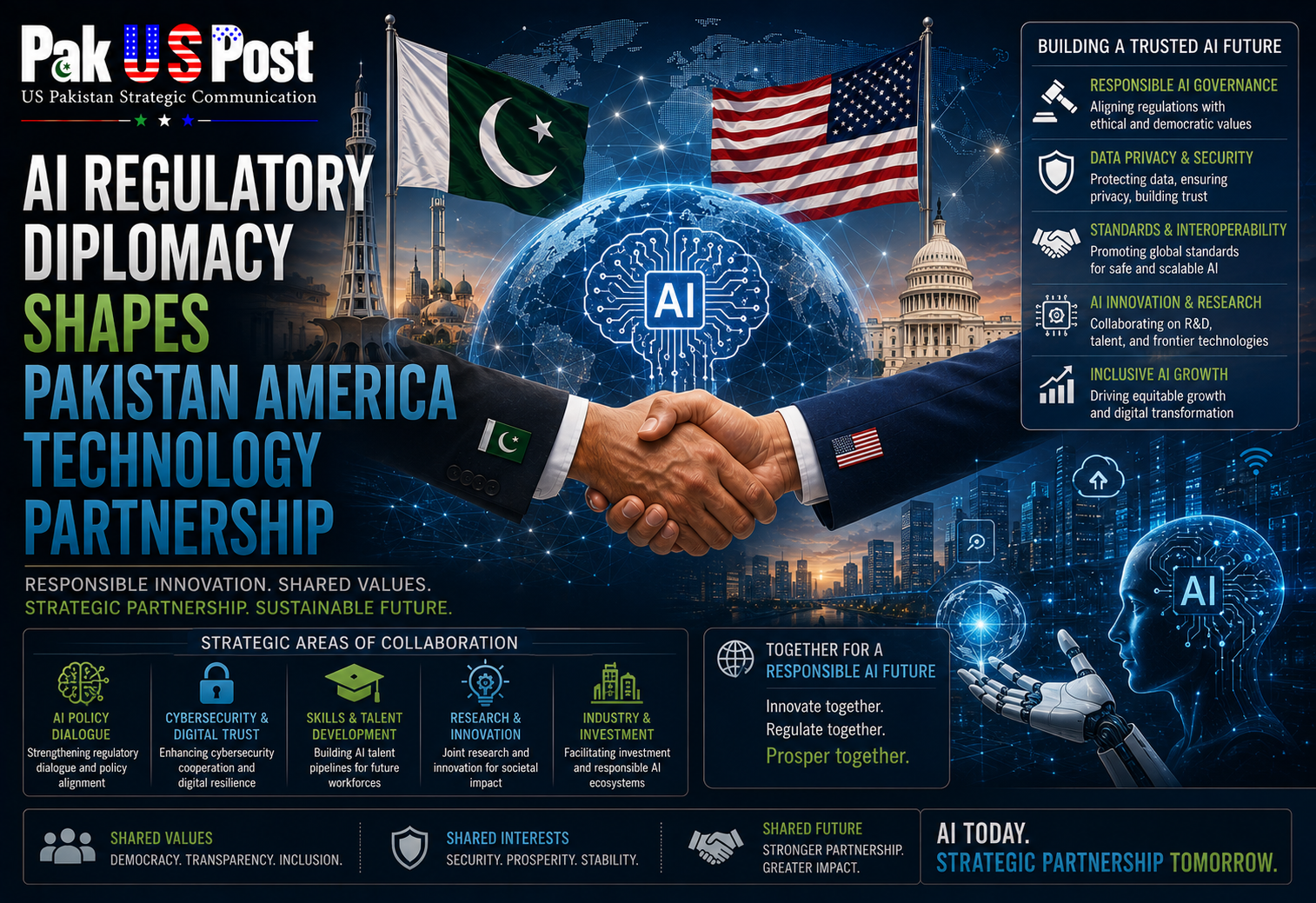
AI Regulatory Diplomacy Shapes Pakistan America Technology Partnership

Artificial intelligence has moved beyond the realm of commercial innovation into the centre of geopolitical statecraft. Governments are no longer debating whether artificial intelligence requires regulation. The discussion has shifted towards determining whose regulatory philosophy will define the global digital economy. The United
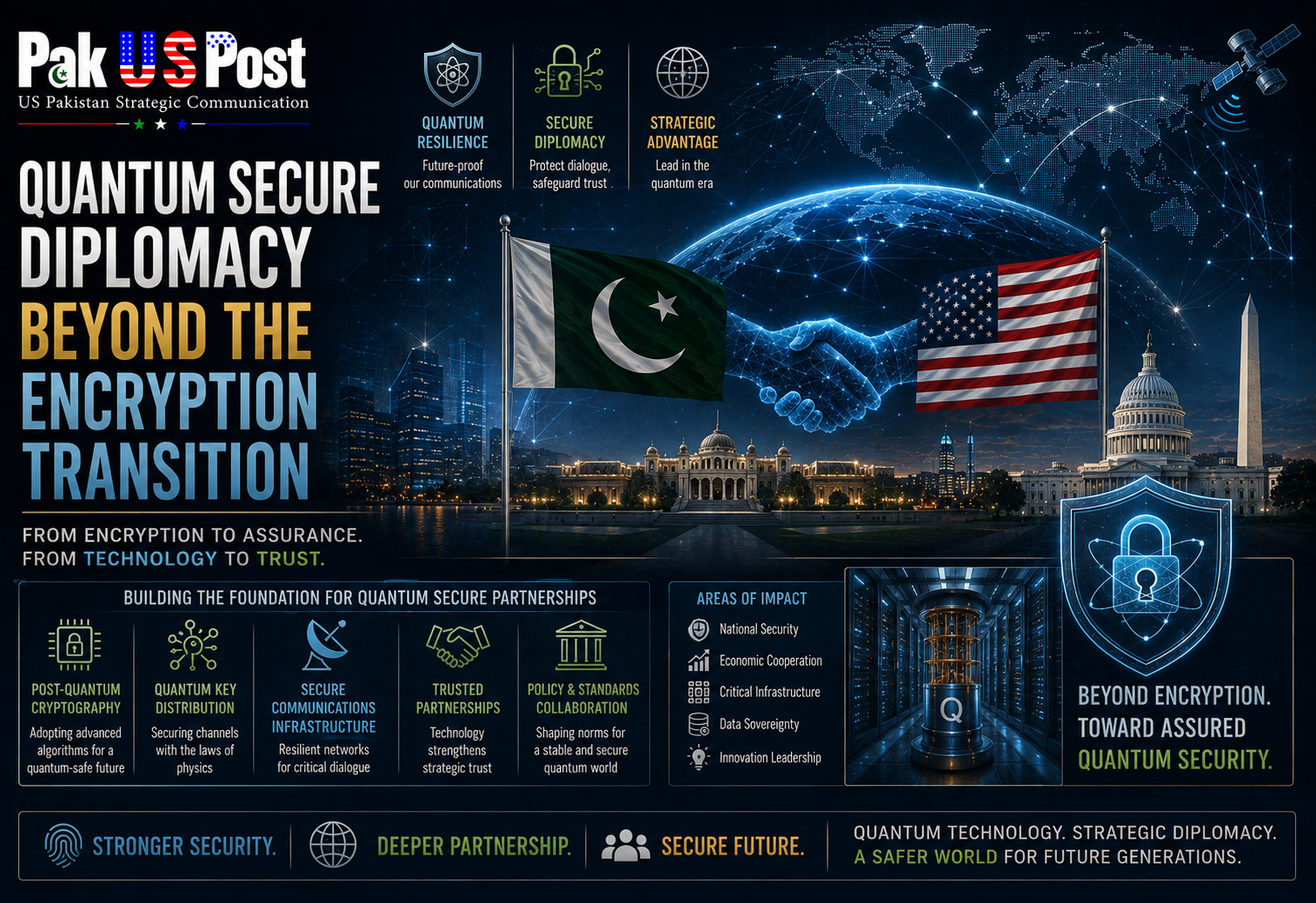
Quantum Secure Diplomacy Beyond the Encryption Transition
The contest shaping twenty first century international influence is no longer confined to military deployments, semiconductor supply chains or artificial intelligence. An equally consequential transformation is emerging beneath the architecture of global digital communications. Quantum computing, once regarded as an ambitious scientific frontier,
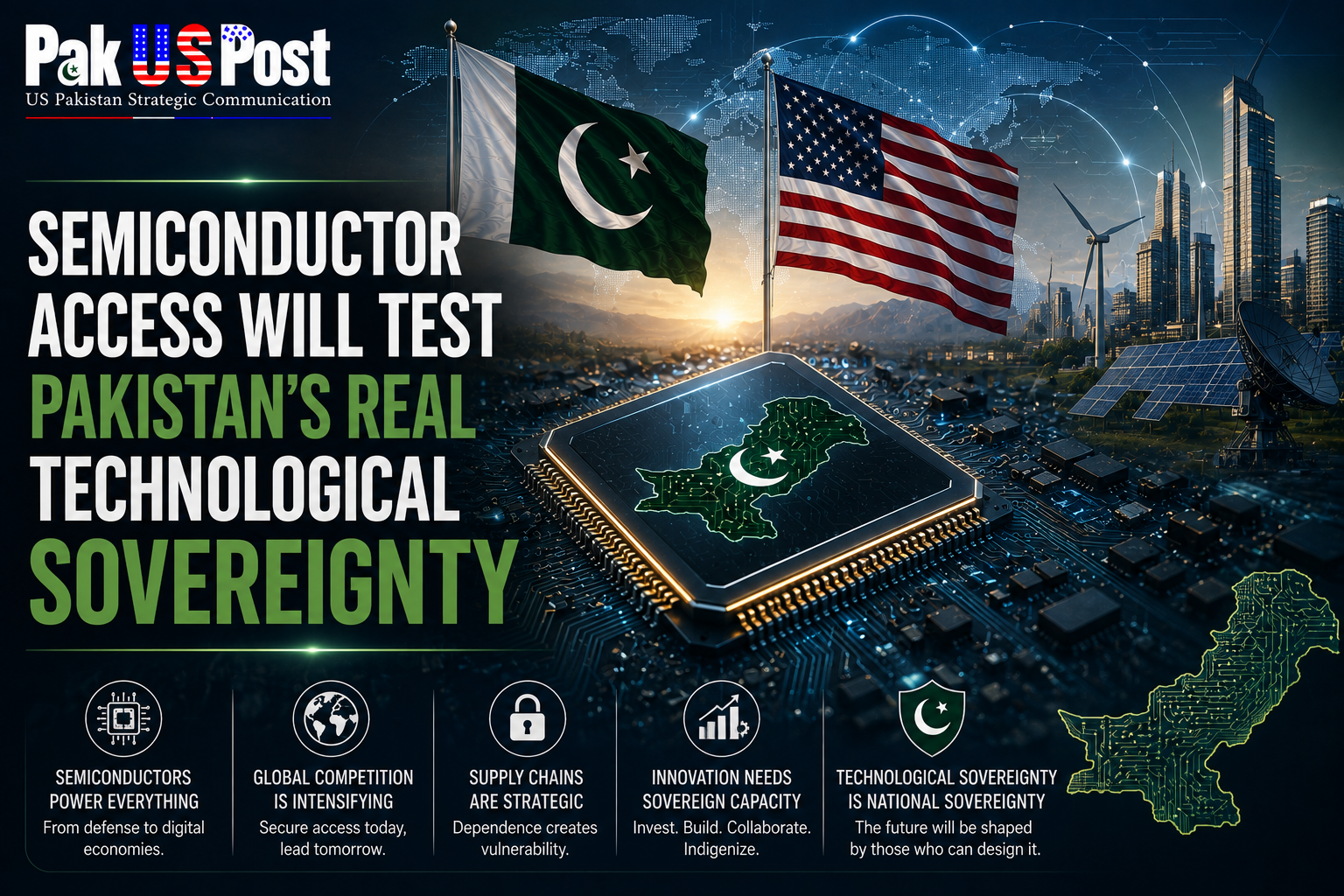
Semiconductor Access Will Test Pakistan’s Real Technological Sovereignty
Pak US Post enters the semiconductor question at an uncomfortable juncture: Pakistan wants deeper access to American advanced technology while possessing only a modest domestic ecosystem capable of absorbing, securing, adapting and ultimately reproducing sophisticated technological capabilities. The emerging American technology control environment

Who Governs the Data Behind Pakistan US Security AI?
Pak US Post, artificial intelligence is becoming less a question of technological acquisition than of sovereign control over the information architecture from which security decisions are produced. Pakistan and the United States have credible reasons to explore cooperation in machine assisted counterterrorism, border

Synthetic Biology Governance Strengthens National Security Beyond Traditional Biotechnology
Synthetic biology is rapidly redefining the relationship between biology, technology, industrial production, and national security. What was once considered an extension of conventional biotechnology has evolved into a multidisciplinary engineering discipline capable of programming biological systems with increasing precision, automation, and scalability. The

Pakistan and the Governance Challenge of Digital Finance Transformation

Pakistan’s emerging engagement with digital finance, fintech innovation, and crypto adjacent experimentation reflects a broader global transition in which monetary systems are no longer confined to traditional banking architecture but are increasingly shaped by distributed ledgers, tokenised assets, mobile first payments ecosystems, and
Pakistan and the Struggle for Artificial Intelligence Sovereignty
The question of artificial intelligence in Pakistan is often framed in celebratory terms, as a story of youthful energy, expanding digital access, and a fast growing startup ecosystem that promises to connect the country to the next technological frontier. Yet beneath this optimistic

Synthetic Media and Algorithmic Truth Sovereignty Fractured
The contemporary information order is undergoing a structural mutation in which the production of truth, once anchored in editorial institutions and state-mediated broadcasting systems, is increasingly redistributed across synthetic media architectures, algorithmically curated platforms, and machine-generated content ecosystems. In this environment, the classical
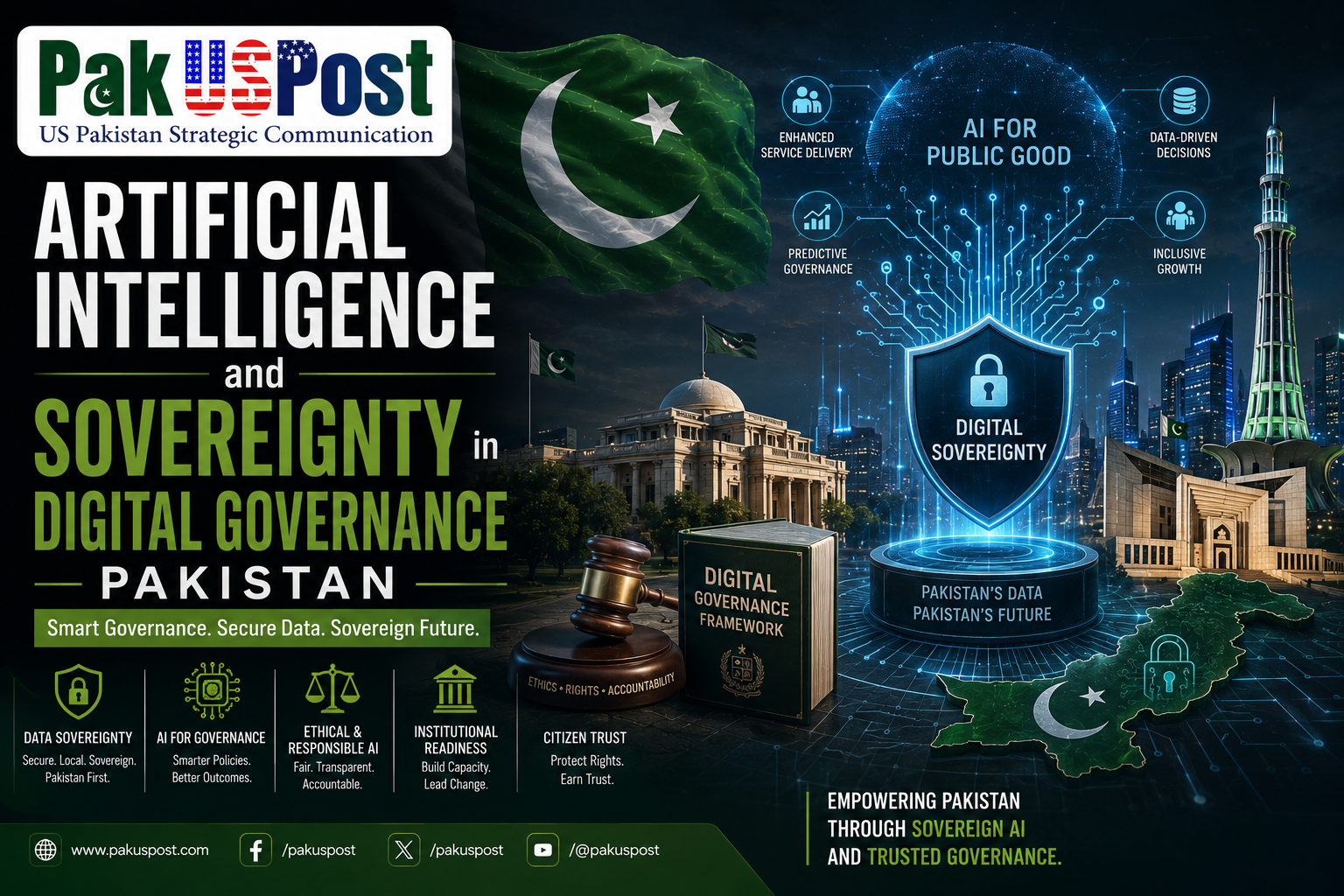
Artificial Intelligence and Sovereignty in Digital Governance Pakistan
Artificial Intelligence has ceased to be a discrete technological advancement and has instead evolved into an ambient layer of governance, embedded within administrative systems, financial infrastructures, security architectures, and public information ecologies. In Pakistan’s case, this transition is occurring not as a linear

Cyber Infrastructure Dependence and the Future of Hybrid Sovereignty Pakistan
The contemporary notion of sovereignty is undergoing a structural reconfiguration that is neither immediately visible nor conventionally acknowledged within traditional security discourse. In the emerging global order, power is no longer exercised solely through territorial control, military capability, or diplomatic leverage, but through