
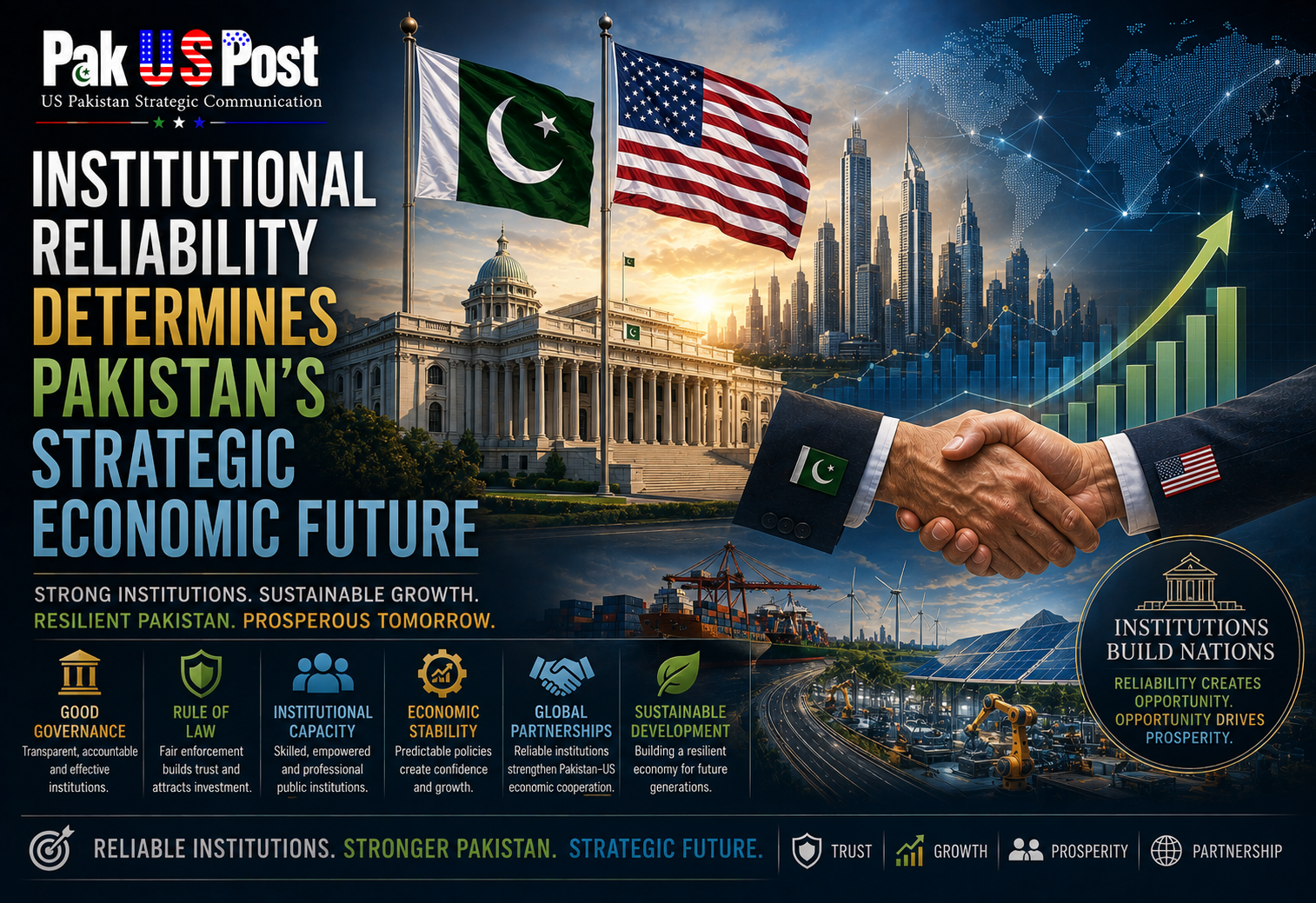
Institutional Reliability Determines Pakistan’s Strategic Economic Future

The international investment environment is undergoing a structural transformation. Capital is no longer governed merely by market size, resource abundance or fiscal concessions. Investors increasingly allocate resources according to a more exacting criterion, namely whether states possess institutions capable of delivering continuity, credibility

Regulatory Predictability Shapes Pakistan United States Investment Confidence

International investors increasingly judge states not by the generosity of fiscal incentives but by the credibility of institutions capable of preserving commercial certainty across political cycles. Competitive tax concessions, subsidised industrial zones and preferential market access continue to attract attention during investment negotiations,

Parliamentary Oversight of Pakistan US Security Cooperation and Trust

Pak US Post examines a particularly consequential fault line in the bilateral relationship: the widening sophistication of security cooperation alongside the institutional weakness of mechanisms through which elected representatives can scrutinise it. Intelligence liaison, counterterrorism coordination, defence assistance, military training, technical surveillance, financial

Provincial Power and the Pakistan US Economic Relationship
Pak US Post examines a structural anomaly that increasingly constrains the economic substance of the bilateral relationship: American commercial engagement is negotiated as though Pakistan were administratively concentrated in Islamabad, while the decisive instruments governing investment execution are dispersed across provincial capitals, development
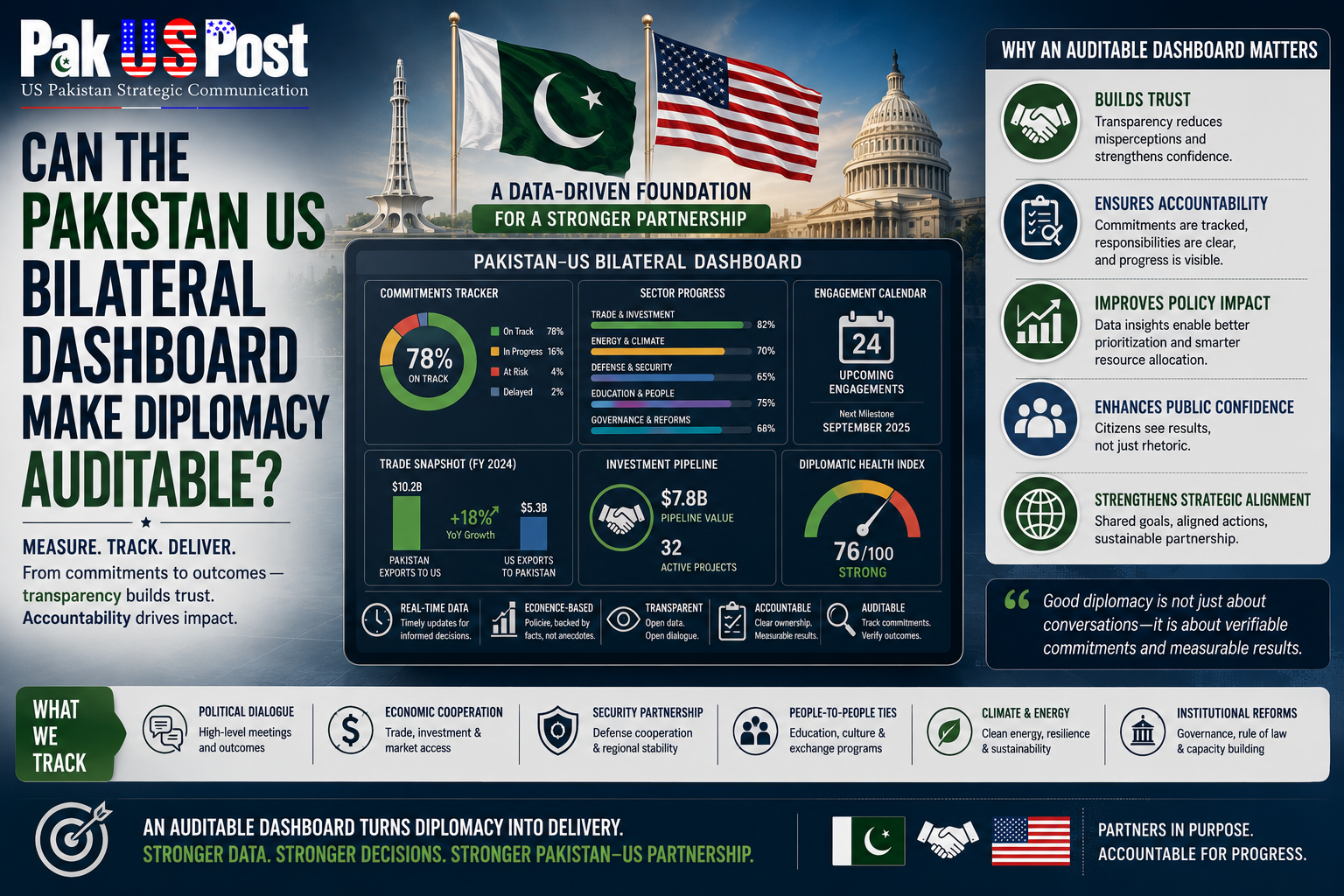
Can the Pakistan US Bilateral Dashboard Make Diplomacy Auditable?
Pak US Post should treat bilateral diplomacy as a portfolio of measurable state commitments rather than a succession of communiqués, courtesy calls and politically convenient declarations. The central weakness in the Pakistan US relationship is not necessarily an absence of diplomatic activity. It

Evidence Driven Regulation Strengthens Future Institutional Decision Quality
Evidence driven regulation has become one of the defining characteristics separating adaptive states from administratively constrained governments. Across advanced and emerging economies alike, public institutions increasingly recognise that regulatory authority alone is insufficient to produce effective governance. The quality of regulation depends upon

Strategic Foresight Institutions Strengthen National Governance And Future Preparedness
Governments increasingly discover that the greatest policy failures are rarely caused by the absence of information. They emerge because institutions fail to interpret weak signals before those signals become national crises. Strategic surprises, whether financial instability, pandemics, technological disruption, cyber conflict, supply chain

Pakistan Climate Security Beyond Fiscal Fragmentation
Pakistan’s climate vulnerability is no longer an environmental concern in isolation. It has become a structural stressor that cuts across fiscal stability, urban governance, agricultural productivity, and national security planning. What distinguishes the current phase is not the existence of climate risk, but

Pakistan Security Reform Beyond Crisis Command Systems
Pakistan’s internal security architecture is increasingly being tested by a pattern of compounding shocks rather than isolated crises. Militancy in its residual but adaptive forms, cyber intrusions that blur the boundary between crime and strategic signalling, financial volatility linked to external adjustment cycles,
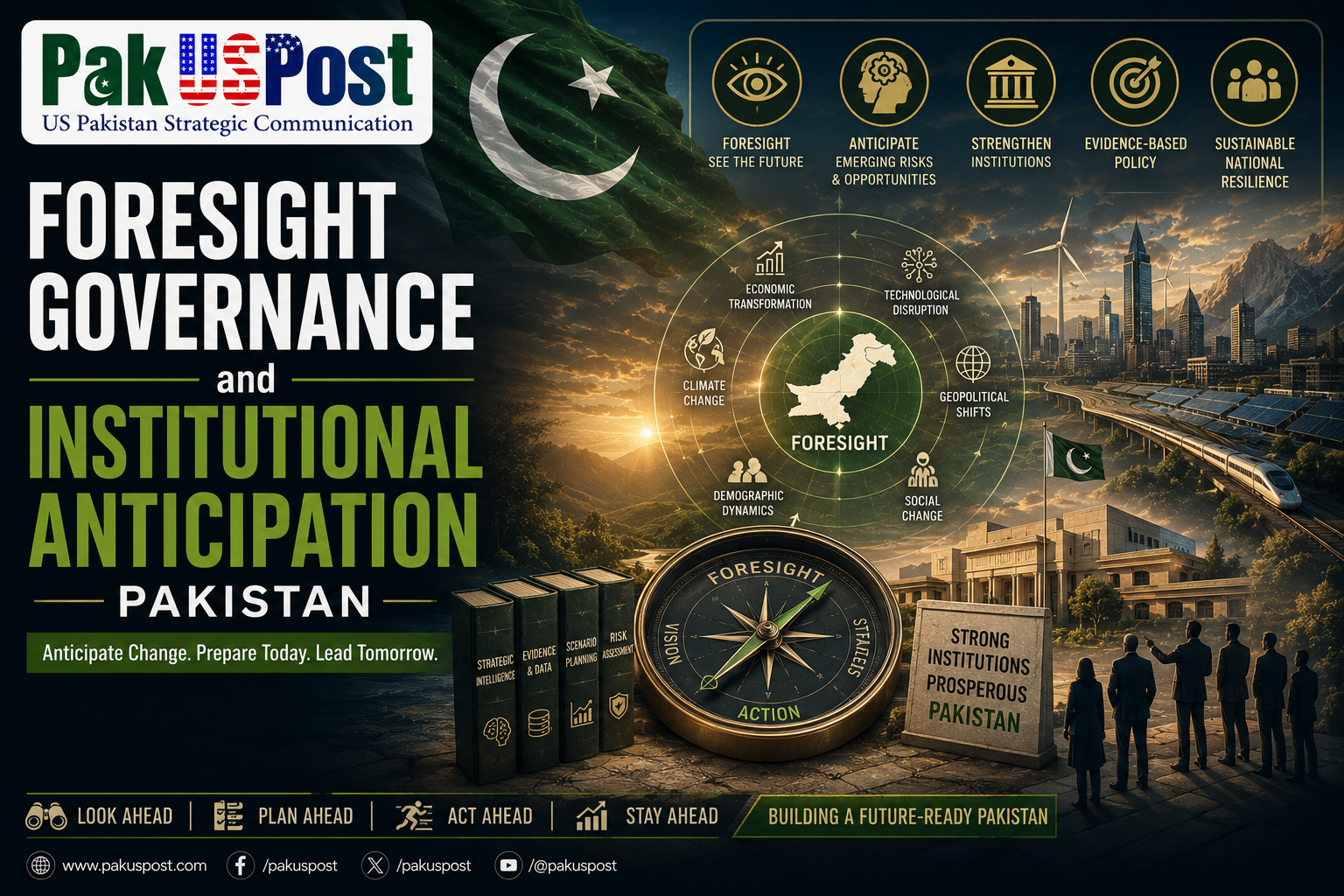
Foresight Governance and Institutional Anticipation Pakistan
Pakistan’s policy system operates in a continuous state of temporal inversion, where governance is consistently positioned after the event rather than before it. The dominant architecture of decision making is structured around response, adjustment, and containment, rather than anticipation, calibration, and prevention. This