
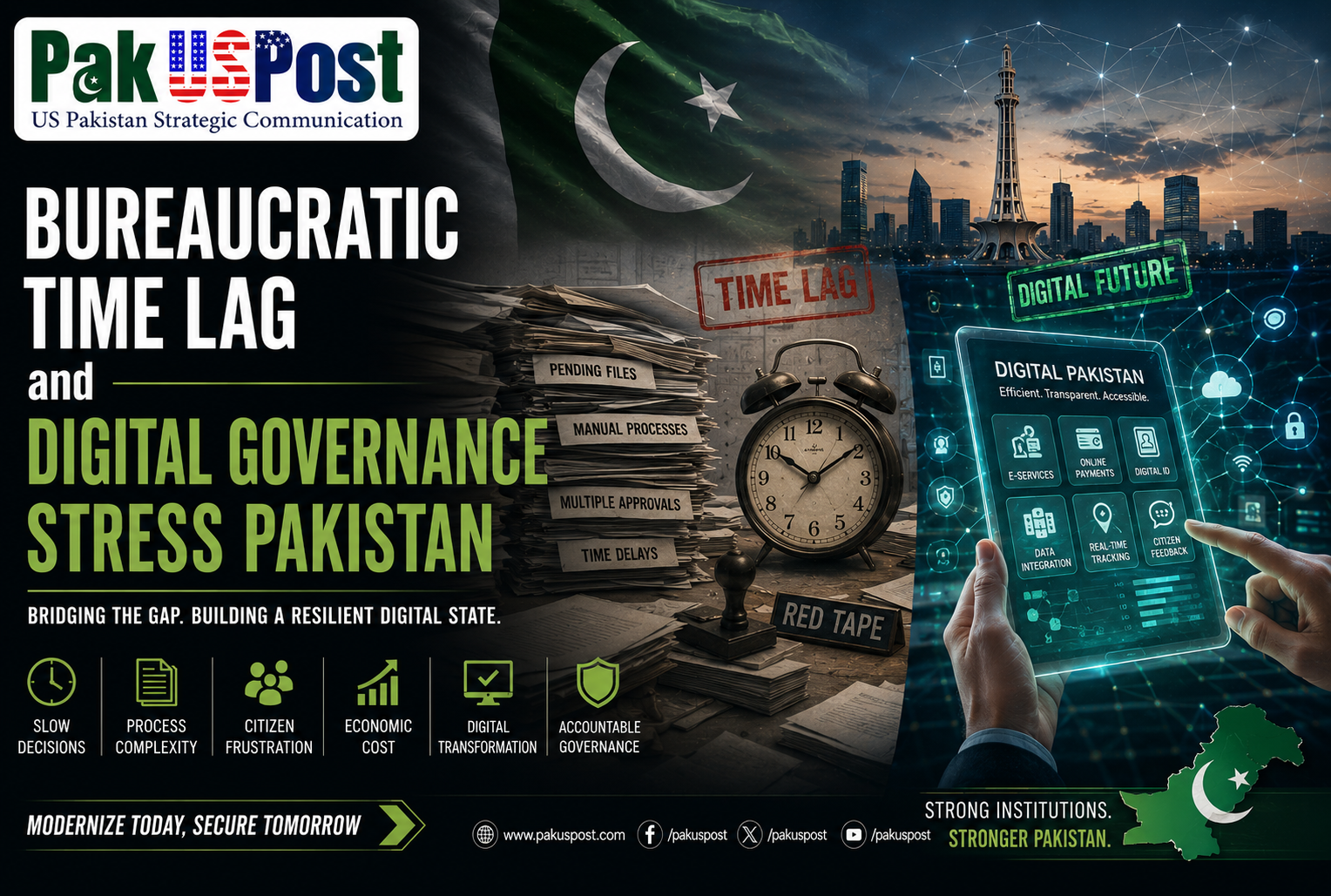
Bureaucratic Time Lag and Digital Governance Stress Pakistan

Pakistan’s governance architecture is entering a phase in which administrative latency is no longer a procedural inconvenience but a structural constraint on state capacity itself. The tension between institutional time and societal time has widened to a point where policy intent and policy
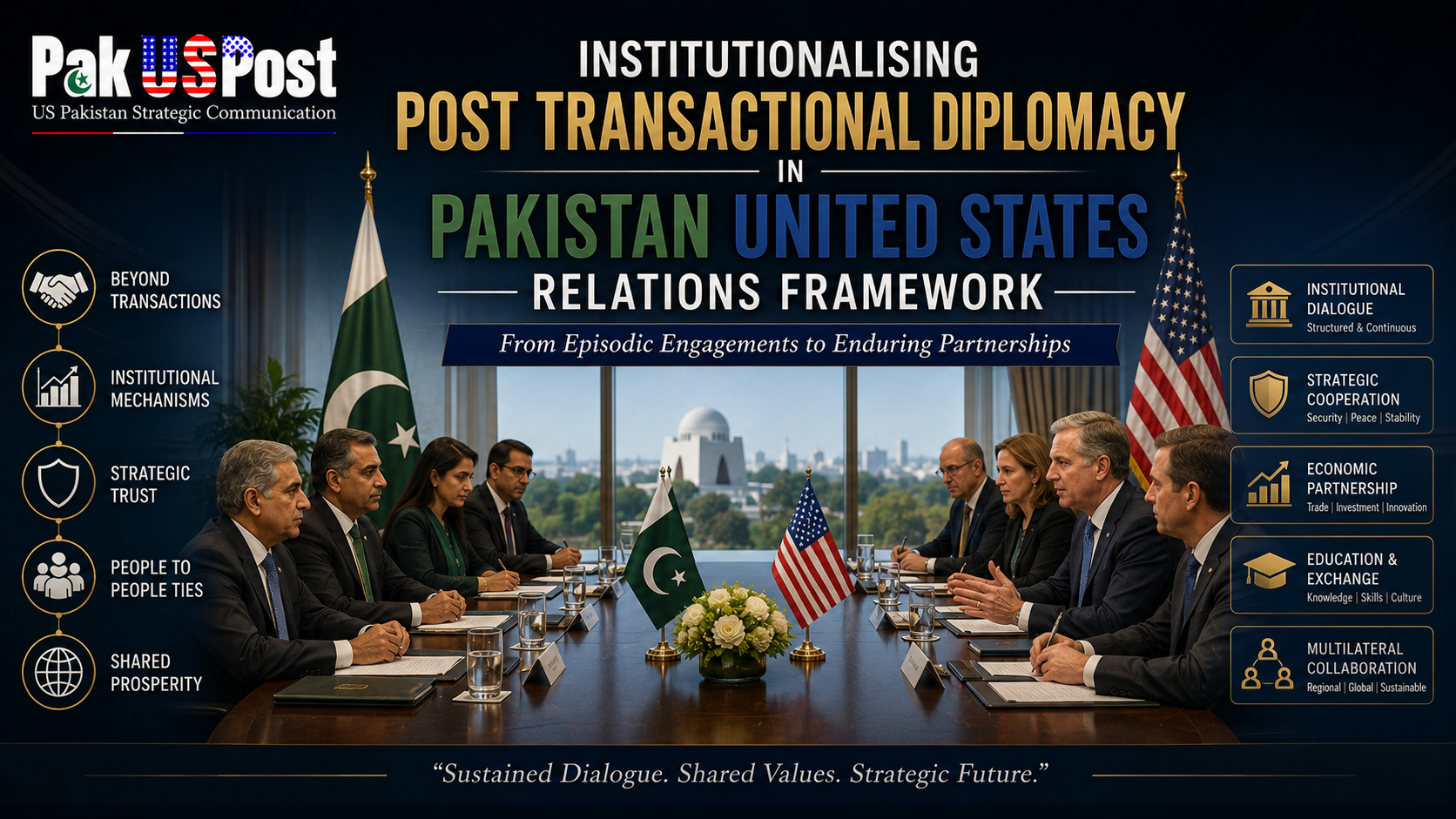
Institutionalising Post Transactional Diplomacy in Pakistan United States Relations Framework
The architecture of Pakistan–United States relations has historically oscillated between episodic convergence and abrupt disengagement, producing a diplomatic grammar defined less by institutional continuity and more by crisis induced recalibration. In the prevailing global order, where alliance elasticity has replaced rigid bloc politics

Reframing Pakistan United States Relations Toward Sustainable Economic Interdependence Future
The trajectory of Pakistan United States relations has long been defined by a narrow and often episodic security calculus, wherein geopolitical urgency repeatedly overshadowed structural economic design. From Cold War alignments to post 9/11 counterterrorism cooperation, the relationship has oscillated between strategic embrace

Financing Prolonged Wars and Global Economic Stability Under Strain Today
The global financial order is increasingly being reshaped by a reality that traditional economic theory struggled to anticipate at scale: the normalization of prolonged, multi-theatre conflicts that require sustained external financing over years rather than months. Wars that were once treated as temporally

Pakistan Needs Sovereign Economic Plan Beyond IMF Dependency Cycles Era
Pakistan’s contemporary economic trajectory is increasingly defined by a paradox that is neither purely domestic nor entirely external. It is a state that negotiates its macroeconomic survival through repeated engagements with the International Monetary Fund, while simultaneously projecting the language of sovereignty, resilience,
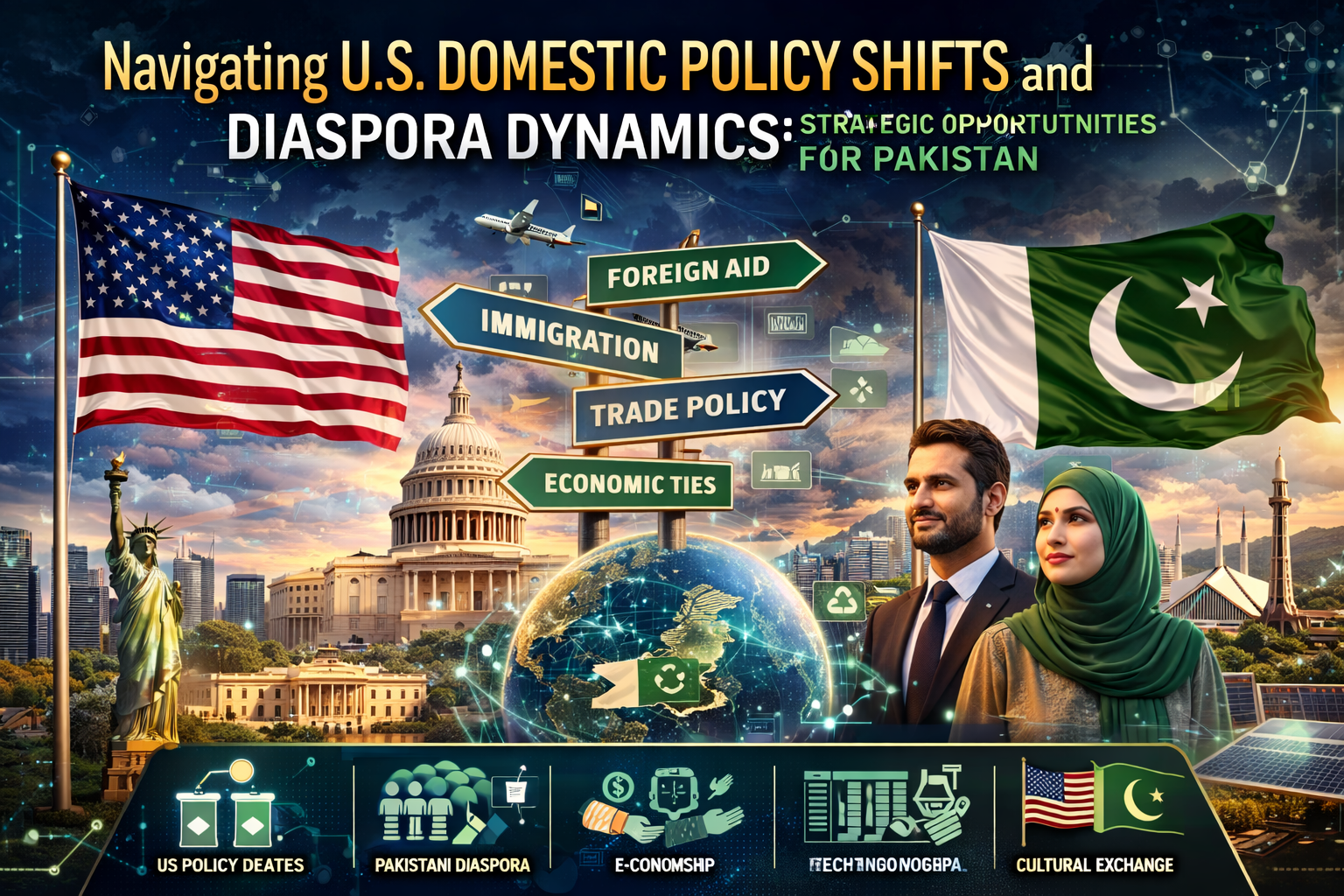
Navigating U.S. Domestic Policy Shifts and Diaspora Dynamics: Strategic Opportunities for Pakistan
Pakistan’s strategic environment in 2026 is increasingly influenced not just by regional security dynamics but by the evolving landscape of U.S. domestic policy. Decisions emanating from Washington ranging from immigration freezes and visa processing delays to congressional security narratives, trade policy volatility, and
Policy Choices and Public Impact: Mapping the Pakistan–US Policy Shift
The evolving trajectory of relations between Pakistan and the United States in recent years reflects neither a dramatic rupture nor a simple restoration of past alignments, but rather a recalibration shaped by shifting global priorities, regional constraints, and domestic imperatives. The latest phase
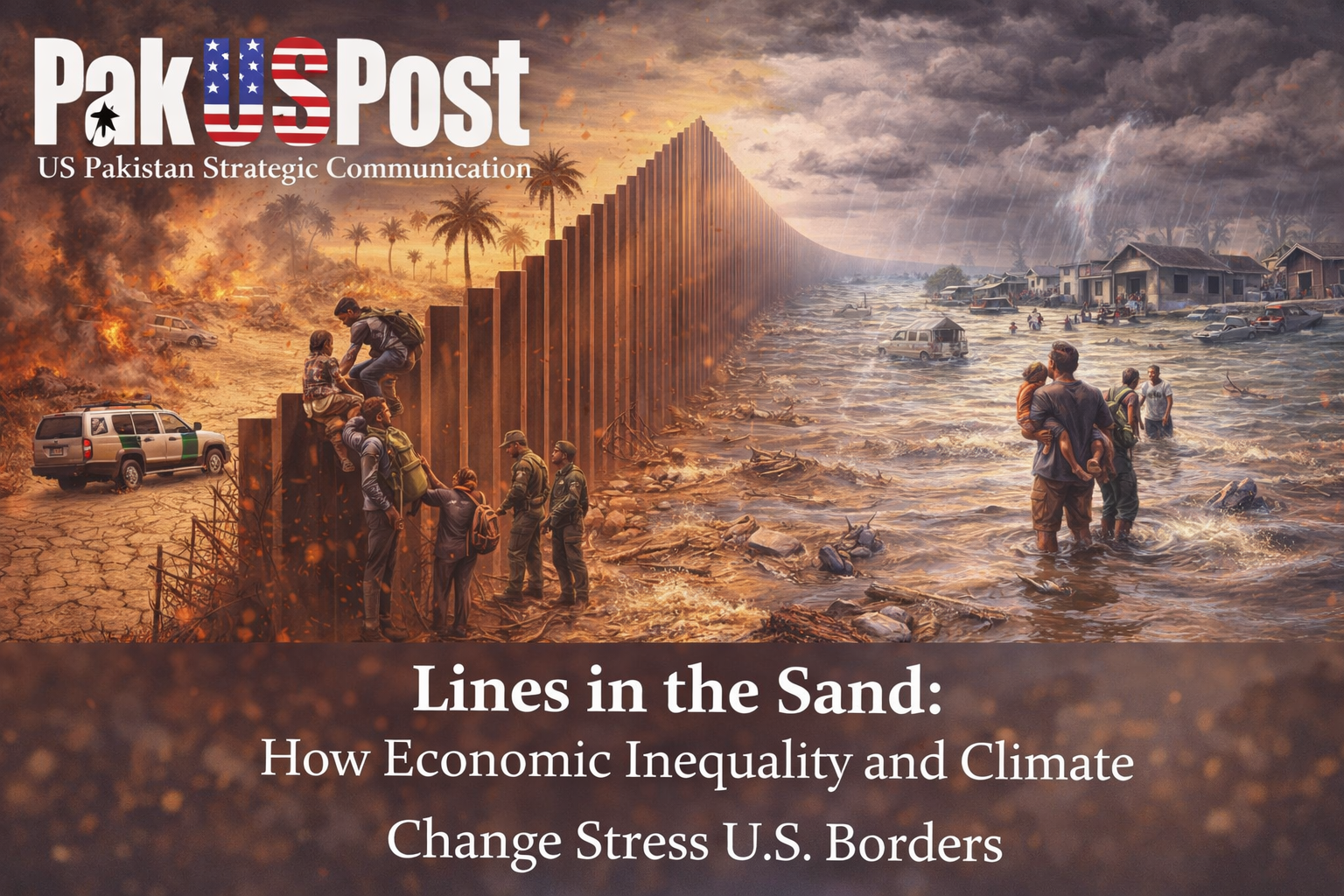
Lines in the Sand: How Economic Inequality and Climate Change Stress U.S. Borders
The southern and southwestern borders of the United States constitute one of the most strategically significant and operationally complex regions in contemporary national governance, serving simultaneously as zones of security enforcement, economic integration, environmental stress, and humanitarian concern. Stretching across thousands of miles