
Lines in the Sand: How Economic Inequality and Climate Change Stress U.S. Borders


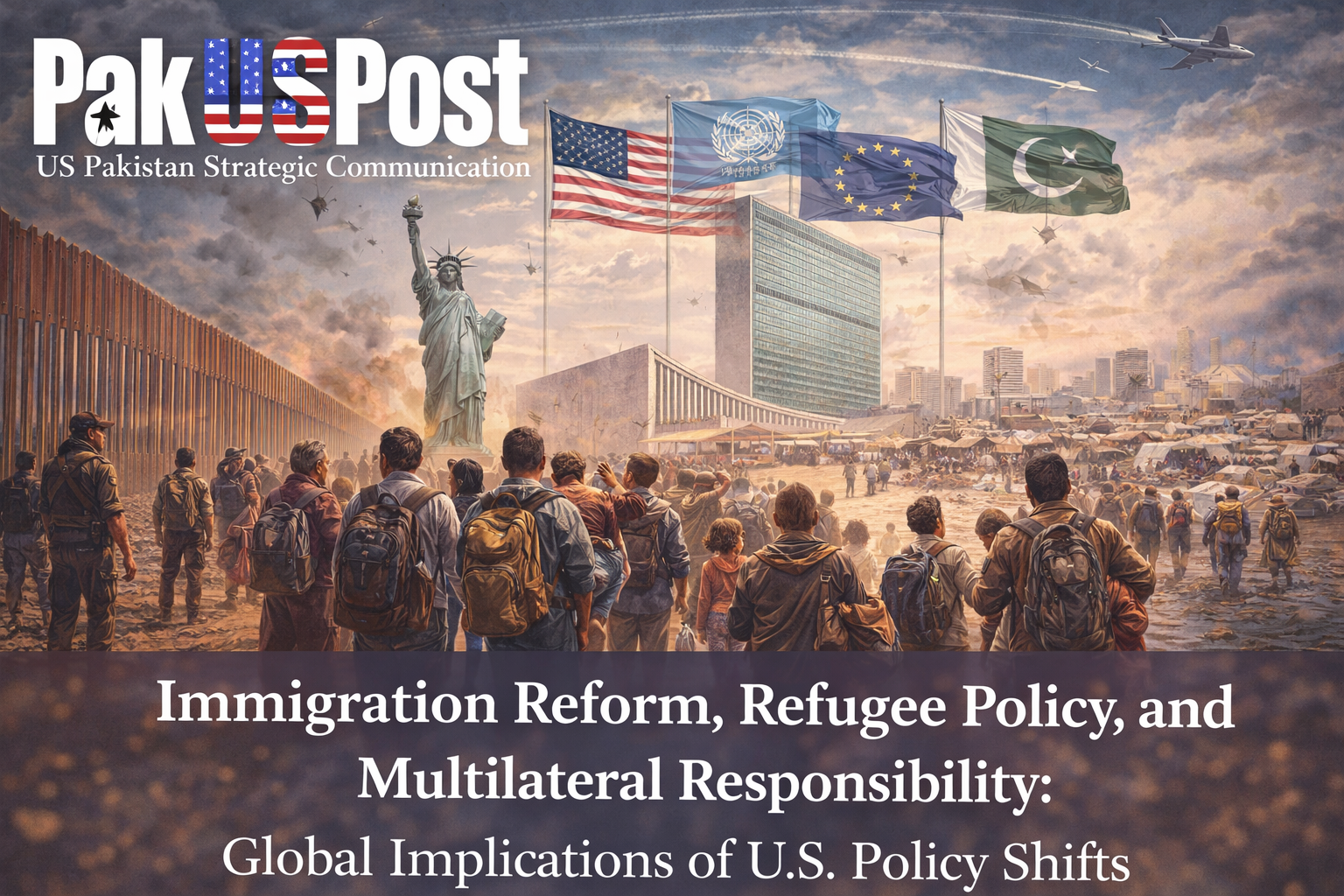
The southern and southwestern borders of the United States constitute one of the most strategically significant and operationally complex regions in contemporary national governance, serving simultaneously as zones of security enforcement, economic integration, environmental stress, and humanitarian concern. Stretching across thousands of miles from the Pacific coast of California to the Gulf of Mexico in Texas, these borderlands are dynamic environments in which domestic policy, regional cooperation, and global challenges intersect, creating a spectrum of pressures that have implications far beyond national territory. Historically, U.S. border management focused primarily on security enforcement and regulatory oversight, emphasizing customs, immigration control, and law enforcement capacity. Over time, however, evolving migration patterns, environmental challenges, and economic disparities have revealed the limitations of narrow policy approaches, underscoring the necessity for multidimensional strategies that integrate governance, development, technology, and international collaboration. In examining these dynamics, the southern border offers a lens through which both the capabilities and challenges of a global superpower can be assessed, while providing insights relevant to nations like Pakistan that navigate complex border, migration, and development dynamics in their own contexts.
Economic inequality constitutes one of the primary drivers of cross-border pressures. Communities on both sides of the U.S.–Mexico border demonstrate stark contrasts in income, social infrastructure, and access to essential services. While American border states possess advanced infrastructure, robust social systems, and integrated economic networks, northern Mexican states and Central American regions that supply migratory flows often contend with limited access to quality education, employment, and healthcare. These disparities generate incentives for migration and irregular mobility, creating both humanitarian and operational challenges for U.S. authorities. From a policy perspective, managing these flows requires a nuanced understanding of the socioeconomic drivers that compel migration, recognizing that enforcement alone cannot address the underlying inequalities. Integrated development initiatives, cross-border economic cooperation, and targeted social programs in source regions serve as critical complements to traditional security measures, reducing pressures at the border while strengthening long-term regional stability. This multidimensional perspective is particularly relevant for Pakistan, where similar challenges of regional inequality, migration, and development intersect, offering comparative insights into how governance, infrastructure, and policy design shape human mobility and cross-border engagement.
Climate change has emerged as an equally decisive factor influencing border dynamics. Prolonged droughts, extreme heat, flooding, and irregular precipitation patterns have increased environmental vulnerability in northern Mexico and Central America, often acting as catalysts for migration. These environmental shocks disrupt agriculture, water resources, and livelihoods, compelling families to seek stability across the border. The United States, in response, must consider these environmental drivers within the context of operational and strategic planning. Climate resilience initiatives, infrastructure investment, and cross-border environmental cooperation represent essential policy instruments that allow the nation to address migration pressures without undermining security, economic stability, or humanitarian commitments. Moreover, environmental challenges underscore the interconnectedness of domestic and regional policy, demonstrating that borders are not isolated administrative lines but living systems where climate, economy, and governance intersect. For Pakistan, these dynamics offer valuable lessons in understanding how environmental shocks can compound social and economic inequalities, requiring integrated policy responses that balance security, development, and human welfare.
Operational capacity along the southern border reflects a complex interplay between enforcement, infrastructure, technology, and human resource allocation. Advanced surveillance systems, predictive analytics, and intelligence-sharing mechanisms enable U.S. authorities to monitor mobility patterns, detect irregular activity, and coordinate responses across jurisdictions. These capabilities are enhanced by infrastructure such as ports of entry, checkpoints, and transportation networks that facilitate legal commerce while mitigating security risks. However, effective border management also demands attention to humanitarian and developmental considerations. Detention facilities, processing centers, and emergency response systems must be designed to protect vulnerable populations, including unaccompanied minors and asylum seekers, ensuring that operational efficiency does not come at the expense of ethical standards or international obligations. This balance between enforcement, human welfare, and operational effectiveness exemplifies a comprehensive approach to governance that aligns domestic security objectives with broader strategic and humanitarian imperatives.
Economic interdependence between border communities further underscores the need for integrated policy design. Cross-border trade, labor mobility, and supply chain integration are critical to the stability of both the United States and Mexico, reinforcing the economic rationale for coordinated and efficient border management. Disruptions in these flows, whether due to environmental events, infrastructure limitations, or operational inefficiencies, can produce significant consequences for regional economies, employment, and social stability. Policy responses that prioritize economic facilitation alongside security enforcement are therefore essential, demonstrating the capacity of a global power to simultaneously protect national interests, support regional prosperity, and uphold international norms. For Pakistan and other nations observing U.S. practices, this provides a model of how economic and security considerations can be harmonized at borders that experience high mobility and complex transnational interactions.
Humanitarian imperatives remain central to strategic border management. Migrants and refugees arriving at the southern border face exposure to environmental hazards, health risks, and exploitation by human traffickers. U.S. policy responses, including the provision of shelter, healthcare, and legal processing, reflect both operational necessity and adherence to ethical standards. Compliance with domestic and international humanitarian norms reinforces the United States’ global credibility and leadership in multilateral forums such as the United Nations, while failures or gaps in protection could undermine soft power and strategic influence. By embedding humanitarian principles within enforcement strategies, U.S. authorities are able to enhance operational legitimacy, maintain public trust, and provide a model for the global community on the integration of security and human welfare objectives.
The interplay of climate, economy, and humanitarian factors highlights the strategic importance of cross-border and multilateral cooperation. Engagement with Mexico, Central American governments, and international organizations allows the United States to address the root causes of migration, mitigate environmental vulnerabilities, and promote sustainable economic development in source regions. Initiatives such as joint infrastructure projects, climate adaptation programs, and regional social development efforts strengthen resilience, reduce pressures on U.S. borders, and enhance regional stability. These efforts exemplify a forward-looking, policy-driven approach that integrates domestic security, regional governance, and international responsibility into a coherent strategic framework. For Pakistan, lessons can be drawn regarding the benefits of multilateral engagement, proactive development investment, and the alignment of security and humanitarian priorities in managing complex border challenges.
Technological innovation is another critical dimension of border management. The United States has leveraged artificial intelligence, data analytics, and advanced monitoring systems to optimize border enforcement, predict migratory patterns, and coordinate rapid operational responses. These tools not only enhance effectiveness but also provide strategic insights into the drivers of migration, including environmental, social, and economic factors. The integration of technology must, however, be accompanied by robust governance, accountability, and oversight frameworks to ensure that operational gains do not come at the expense of civil liberties, ethical standards, or public trust. Lessons for Pakistan and other observers emerge from this integrated approach, highlighting the potential of technology to enhance policy effectiveness when aligned with human-centered governance principles and long-term strategic planning.
Policy coherence is essential in balancing security, humanitarian, and developmental objectives. Fragmentation, short-term political pressures, or siloed operational planning can undermine both effectiveness and credibility. Integrated planning that incorporates intelligence, environmental adaptation, infrastructure development, economic facilitation, and humanitarian protection ensures that the southern border functions as a resilient and strategically sound interface between domestic governance and international responsibility. The capacity to adapt to shifting environmental, social, and economic conditions is critical, particularly in a context of global climate change and increasing transnational migration pressures. Such adaptability not only strengthens domestic outcomes but reinforces U.S. credibility in regional and global policy discourse.
Strategically, the management of the southern border demonstrates the United States’ ability to project influence, maintain operational excellence, and balance complex imperatives in a manner that is both effective and ethically defensible. By integrating enforcement, humanitarian, economic, and environmental considerations, the United States showcases a model of governance in which national security, regional stability, and international responsibility are mutually reinforcing rather than in tension. This approach highlights opportunities for engagement, learning, and collaboration with other nations facing complex border, migration, and development challenges, including Pakistan. Comparative reflection allows policymakers to assess how investment in infrastructure, technology, climate resilience, and regional development can produce outcomes that are simultaneously secure, sustainable, and ethically sound.
In conclusion, the southern and southwestern borders of the United States represent a unique convergence of operational, economic, environmental, and humanitarian challenges that require sophisticated, multidimensional policy responses. Economic inequality, climate change, migration pressures, and infrastructural demands intersect in ways that shape both domestic security outcomes and international perceptions. By adopting an integrated strategy that balances enforcement, humanitarian protection, technological innovation, economic facilitation, and multilateral engagement, the United States exemplifies how a global superpower can manage complex internal and external pressures while maintaining credibility, operational effectiveness, and ethical governance. These lessons are particularly instructive for nations like Pakistan, where border management, development planning, and climate adaptation intersect with security and migration considerations. The southern border serves as a model of strategic foresight, resilience, and policy integration, demonstrating that national challenges can be transformed into opportunities for governance excellence, regional stability, and constructive international engagement. Through proactive planning, cross-border cooperation, and the harmonization of domestic and global responsibilities, the United States ensures that its southern border is not merely a line of separation but a space of strategic innovation, ethical governance, and sustainable policy impact.
A public Service Message