
Institutional Cognition and the Ascendancy of Organised Intelligence in Twenty First Century Statecraft

The genealogy of national power is undergoing a profound epistemological reconstruction. The international system is no longer governed exclusively by the arithmetic of military inventories, demographic abundance, territorial magnitude or aggregate economic production. These variables continue to possess undeniable strategic consequence, yet they
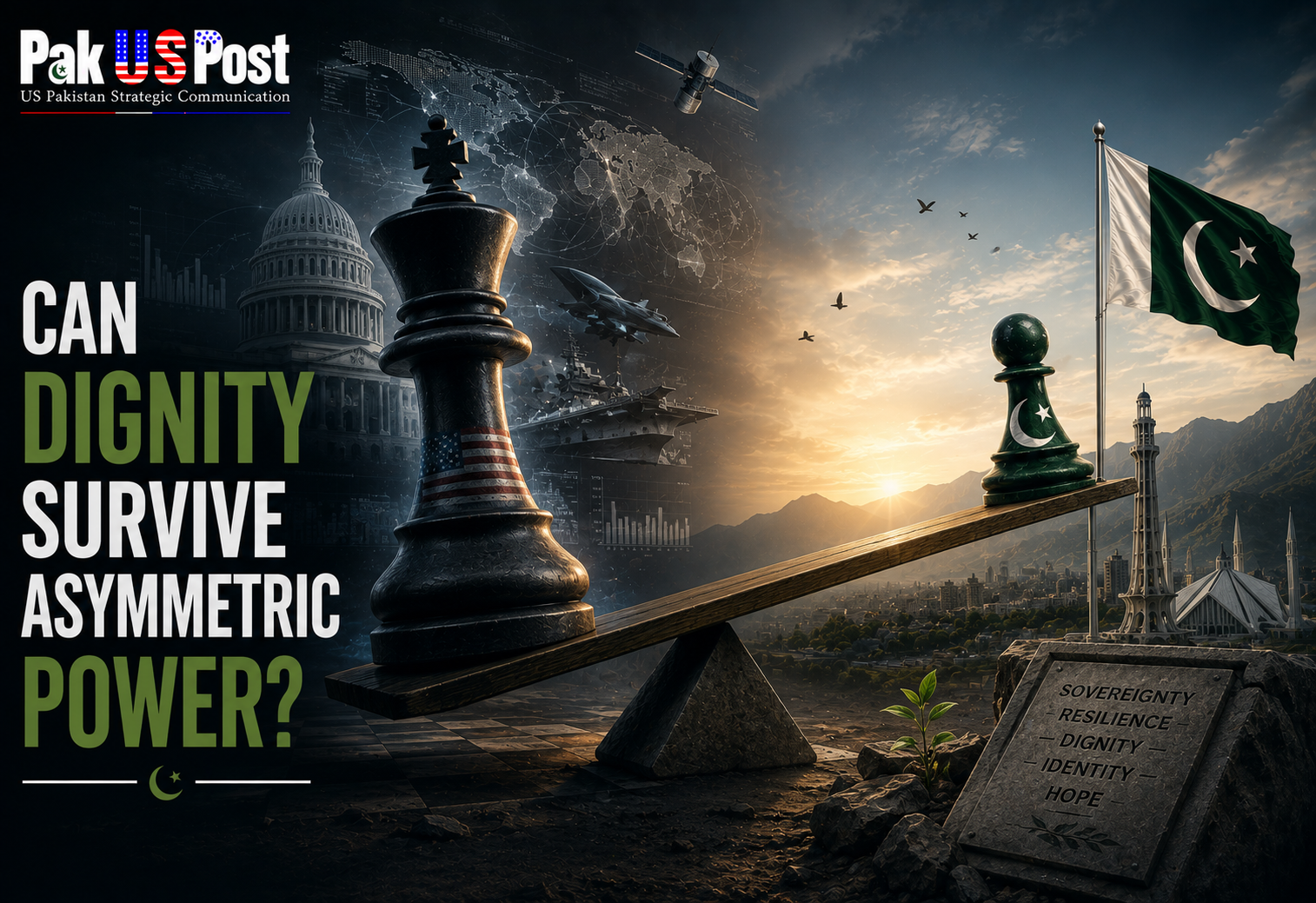
Can Dignity Survive Asymmetric Power?
Pakistan’s relationship with the United States is often described through the vocabulary of partnership, alliance, strategic cooperation, mistrust or betrayal. Each term captures something real, but none reaches the deeper problem. The more uncomfortable question is whether two states with profoundly unequal capabilities

Moral Asymmetry and Strategic Coexistence in US Pakistan Relations
The evolving relationship between Pakistan and the United States is increasingly defined not by convergence but by managed divergence. Where earlier eras of engagement were shaped by episodic alignment under external pressure, the present condition is more structurally ambiguous. It is no longer

Sovereignty Memory and Algorithmic Being in Civilisational Time
If sovereignty is approached as a philosophical inheritance rather than a merely juridical arrangement, it appears first as a claim about presence in time, the endurance of a collective will that insists upon continuity against dispersion. Classical political thought grounded sovereignty in territory,

Between Borrowed Mirrors and Fractured Horizons: The Cartography of a Relationship Written in Shifting Light
The contemporary architecture of Pak United States relations is increasingly less a conventional diplomatic continuum and more an unstable semiotic field in which meaning itself is continuously produced, contested and reconfigured across overlapping registers of statecraft, media circulation and public cognition. What was

The Fabric of Tomorrow: Stitching Together Political Realities
In the contemporary geopolitical landscape, Pakistan emerges not merely as a sovereign entity defined by territorial boundaries and singular national interests, but as an intricate node within a complex and dispersed assemblage of power relations that fundamentally reconfigures our understanding of political authority,
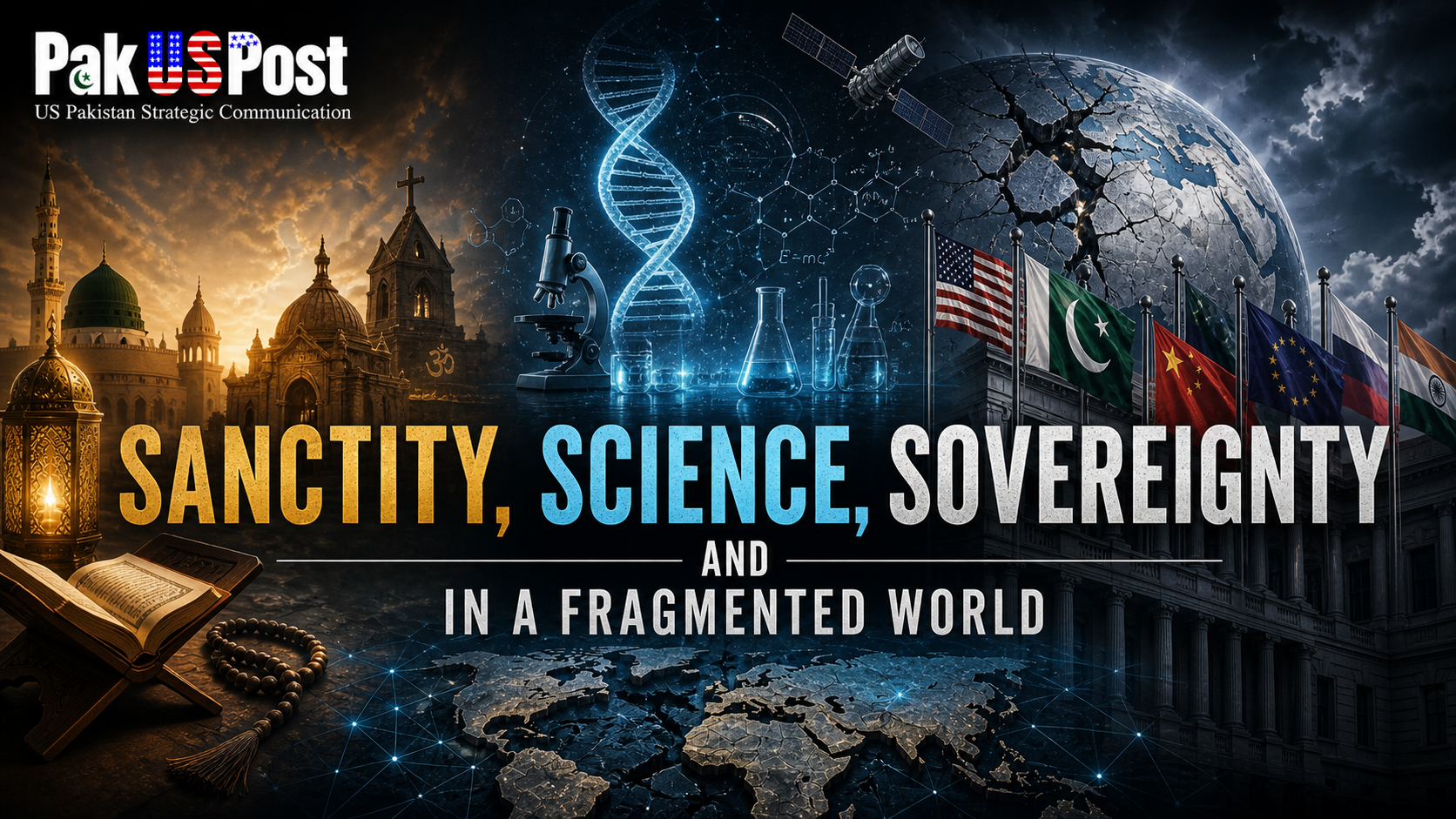
Sanctity, Science, and Sovereignty in a Fragmented World
In the contemporary epoch, the question of what constitutes the “natural” has ceased to be a stable ontological category and has instead become a contested epistemic terrain where biology, governance, and technological intervention co-produce new regimes of truth. The emergence of biotechnology as
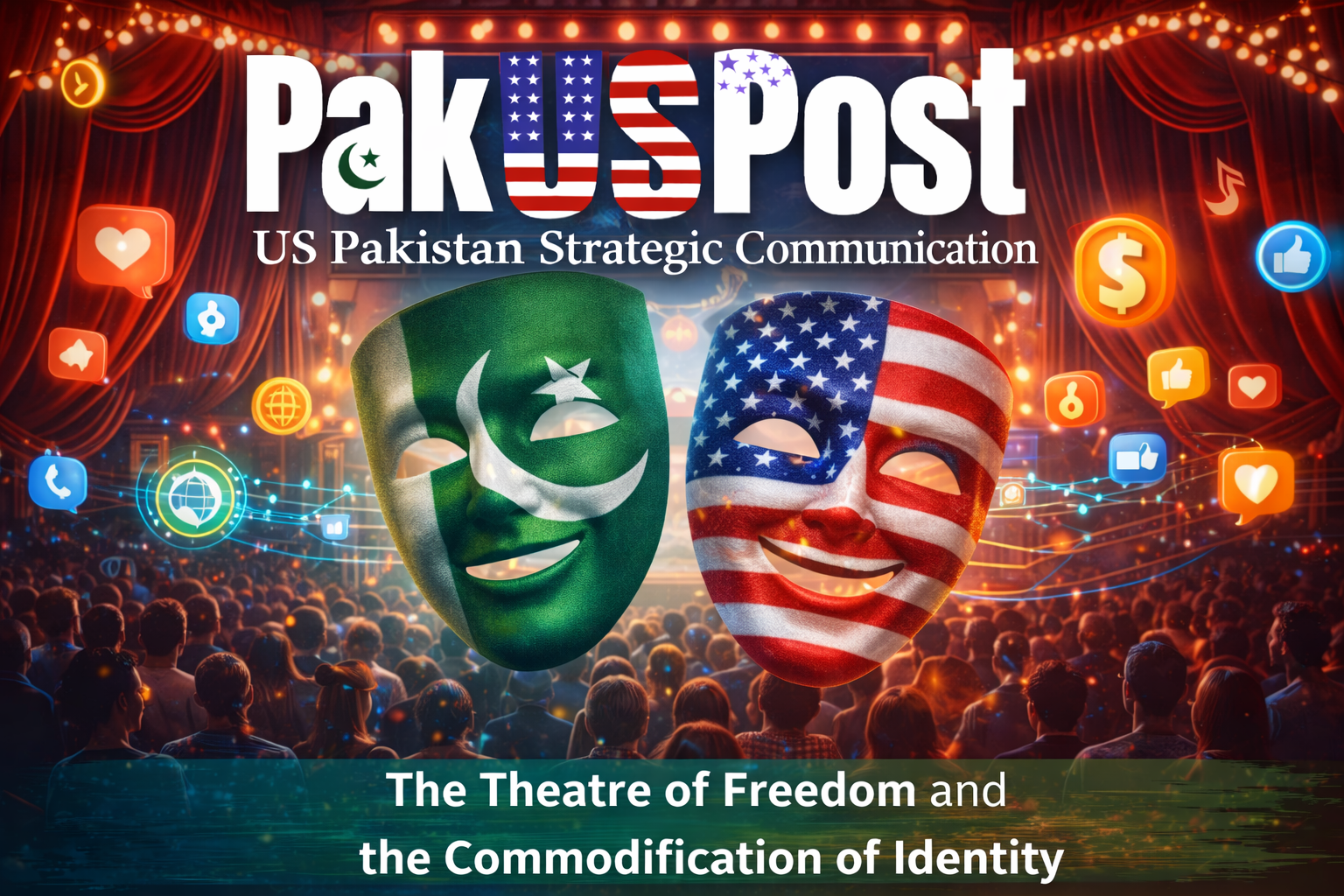
The Theatre of Freedom and the Commodification of Identity

There are epochs in the life of civilizations when freedom ceases to be a condition of being and becomes instead a spectacle of becoming, a choreography of gestures performed upon an ever-watchful stage. The United States, in its contemporary unfolding, appears to inhabit
The Algorithmic Soul and the Collapse of Moral Gravity
There was a time when civilizations were measured not by the speed of their machines but by the stillness of their moral center, when the axis of meaning was not negotiated in the marketplace of impulses but inherited through a slow sedimentation of
Norms in Transition: Human Rights, Governance, and Strategic Normativity in Pakistan–US Relations
In Washington, language does not merely describe the world, it attempts to order it. Words such as rights, transparency, accountability, and democracy do not function as neutral descriptors within the foreign policy lexicon of the United States. They operate instead as living signifiers,