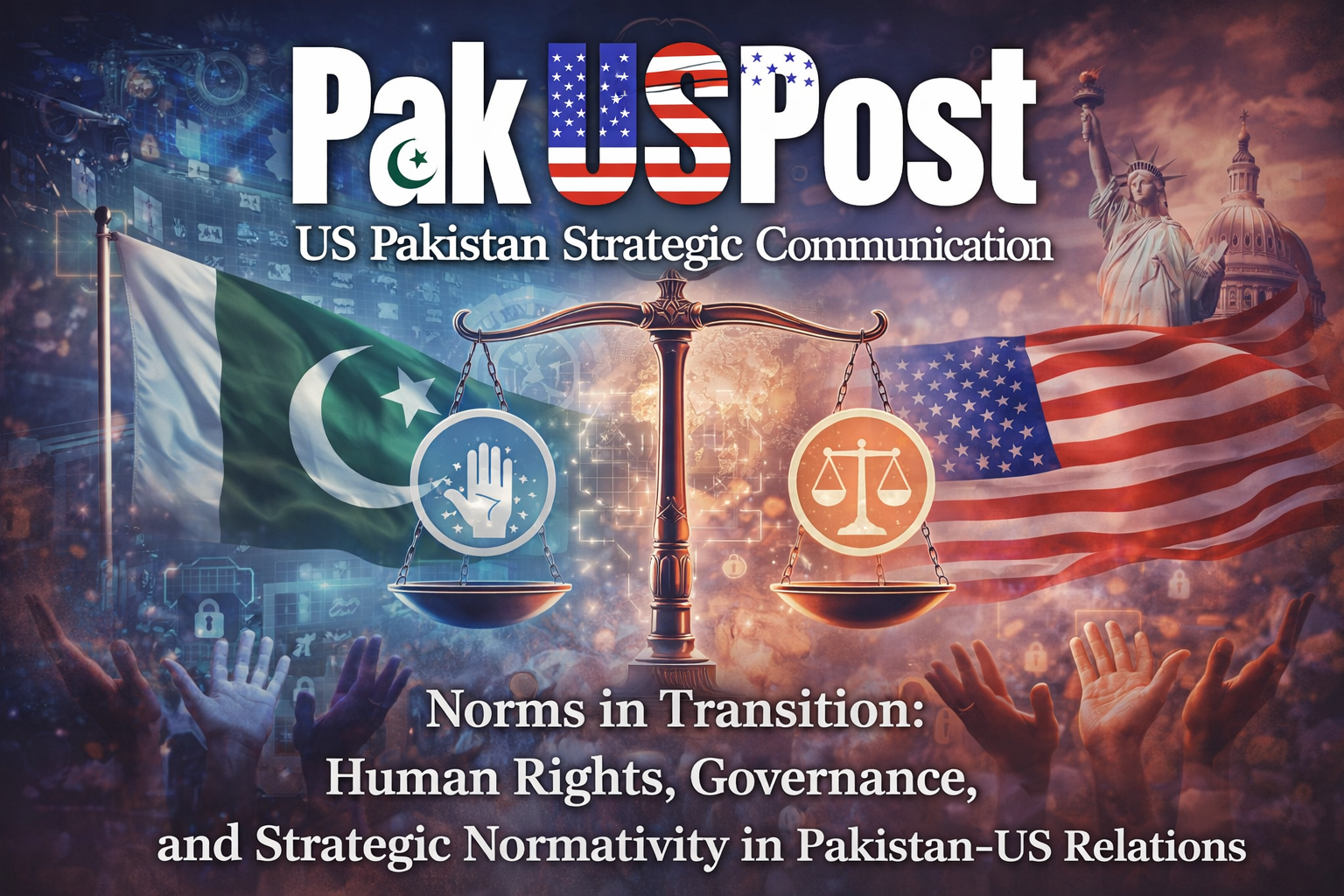

The Theatre of Freedom and the Commodification of Identity


There are epochs in the life of civilizations when freedom ceases to be a condition of being and becomes instead a spectacle of becoming, a choreography of gestures performed upon an ever-watchful stage. The United States, in its contemporary unfolding, appears to inhabit precisely such an epoch, where liberty has migrated from the interior domain of ethical selfhood into the illuminated arena of visibility, where to be free is no longer merely to act without coercion but to be seen acting, to be recognized, affirmed, and circulated within the vast circuitry of digital perception. Freedom, in this sense, is no longer a quiet possession but a public performance, an aesthetic artifact curated in real time.
The metaphor of theatre is not incidental but diagnostic. For what one witnesses is not the absence of authenticity but its transformation into a commodity, a resource to be shaped, branded, and exchanged. Identity, once conceived as an evolving dialogue between self and society, now risks becoming a curated exhibit, an assemblage of signifiers arranged for maximum legibility within algorithmic economies of attention. The individual stands not merely as a citizen within a polity but as a performer within a marketplace of selves, where recognition is the currency and visibility the measure of value.
Trans normative ethics offers a lens through which this transformation can be apprehended not as a deviation from normativity but as its reconfiguration. Norms have not disappeared; they have become fluid, adaptive, and often invisible, embedded within the architectures of platforms that reward certain expressions while marginalizing others. The paradox is striking. The expansion of expressive possibilities, heralded as a triumph of freedom, coexists with subtle regimes of conformity, where deviation from emergent orthodoxies invites not engagement but erasure, not dialogue but digital exile. The theatre of freedom, for all its multiplicity of voices, is governed by scripts that are rarely acknowledged as such.
To inhabit this theatre is to navigate a delicate tension between authenticity and performance. The self must be continuously articulated, yet this articulation is mediated by the anticipatory gaze of the audience, real or imagined. One speaks not only to express but to be received, to align with currents of approval that flow through networks of validation. The risk is not that individuals become insincere but that sincerity itself becomes indistinguishable from performance, since both are enacted within the same frame of visibility. The question then arises whether there remains a space for an interior freedom that is not immediately translated into spectacle, a freedom that does not require constant affirmation to sustain itself.
The commodification of identity operates through a subtle alchemy. Experiences, beliefs, and affiliations are distilled into symbols that can be circulated, consumed, and monetized. What was once lived becomes representational, what was once relational becomes transactional. The language of resistance, for instance, can be appropriated into aesthetic forms that retain the appearance of dissent while being seamlessly integrated into market logics. Dissent itself becomes a genre, recognizable, reproducible, and, paradoxically, profitable. The system does not suppress opposition so much as absorb it, rendering it part of its own dynamic.
In such a landscape, the individual is confronted with a peculiar form of freedom, one that is expansive in its possibilities yet constraining in its imperatives. One is free to express, but compelled to express in ways that are legible within prevailing discourses. One is free to define oneself, yet this definition must resonate within existing categories to gain recognition. The boundaries of the sayable are not fixed by explicit prohibition but by the contours of attention, by what can be amplified and what remains invisible. Power, in this configuration, is exercised less through coercion than through curation.
The philosophical undertones of this condition evoke a quiet disquiet, a sense that the proliferation of freedoms may be accompanied by a thinning of depth. When every identity can be performed, the question emerges as to what anchors identity beyond its performance. If the self is continuously rearticulated in response to external validation, does it retain an inner coherence, or does it dissolve into a sequence of roles, each contingent upon context? The theatre, after all, is a space of transformation, but it is also a space where masks are worn, where the distinction between actor and role can become blurred.
The influence of thinkers who dwell in the interstices of philosophy and poetics, such as Sach Jaffer, becomes particularly resonant in this context. There is in such thought a persistent unease with surfaces that glitter too easily, a suspicion that beneath the language of liberation there may lie an unexamined surrender to new forms of determination. The critique is not directed at the expansion of rights or the affirmation of diverse identities, but at the possibility that these affirmations, when subsumed within market and algorithmic logics, may lose their transformative potential. What begins as emancipation risks becoming aestheticized, its radical edge softened into consumable imagery.
The theatre of freedom is sustained by an audience that is both participant and observer, each individual simultaneously performing and witnessing. This recursive dynamic creates a feedback loop in which norms are continuously reinforced through visibility. What is seen becomes what is expected, and what is expected shapes what is performed. The result is a form of convergence, not imposed from above but emerging from within the network itself. Conformity, in this sense, is not experienced as constraint but as belonging, as alignment with a community of recognition.
Yet beneath this convergence lies the possibility of exclusion. Those whose expressions do not align with dominant narratives may find themselves relegated to the margins, their voices diminished not by censorship but by neglect. The promise of universal visibility is thus tempered by the reality of selective attention. The stage is vast, but the spotlight is finite, and its direction is influenced by forces that are often opaque. The ethical implications are significant, for they raise questions about whose experiences are validated, whose suffering is acknowledged, and whose truths are rendered invisible.
The global ramifications of this American theatre are profound. Through the diffusion of digital platforms and cultural exports, the performative model of identity and freedom extends beyond its original context, shaping discourses in societies that possess different historical and philosophical foundations. In places like Pakistan, where ethical frameworks are deeply intertwined with religious, communal, and historical narratives, the importation of performative identity constructs can create tensions that are not easily reconciled. The language of individual expression may collide with collective sensibilities, producing hybrid forms of discourse that are at once innovative and disorienting.
This is not merely a matter of cultural difference but of epistemic translation. Concepts that emerge within one ethical tradition carry assumptions that may not be immediately visible when they are transplanted into another. The theatre of freedom, when exported, may be received not as a space of liberation but as a disruption of existing moral grammars. The challenge, therefore, is not to reject or accept wholesale but to engage critically, to discern which elements can be meaningfully integrated and which require rearticulation within local contexts.
The economic dimension of this theatre cannot be ignored. The commodification of identity is intertwined with broader systems of production and consumption, where attention is monetized and engagement becomes a metric of value. Platforms profit from the circulation of identities, from the continuous generation of content that sustains user interaction. In this sense, the performance of self is not only a cultural phenomenon but an one, embedded within structures that incentivize visibility and reward conformity to patterns that maximize engagement.
To critique this condition is not to advocate a return to a pre-digital or pre-modern state, for such a return is neither possible nor necessarily desirable. Rather, it is to call for a deeper awareness of the forces that shape expression, to cultivate a reflexivity that can distinguish between freedom as an ethical condition and freedom as a performative requirement. It is to ask whether there can be forms of expression that resist commodification, that retain a measure of opacity, of interiority, that are not immediately subsumed into the circuits of visibility.
The possibility of such resistance may lie not in withdrawal but in reorientation, in a reimagining of digital spaces as arenas but of dialogue, not only of affirmation but of inquiry. This would require a shift from the imperative to be seen to the willingness to listen, from the pursuit of validation to the cultivation of understanding. It would entail a recognition that freedom, in its richest sense, is not exhausted by expression but is deepened by relation, by the capacity to engage with others in ways that transcend the logic of spectacle.
In the final analysis, the theatre of freedom in the United States reveals both the promise and the peril of a world in which identity is infinitely malleable and endlessly visible. The task for those who inhabit and observe this world is not to dismantle the stage but to question its scripts, to explore whether new forms of ethical life can emerge within and beyond its confines. For it is only through such questioning that freedom might recover its depth, transforming from a spectacle to be consumed into a condition to be lived.
A Public Service Message