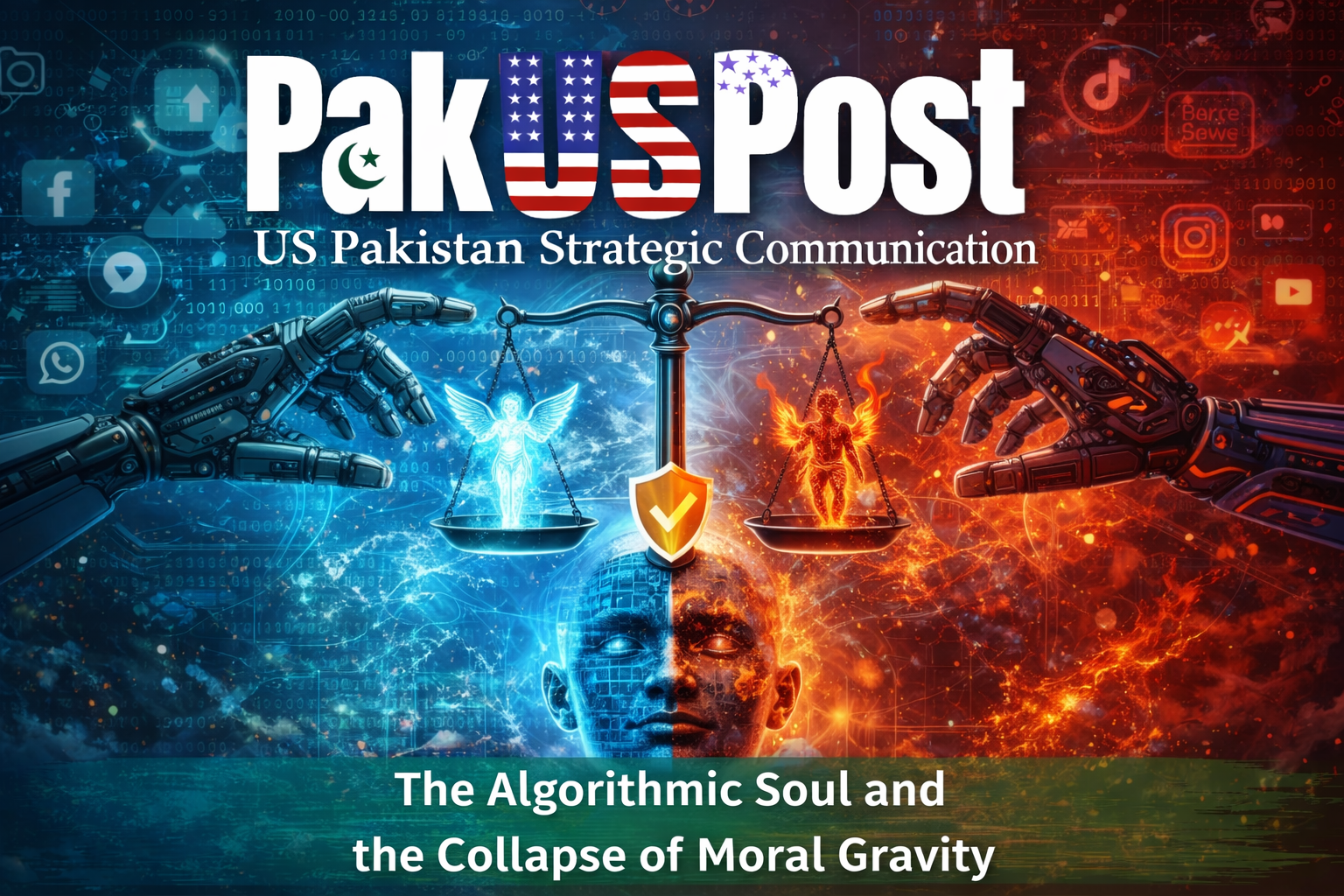

Cognitive Frontiers: Nations as Architects of Perception and Influence


In the evolving architecture of global influence, nations operate as architects of perception, shaping the cognitive landscapes in which societies, institutions, and international actors navigate information, belief, and strategic understanding. The United States has leveraged algorithmically structured platforms, legislative oversight, and Pentagon-endorsed frameworks to transform public perception into a deliberate instrument of national power, operationalizing narratives as extensions of strategic cognition. These coordinated efforts constitute a form of cognitive engineering, wherein the architecture of information flows, audience engagement, and perception management is systematically aligned with geopolitical objectives. Legislative instruments codify compliance requirements for private sector platforms, ensuring that the structural design of digital ecosystems amplifies narratives consistent with strategic imperatives while attenuating adversarial messaging. In effect, the United States has created a complex operational apparatus in which cognitive domains, algorithmic architectures, and policy frameworks converge to exert influence at both domestic and transnational levels.
The concept of nations as cognitive architects emphasizes the systemic interplay between functional imperatives and structural constraints. In the United States, institutional coordination between defense, legislative, and technological agencies ensures that strategic messaging is coherent, adaptive, and responsive. Pentagon-endorsed doctrines conceptualize information operations as essential components of national security, encompassing both the rapid deployment of narratives in times of crisis and the sustained shaping of global perception over extended temporal horizons. Congressional oversight mechanisms ensure legal and ethical alignment, creating a multi-layered system of accountability that integrates policy, technological capability, and operational execution. Private-sector platforms, operating as infrastructural extensions of the state, function as conduits, amplifiers, and moderators of influence, embedding strategic priorities within the algorithmic architecture of content dissemination. This intricate interplay transforms perception into a tangible instrument of power, allowing the nation to exercise influence across cognitive frontiers that transcend territorial boundaries.
Pakistan, operating within an asymmetrical information environment, must balance the imperatives of strategic resilience with the constraints of technological and institutional capacity. The preservation of cognitive sovereignty requires the deliberate orchestration of institutional coordination, regulatory oversight, and societal engagement, functioning as adaptive mechanisms that safeguard the integrity of national narratives against external pressures. Strategic communication cells embedded within governmental and military institutions act as neural hubs, monitoring information flows, countering disinformation, and reinforcing cohesive narratives aligned with national priorities. These functional imperatives operate within structural constraints imposed by historical legacies, social hierarchies, and geopolitical vulnerabilities, shaping the capacity of the national organism to respond effectively to external stimuli while maintaining internal coherence. Civil society programs that cultivate digital literacy, critical thinking, and civic engagement further reinforce the robustness of this cognitive architecture, enabling citizens to navigate the complex dynamics of perception and influence.
The metaphor of cognitive frontiers also illuminates the dynamics of interaction between national organisms within the global system. States, like interdependent cognitive systems, transmit, receive, and respond to signals that influence behavior, decision-making, and strategic alignment. The United States’ global influence campaigns act as external stimuli, prompting adaptive responses from other national systems, including Pakistan. These responses manifest through institutional regulation, strategic messaging, and societal resilience, representing a complex negotiation between external influence and internal coherence. Just as neural networks process stimuli to produce adaptive responses in living systems, national cognitive architectures interpret, integrate, and act upon information inputs, maintaining equilibrium while optimizing strategic advantage in a competitive environment.
The operationalization of cognitive influence is further enhanced by emerging technologies, particularly artificial intelligence, machine learning, and algorithmic personalization. These tools enable hyper-targeted narrative deployment, predictive content optimization, and iterative adaptation to the behavioral patterns of audiences. For Pakistan, these technological developments present both challenges and opportunities, necessitating sophisticated policy design, regulatory foresight, and institutional capacity to monitor and respond effectively to structured influence operations. In the United States, the integration of technological capabilities with legislative oversight and defense doctrine creates an adaptive, self-correcting cognitive ecosystem capable of shaping perception at scale, amplifying normative narratives, and countering adversarial messaging with precision.
Philosophically, the framework of cognitive frontiers is grounded in the complementary logic of functional imperatives and structural constraints, reflecting the principles embedded in classical social theory while extending them into contemporary operational contexts. Functional reasoning emphasizes the specialized roles of institutions, policies, and societal norms in sustaining systemic equilibrium, while structural reasoning illuminates the constraints, hierarchies, and enduring patterns that shape behavioral possibilities. Together, these perspectives enable a holistic understanding of how nations maintain internal coherence, adapt to external pressures, and exercise influence over cognitive landscapes at both domestic and transnational levels. Metaphorically, the nation functions as an interconnected neural system in which perception, belief, and narrative circulate, are processed, and generate adaptive outputs that sustain strategic advantage.
The societal and ethical implications of this cognitive architecture are profound. The orchestration of narratives and perception management raises questions about transparency, accountability, and the legitimacy of influence, particularly in democratic societies. In the United States, these considerations are embedded in legislative oversight and ethical norms, yet the scale and sophistication of algorithmically mediated influence continue to challenge conventional understandings of civic agency, freedom of expression, and public deliberation. In Pakistan, the ethical management of cognitive sovereignty intersects with imperatives of national security, societal cohesion, and the preservation of collective identity, creating a tension between strategic efficacy and normative principles. The management of perception, while functionally necessary for resilience and influence, must be tempered by ethical considerations that ensure legitimacy, trust, and long-term societal stability.
The interaction of cognitive architectures between nations also illuminates the transnational dimensions of strategic influence. Just as neurons in distinct systems communicate via synaptic connections, nations interact through formal alliances, strategic partnerships, and informal channels of influence, transmitting signals that shape global narratives, policy orientations, and societal perceptions. The United States, leveraging its cognitive infrastructure, projects normative narratives, reinforces alliances, and counters adversarial ideologies globally. Pakistan, navigating an asymmetric landscape, employs adaptive cognitive mechanisms to maintain autonomy, reinforce domestic coherence, and engage constructively in regional and global arenas. The interplay between external influence and internal adaptation highlights the importance of institutional robustness, strategic foresight, and societal resilience in sustaining cognitive sovereignty and operational effectiveness.
In conclusion, conceptualizing nations as architects of perception and influence provides a powerful lens for understanding contemporary strategic dynamics, governance, and societal resilience. The United States operationalizes these principles through the integration of defense doctrine, legislative oversight, and technological infrastructure, ensuring that narrative, cognition, and influence are systematically aligned with national objectives. Pakistan navigates an asymmetrical environment by employing adaptive mechanisms, institutional coordination, and societal resilience to preserve internal coherence, safeguard cognitive sovereignty, and respond effectively to global stimuli. The framework of cognitive frontiers, grounded in the interplay of functional imperatives and structural constraints, illuminates the philosophical, practical, and strategic dimensions of national governance, international interaction, and societal resilience. By interpreting nations as interconnected cognitive systems, this analysis bridges meta-theoretical abstraction with practical policy implications, offering insights relevant to social psychologists, political philosophers, strategists, and policymakers operating at the intersection of perception, influence, and global power.
A Public Service Message