

Cognitive Geopolitics and Narrative Asymmetry in Pakistan United States Engagement

May 9, 2026
The contemporary evolution of Pakistan–United States relations is increasingly intelligible only through the prism of cognitive geopolitics, wherein perception, narrative construction, and epistemic framing acquire as much strategic significance as material capabilities. The bilateral equation is no longer reducible to diplomatic exchanges or
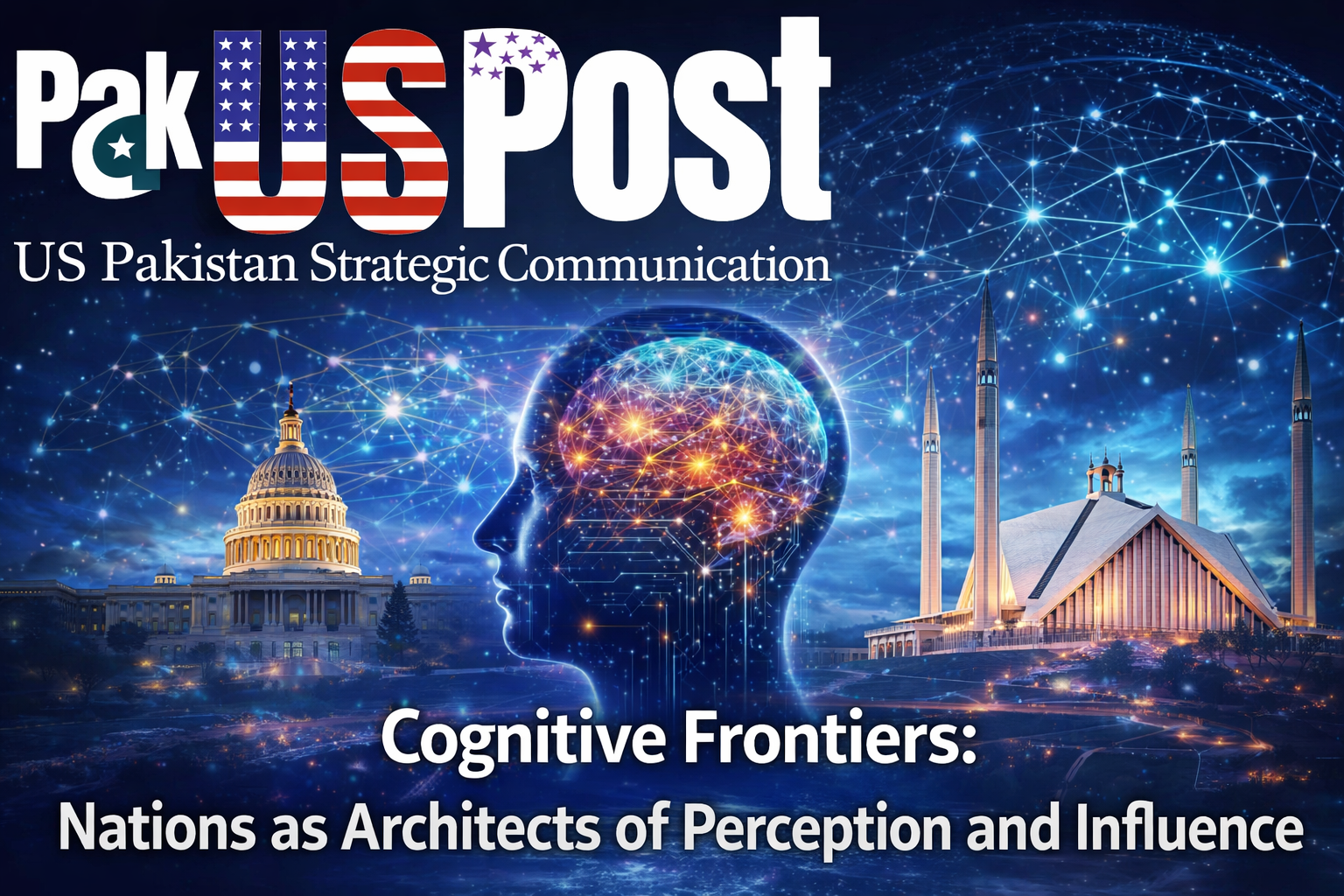
Cognitive Frontiers: Nations as Architects of Perception and Influence

Mar 24, 2026
In the evolving architecture of global influence, nations operate as architects of perception, shaping the cognitive landscapes in which societies, institutions, and international actors navigate information, belief, and strategic understanding. The United States has leveraged algorithmically structured platforms, legislative oversight, and Pentagon-endorsed frameworks