Diaspora Capital and Shifting Transnational Influence Architectures in Washington


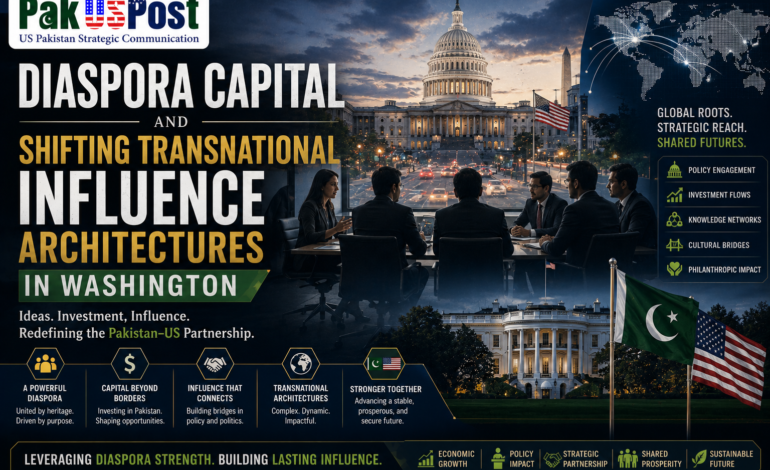
In the contemporary political ecology of the United States, diaspora formations have ceased to operate as passive sociological extensions of immigrant settlement and have instead evolved into structured nodes of influence that intersect with legislative behavior, campaign financing circuits, and policy interpretation mechanisms within Washington. What was once understood as community identity expression has gradually been reorganized into a calibrated system of advocacy production, where narratives are not merely voiced but engineered, sequenced, and strategically delivered into institutional pipelines that respond to visibility, funding density, and electoral sensitivity.
This transformation has not occurred in a vacuum. It reflects a broader recalibration of American domestic politics, in which fragmented electoral demographics now exert disproportionate influence over issue-specific policy formulation. Diaspora communities, particularly those originating from South Asia, have become increasingly proficient in navigating this architecture, deploying legal advocacy groups, political action committees, academic affiliations, and media amplification channels to shape perception economies in Washington. The result is not a unified diaspora voice, but rather a competitive marketplace of influence in which competing interpretations of homeland politics are continuously filtered through domestic American political incentives.
The South Asian diaspora in the United States presents a particularly complex case study. It is internally stratified along linguistic, regional, sectarian, and class-based lines that mirror, and in some cases intensify, the divisions of the region of origin. Yet within the U.S. political system, these distinctions are often flattened into simplified identity categories that are then mobilized for legislative engagement. This simplification creates a paradox: the more diverse and fragmented the diaspora becomes internally, the more monolithic it is perceived externally when it enters lobbying ecosystems. This distortion has implications for policy clarity, as Washington increasingly receives compressed narratives that obscure internal heterogeneity while amplifying selectively curated grievances or priorities.
Within this evolving configuration, diaspora capital must be understood not only in financial terms but also as symbolic and institutional capital. Financial contributions to electoral campaigns remain significant, but equally influential are contributions to think tanks, university research centers, policy forums, and digital advocacy platforms. These institutions act as intermediaries, translating diaspora concerns into policy language that is legible to federal agencies and congressional committees. Over time, this has created a semi-formalized circuit of influence in which diaspora-origin perspectives can enter policy discussions without necessarily passing through traditional diplomatic channels.
The implications for Pakistan–United States relations are particularly pronounced. Islamabad’s engagement with its diaspora has historically oscillated between symbolic outreach and episodic mobilization during moments of crisis. However, this approach is increasingly inadequate in an environment where diaspora influence is continuous rather than episodic. The absence of a structured, long-term institutional framework for engagement has allowed non-state actors, advocacy groups, and issue-specific coalitions to occupy interpretive space that would traditionally be associated with state-to-state communication.
As a consequence, narratives surrounding Pakistan in Washington are frequently shaped by intermediaries who operate with varying degrees of alignment to official state positions. These intermediaries may include advocacy organizations, policy entrepreneurs, and research fellows whose outputs, while often analytically rigorous, are nonetheless embedded within normative frameworks that do not necessarily reflect the strategic priorities of Islamabad. This divergence between state intent and diaspora-mediated representation introduces a layer of interpretive volatility into bilateral discourse.
At the same time, it would be analytically insufficient to treat diaspora influence as a distortion of diplomacy alone. It also functions as a corrective mechanism in certain contexts, providing channels through which marginalized or underrepresented perspectives can enter policy deliberation. The challenge lies not in the existence of such influence, but in its unregulated expansion and lack of institutional coherence. Without structured engagement protocols, diaspora advocacy risks becoming episodic, reactive, and disproportionately shaped by media cycles rather than sustained policy analysis.
Within Washington itself, diaspora influence operates inside a broader environment of political polarization and institutional segmentation. Legislative behavior is increasingly responsive to micro-constituency pressures, particularly in competitive electoral districts. This has created an environment in which foreign policy adjacent issues are sometimes refracted through domestic political competition, rather than assessed solely on strategic merit. Diaspora groups, by virtue of their organizational density and issue specialization, are well positioned to leverage this environment. However, this leverage is not uniformly distributed, and it often privileges well-resourced segments over less organized communities.
The digital dimension further complicates this architecture. Social media platforms have accelerated the velocity of narrative formation, enabling diaspora actors to mobilize opinion clusters in real time. Unlike traditional lobbying, which relies on institutional access and procedural engagement, digital advocacy operates through rapid amplification, emotional framing, and algorithmic visibility. This shift has reduced the temporal distance between geopolitical events and domestic political response in the United States, compressing policy reaction cycles and increasing volatility in narrative stabilization.
For Pakistan, this environment presents both opportunity and constraint. On one hand, diaspora engagement offers a pathway for soft influence, economic linkage, and reputational management. On the other hand, the absence of coordinated engagement strategy exposes national narratives to fragmentation and reinterpretation. The challenge is not merely communicative, but structural: Pakistan lacks a sustained institutional architecture that integrates diaspora engagement into its foreign policy apparatus in a manner that is analytically consistent and operationally continuous.
A more calibrated approach would require the establishment of a permanent diaspora engagement framework embedded within foreign policy institutions, with dedicated analytical units capable of mapping influence networks, tracking policy sentiment, and identifying leverage points within U.S. legislative and administrative systems. Such a framework would need to operate with a degree of analytical independence while remaining aligned with core state objectives, thereby reducing the gap between narrative projection and strategic intent.
In parallel, Washington faces its own governance considerations. The increasing entanglement of diaspora advocacy with domestic political processes raises questions about transparency, accountability, and foreign policy coherence. While diaspora participation in democratic processes is both legitimate and constitutionally protected, the absence of standardized disclosure mechanisms for transnational advocacy funding can obscure the origins and trajectories of policy influence. Strengthening transparency regimes in lobbying disclosures and think tank funding structures would contribute to a more intelligible policy environment without constraining legitimate civic participation.
There is also a need for institutional refinement in how diaspora perspectives are integrated into policy formulation. Rather than allowing ad hoc incorporation through fragmented channels, federal agencies could benefit from structured advisory mechanisms that consolidate diaspora input into analytically coherent formats. Such mechanisms would not eliminate diversity of opinion but would provide a filtering architecture capable of distinguishing between episodic sentiment and sustained strategic insight.
At a broader level, the evolution of diaspora capital reflects a transformation in how sovereignty, identity, and influence intersect in a digitized global environment. Traditional distinctions between domestic and foreign policy are increasingly porous, particularly in states with high levels of immigration and political pluralism. Diaspora communities now inhabit an intermediate space where they are simultaneously domestic constituencies and transnational actors. This dual positioning complicates conventional diplomatic frameworks, which were historically designed to operate between territorially bounded states rather than internally networked societies.
The policy implications are therefore multidimensional. For Washington, the task is to preserve democratic openness while ensuring analytical clarity in foreign policy formulation. For Islamabad, the imperative is to move beyond episodic diaspora engagement toward sustained institutional integration that recognizes the permanence of transnational political participation. For both, the underlying challenge lies in adapting to an environment where influence is no longer linear or hierarchical, but distributed across overlapping networks of communication, capital, and cognition.
Failure to adapt risks producing a policy environment characterized by interpretive noise, where signals of strategic importance are diluted by the velocity of competing narratives. Conversely, a calibrated institutional response could transform diaspora engagement into a stabilizing rather than distorting force, enabling more predictable and analytically grounded bilateral interaction.
In this context, diaspora capital should be understood not as an externality of migration but as an embedded feature of contemporary political systems. Its influence is neither inherently beneficial nor inherently disruptive; rather, it is structurally ambivalent, capable of reinforcing or destabilizing policy coherence depending on the institutional frameworks within which it operates. The task for policymakers is therefore not to restrict its existence, but to refine the conditions under which it is translated into actionable political insight.
As Washington and Islamabad navigate this evolving terrain, the central question is no longer whether diaspora influence matters, but how it is organized, interpreted, and incorporated into decision-making systems that were not originally designed to accommodate its scale or complexity. The answer to this question will shape not only bilateral relations but also the broader architecture of transnational political engagement in the coming decade.
A Public Service Message