

Green Technology and Energy Transition: Pakistan-U.S. Cooperation for Sustainable Development

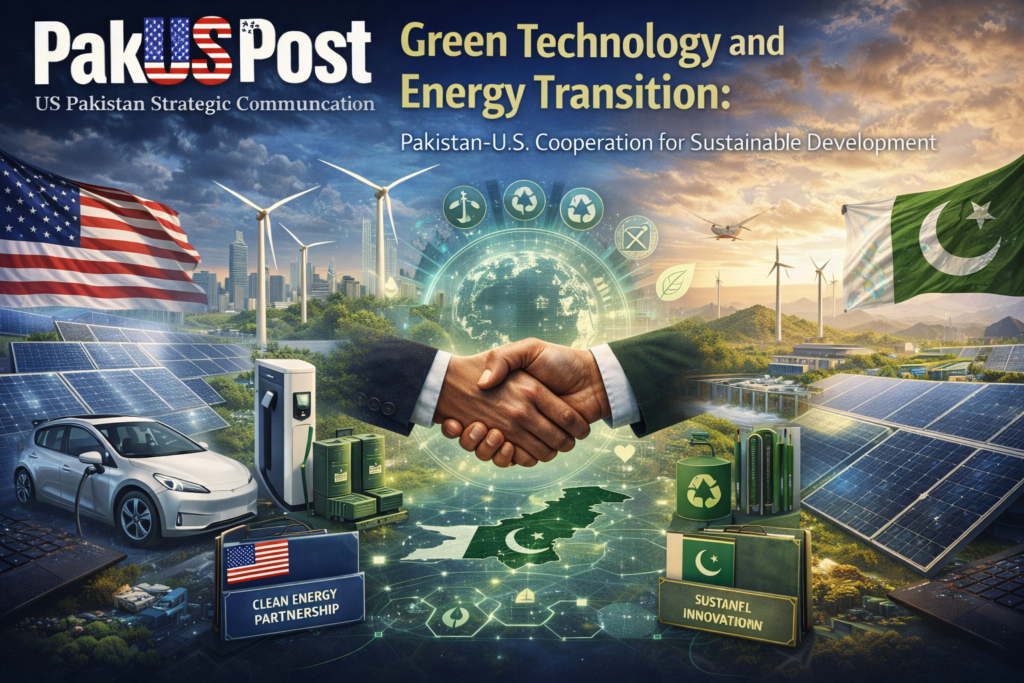
Pakistan’s energy and environmental landscape has reached a point of strategic urgency where systemic vulnerabilities intersect with global technological and climate imperatives. Persistent electricity shortages, reliance on imported fossil fuels, and escalating climate threats constrain economic growth and regional leverage. At the same time, the global transition to renewable energy and green technology, led by the United States, presents an unparalleled opportunity for Pakistan to align domestic reform with strategic engagement. For policymakers, this is a moment to convert domestic vulnerabilities into leverage by operationalizing U.S. expertise, financing, and technological innovation to advance energy security, climate resilience, and sustainable development, thereby strengthening Pakistan’s regional credibility and international standing.
Pakistan faces a complex set of challenges that must be addressed strategically. Its energy system remains heavily dependent on fossil fuels, making the country vulnerable to global price shocks and supply disruptions. Renewable energy penetration is constrained by fragmented regulations, financing gaps, and insufficient domestic capacity. Climate change compounds these vulnerabilities, with recurring floods, droughts, and extreme heat threatening infrastructure, agricultural output, and social stability. These challenges, however, also present distinct opportunities. Pakistan’s untapped solar, wind, and hydroelectric potential, combined with a growing domestic technological workforce, creates a platform for scalable collaboration with the United States, converting energy deficits into strategic advantage. To achieve this, policymakers should establish a structured energy diplomacy framework that clearly outlines Pakistan’s renewable energy potential, regulatory reforms, and incentives to attract U.S. participation while mitigating risks such as over-reliance on foreign technology or misalignment with domestic priorities.
A key pillar of this engagement is technology transfer. U.S. firms lead in solar photovoltaic systems, wind turbines, energy storage solutions, and smart-grid management, while Pakistan possesses both human capital and geographic advantage for deployment. The risk lies in inadequate local absorption or over-dependence on foreign expertise, but the opportunity is substantial: through joint ventures and structured skill development programs, Pakistan can cultivate domestic capacity, foster industrial growth, and achieve long-term technological self-reliance. Policymakers should implement formal training initiatives, establish technology incubation centers, and enforce intellectual property safeguards to ensure that knowledge transfer strengthens domestic innovation ecosystems.
Financing mechanisms are equally critical. Traditional dependency on limited domestic financing or ad-hoc bilateral aid exposes projects to delays and incompletion. By contrast, innovative structures such as green bonds, concessional financing, and public-private partnership models provide an avenue to de-risk investment and attract significant U.S. and multilateral participation. Policymakers should negotiate phased funding arrangements tied to performance metrics, embed transparent governance protocols, and ensure accountability to secure investor confidence while mitigating risks related to project execution or funding shortfalls.
Integration with broader national development objectives enhances the strategic value of energy transition projects. Renewable energy deployment should support industrial growth, generate employment, and modernize regional infrastructure. If uncoordinated, energy projects risk socio-economic displacement or underutilization, yet when properly aligned, they generate measurable benefits and demonstrate Pakistan’s proactive engagement to U.S. partners. Recommendations for policymakers include linking renewable energy initiatives to industrial zones, incentivizing green job creation, and embedding projects within climate adaptation strategies that strengthen both local resilience and strategic credibility.
Strategic communication plays a central role in consolidating achievements and securing long-term engagement. Under-communication of project successes may reduce U.S. collaboration and weaken negotiating leverage, but effectively publicizing measurable outcomes enhances credibility and attracts further cooperation. Policymakers should develop coordinated messaging strategies using think tanks, policy briefs, and international forums to showcase pilot projects, technology transfer, and alignment with global climate frameworks. By emphasizing tangible results, Pakistan reinforces its position as a reliable and capable partner in sustainable development initiatives.
Regional stabilization and climate resilience intersect meaningfully with energy projects. Border provinces and rural areas are highly vulnerable to climate shocks, which can exacerbate migration, social instability, and localized conflict. Integrating decentralized energy solutions, such as microgrids and community-based renewable systems, not only reduces these vulnerabilities but also presents measurable value to U.S. strategic interests. Operational recommendations include combining renewable energy deployment with resilient infrastructure development, linking initiatives to local governance structures, and monitoring socio-economic impact to ensure sustainable outcomes.
The evolution of this partnership can be traced through recent developments that illustrate both risk and opportunity. In April 2022, Pakistan signed a memorandum of understanding with U.S. agencies to pilot renewable energy and climate resilience programs, mitigating the risk of fragmented engagement and signaling commitment to long-term collaboration. By October 2022, joint feasibility studies for large-scale solar and wind projects in Sindh and Punjab demonstrated the opportunity to convert technical capacity into scalable national infrastructure. In March 2023, a technical collaboration agreement was finalized for wind infrastructure and smart-grid technology, reflecting the importance of structured governance to minimize execution risk. Subsequent regulatory reforms in July 2023 streamlined approvals and incentivized private-sector participation, addressing institutional risk while maximizing the opportunity for accelerated project deployment. Pilot projects inaugurated in January 2024 integrated workforce training and technology transfer, operationalizing recommendations for skill development and local absorption. By September 2025, green financing instruments developed in collaboration with U.S. development banks attracted multi-billion-dollar investments, reducing funding risk while ensuring operational continuity. The institutionalization of a strategic bilateral energy and climate dialogue in February 2026 further formalized mechanisms for monitoring, evaluation, and expansion, providing a structured platform to mitigate governance and execution risks while creating long-term opportunities.
By embedding risks, opportunities, and actionable recommendations directly into energy and climate strategy, Pakistan can convert renewable energy and green technology collaboration with the United States into a multidimensional tool for sustainable development, regional influence, and strategic leverage. Policymakers who operationalize this integrated framework will secure tangible economic, technological, and environmental benefits, strengthen bilateral trust, and enhance Pakistan’s credibility in global climate governance, transforming technical cooperation into long-term strategic advantage.
A Public Service Message