
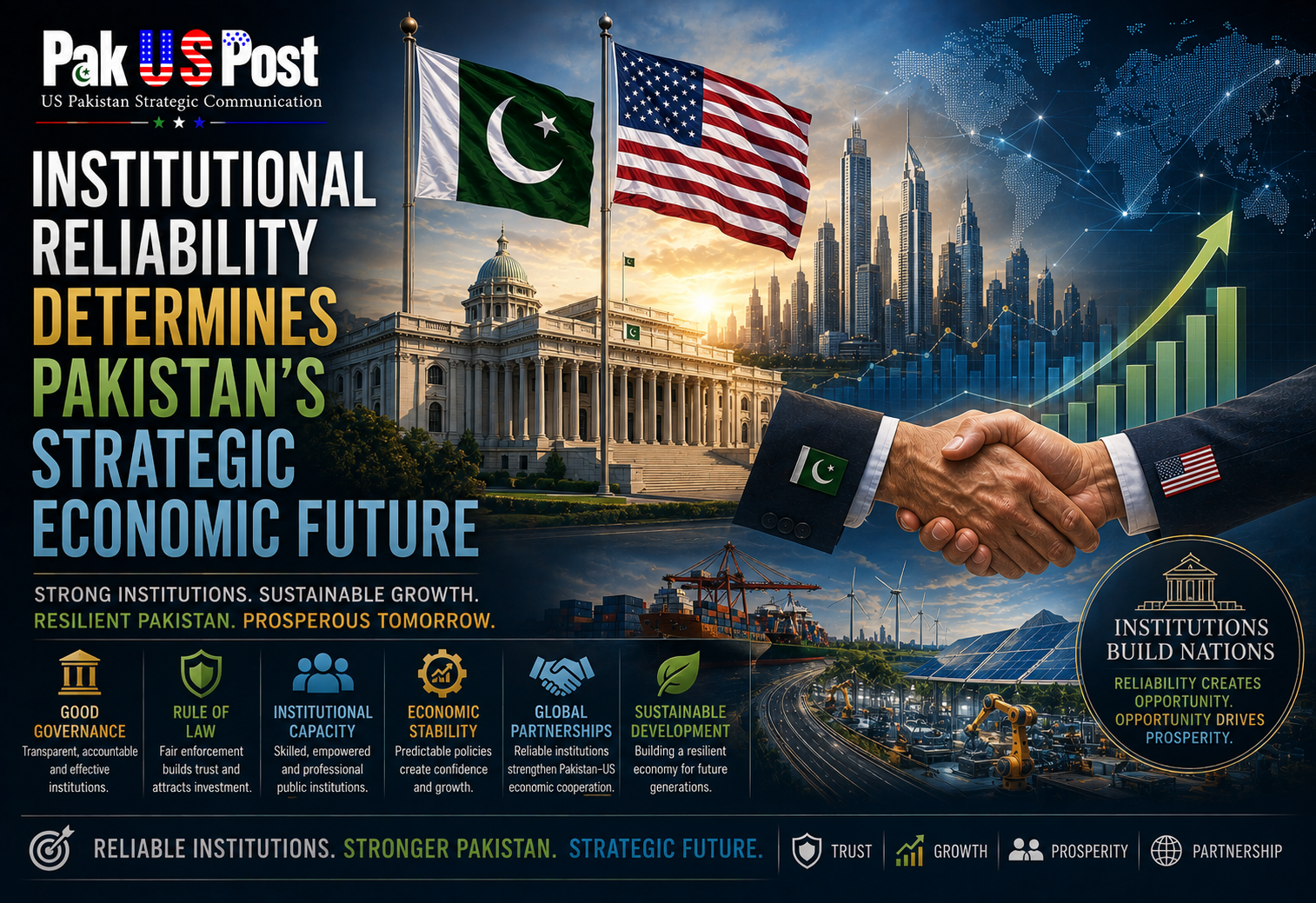
Institutional Reliability Determines Pakistan’s Strategic Economic Future

The international investment environment is undergoing a structural transformation. Capital is no longer governed merely by market size, resource abundance or fiscal concessions. Investors increasingly allocate resources according to a more exacting criterion, namely whether states possess institutions capable of delivering continuity, credibility

Provincial Power and the Pakistan US Economic Relationship
Pak US Post examines a structural anomaly that increasingly constrains the economic substance of the bilateral relationship: American commercial engagement is negotiated as though Pakistan were administratively concentrated in Islamabad, while the decisive instruments governing investment execution are dispersed across provincial capitals, development

Evidence Driven Regulation Strengthens Future Institutional Decision Quality
Evidence driven regulation has become one of the defining characteristics separating adaptive states from administratively constrained governments. Across advanced and emerging economies alike, public institutions increasingly recognise that regulatory authority alone is insufficient to produce effective governance. The quality of regulation depends upon

Pakistan Climate Security Beyond Fiscal Fragmentation
Pakistan’s climate vulnerability is no longer an environmental concern in isolation. It has become a structural stressor that cuts across fiscal stability, urban governance, agricultural productivity, and national security planning. What distinguishes the current phase is not the existence of climate risk, but
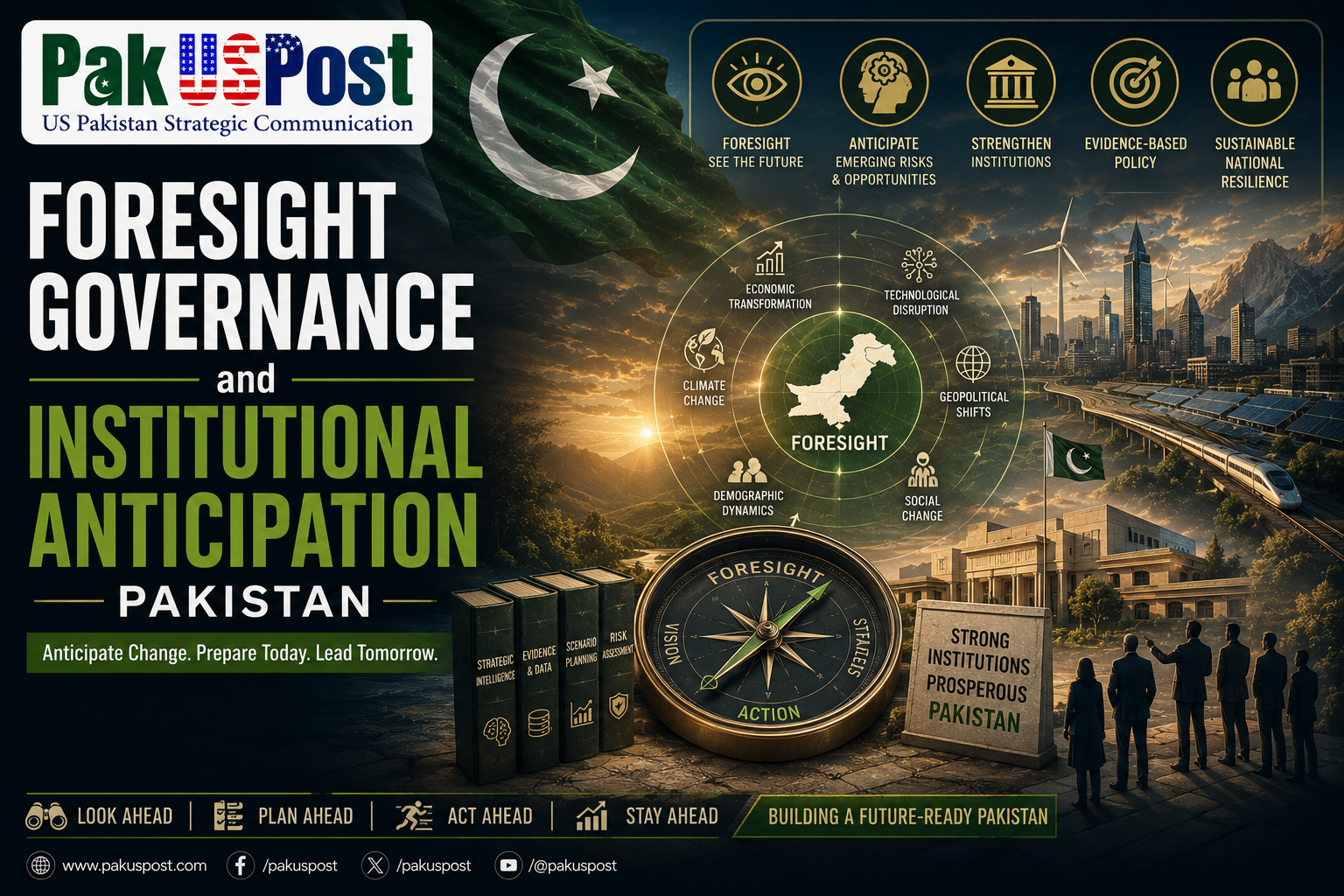
Foresight Governance and Institutional Anticipation Pakistan
Pakistan’s policy system operates in a continuous state of temporal inversion, where governance is consistently positioned after the event rather than before it. The dominant architecture of decision making is structured around response, adjustment, and containment, rather than anticipation, calibration, and prevention. This

Reducing Geoeconomic Vulnerability under External Constraint Regimes
Pakistan’s economic architecture is increasingly shaped by an external constraint regime that operates through overlapping mechanisms of tariff modulation, conditional liquidity provisioning, and supply chain reconfiguration led by advanced economies. Within this evolving geoeconomic order, sovereignty is no longer defined by formal autonomy

Institutional Reform as Foreign Policy Credibility and Investment Future
In the evolving grammar of international relations, the distinction between domestic governance and foreign policy has become increasingly porous. States are no longer evaluated solely on their external diplomatic conduct or strategic alignments, but also on the internal coherence of their institutions, the

AI MERGER GOVERNANCE AND DIGITAL SOVEREIGNTY IN GLOBAL ORDER
The accelerating consolidation of artificial intelligence industries across borders is quietly redrawing the architecture of global power. What once appeared as a technological competition among firms has now evolved into a structural struggle over sovereignty, information control, and cognitive infrastructure. Cross-border mergers, strategic

Civil Service Reform and Data State Pakistan Geopolitical Future Edge
Pakistan’s civil service stands at the intersection of historical continuity and structural obsolescence, a bureaucratic architecture originally designed for colonial administrative efficiency that now finds itself embedded in a twenty first century geopolitical economy defined by data sovereignty, algorithmic governance, and real time
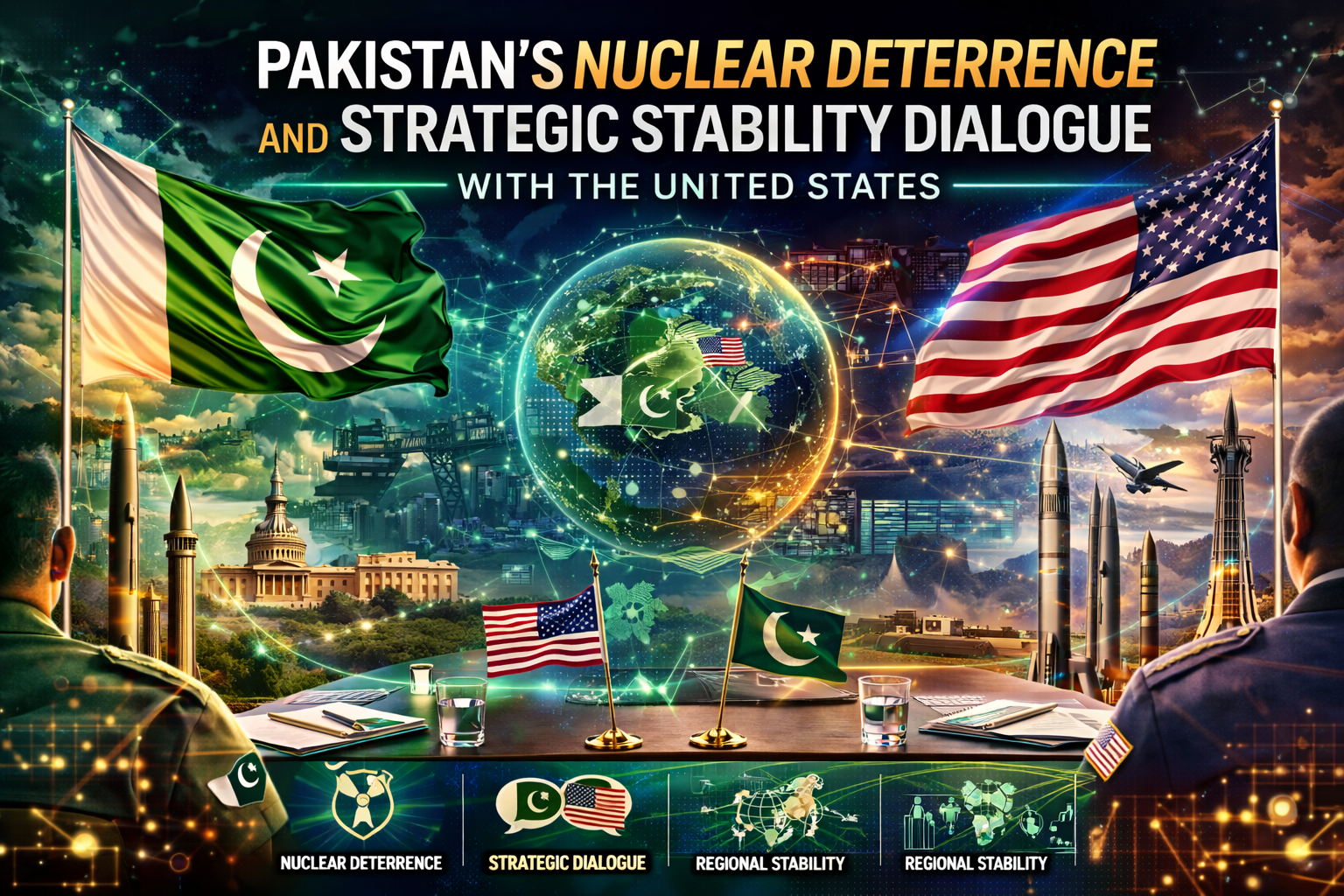
Pakistan’s Nuclear Deterrence and Strategic Stability Dialogue with the United States
Pakistan’s nuclear program remains a cornerstone of its national security architecture, ensuring strategic autonomy in a complex regional environment characterized by dynamic threats and evolving power balances. The nuclear doctrine, command and control architecture, and strategic deterrence posture of Pakistan not only serve