
Technology Diplomacy: Pakistan–US Collaboration and Competition in Innovation


The contemporary phase of engagement between Pakistan and the United States is increasingly defined by the expanding domain of technology diplomacy, where innovation, digital infrastructure, and knowledge economies intersect with strategic interests and global competition. In a world where technological capability has become a primary determinant of national power, the relationship between these two countries is being reshaped by both cooperation and competition in areas such as artificial intelligence, cybersecurity, digital governance, and innovation ecosystems. This transformation reflects a broader shift in international relations, where technology is no longer a neutral tool but a contested space that influences economic development, political sovereignty, and global influence.
Recent developments indicate a cautious yet meaningful expansion of technological engagement between Pakistan and the United States. This engagement is driven by a convergence of interests, albeit within an environment shaped by asymmetry in capability and influence. The United States, as a global leader in technological innovation, approaches this relationship with a focus on maintaining its strategic advantage while selectively enabling partners to integrate into its digital ecosystem. Pakistan, on the other hand, views technology cooperation as an essential pathway toward economic modernization, human capital development, and global competitiveness. This alignment of interests creates opportunities for collaboration, but it is accompanied by underlying tensions that reflect broader geopolitical realities.
One of the most significant areas of engagement lies in the development of Pakistan’s digital economy. The United States has supported initiatives aimed at fostering entrepreneurship, expanding digital infrastructure, and promoting innovation driven growth. Programs that connect Pakistani startups with global investors, mentorship networks, and technological expertise have contributed to the emergence of a vibrant startup ecosystem, particularly in urban centers such as Karachi, Lahore, and Islamabad. These initiatives have enabled a new generation of entrepreneurs to develop solutions in fields such as fintech, e commerce, health technology, and educational platforms.
The impact of this cooperation on Pakistan’s economy is increasingly visible. The growth of the technology sector has created employment opportunities for young professionals, particularly in software development, digital marketing, and data analysis. It has also facilitated the integration of Pakistan into global value chains, allowing local companies to access international markets and compete on a broader scale. The expansion of freelance platforms and remote work opportunities has further diversified income sources, providing economic resilience in a context of broader structural challenges. However, the benefits of this growth are unevenly distributed, with rural areas and marginalized communities often excluded from the digital transformation due to limited access to infrastructure and education.
Artificial intelligence represents another critical dimension of technology diplomacy between Pakistan and the United States. American institutions and companies have played a role in supporting research collaborations, capacity building initiatives, and knowledge exchange programs that introduce Pakistani professionals to advanced AI technologies. These efforts have the potential to transform sectors such as healthcare, agriculture, and public administration by enabling data driven decision making and improving efficiency. For example, AI applications in agriculture can enhance crop management and resource utilization, while in healthcare they can support diagnostics and patient care.
At the same time, the development and deployment of AI technologies raise important questions about governance, ethics, and sovereignty. The reliance on external expertise and platforms can create dependencies that limit Pakistan’s ability to shape its own technological trajectory. Issues related to data ownership, privacy, and algorithmic bias become particularly significant in this context. The alignment of Pakistan’s AI policies with US standards may facilitate collaboration but can also constrain the development of indigenous frameworks that reflect local priorities and values. This tension between integration and autonomy is a defining feature of technology diplomacy.
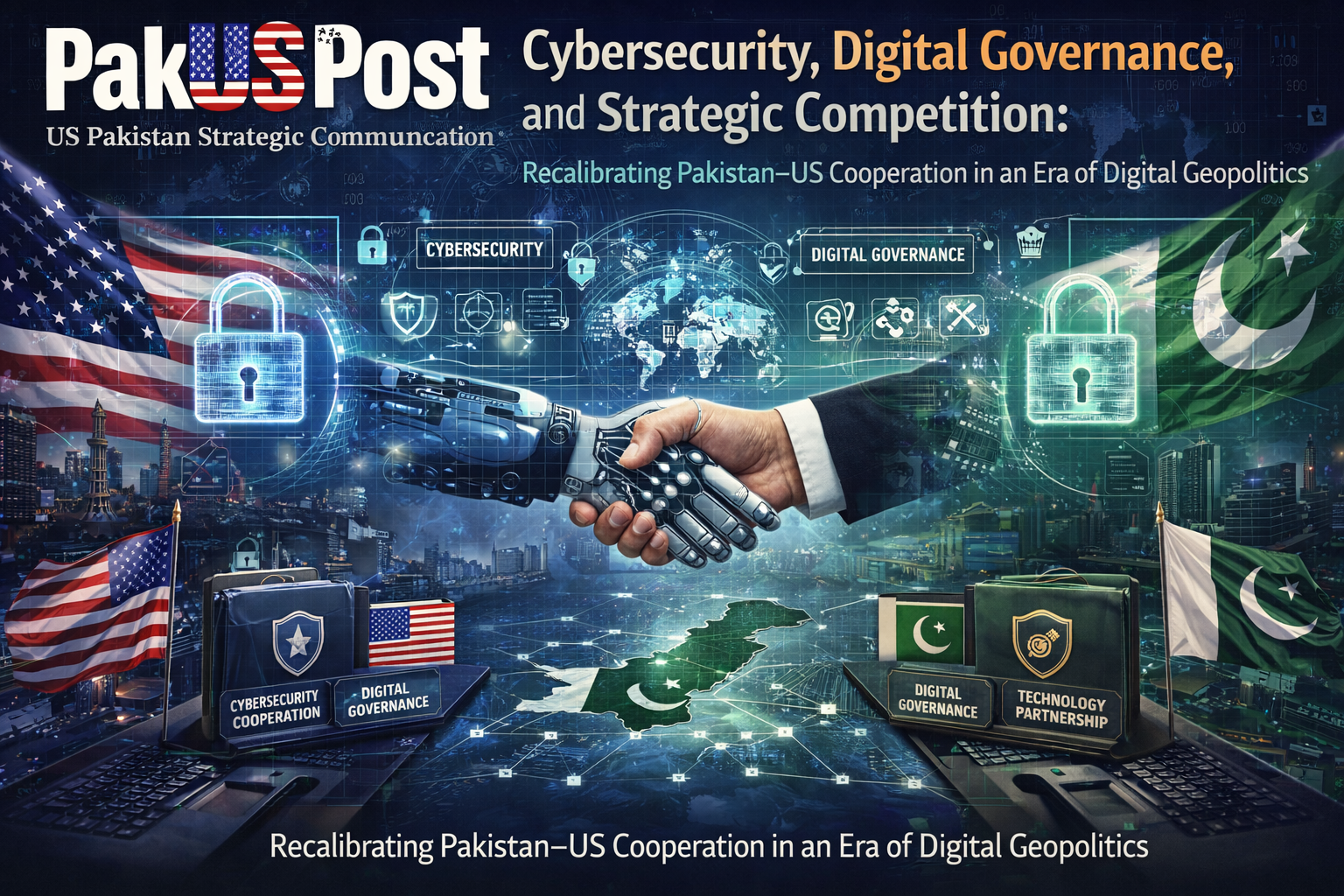
Cybersecurity cooperation has also gained prominence as both countries recognize the increasing importance of digital security in a connected world. The United States has engaged with Pakistan through training programs, technical assistance, and information sharing initiatives aimed at strengthening cyber resilience. These efforts are particularly relevant in the context of rising cyber threats that target critical infrastructure, financial systems, and government networks. For Pakistan, enhancing cybersecurity capabilities is essential not only for protecting national assets but also for building trust with international partners and investors.
However, cybersecurity cooperation is inherently complex, as it involves sensitive information and strategic considerations. The asymmetry in technological capability between Pakistan and the United States can create imbalances in the relationship, with Pakistan relying heavily on external support while navigating concerns about sovereignty and control. Additionally, the broader geopolitical environment influences the scope and nature of cooperation, particularly in relation to Pakistan’s ties with China, which is also a major player in the global technology landscape. Balancing these relationships requires careful policy calibration to avoid strategic overdependence on any single partner.
Digital infrastructure development is another area where collaboration and competition intersect. The expansion of broadband connectivity, data centers, and digital payment systems is essential for Pakistan’s economic transformation. The United States has supported initiatives that promote private sector investment and regulatory reform in these areas, encouraging a market driven approach to digital development. This approach aligns with broader US technology policy, which emphasizes open markets, innovation, and competition.
At the same time, Pakistan’s digital infrastructure landscape is influenced by multiple external actors, each offering different models of development. The presence of alternative partners introduces an element of competition that shapes the choices available to Pakistan. This competitive environment can be beneficial in terms of accessing diverse technologies and investment sources, but it also requires careful management to ensure coherence and sustainability. The challenge lies in developing a regulatory framework that balances openness with security, enabling innovation while protecting national interests.
The implications of technology diplomacy for Pakistan’s human capital are particularly significant. Collaboration with the United States provides access to advanced education, training programs, and research opportunities that can enhance the skills of Pakistani professionals. Scholarships, exchange programs, and partnerships between universities contribute to the development of a knowledge based workforce capable of driving innovation and economic growth. The exposure to global best practices and cutting edge technologies can have a transformative impact on individuals and institutions alike.
However, this dynamic also raises concerns about brain drain, as highly skilled professionals may seek opportunities abroad, particularly in the United States where the technology sector offers attractive prospects. While this migration can lead to remittances and knowledge transfer, it can also result in a loss of talent that affects Pakistan’s domestic capacity. Addressing this challenge requires policies that create incentives for skilled professionals to remain in or return to Pakistan, including investment in local industries, competitive salaries, and supportive innovation ecosystems.
The governance challenges associated with technology cooperation are complex and multifaceted. The rapid pace of technological change often outstrips the development of regulatory frameworks, creating gaps in areas such as data protection, digital rights, and platform accountability. Pakistan faces the task of developing policies that address these challenges while aligning with international standards to facilitate cooperation. The United States, as a major driver of global technology norms, plays a significant role in shaping these standards, influencing how countries like Pakistan approach regulation.
This dynamic creates both opportunities and constraints. On one hand, alignment with US standards can enhance interoperability and attract investment. On the other hand, it can limit policy flexibility and raise questions about the extent to which global norms reflect diverse perspectives. The negotiation of these norms is an ongoing process that involves not only governments but also private sector actors, civil society, and international organizations. For Pakistan, active participation in this process is essential to ensure that its interests are represented.
The broader strategic context of technology diplomacy cannot be overlooked. The global competition for technological leadership, particularly between the United States and China, shapes the environment in which Pakistan operates. As a country with significant development needs and strategic importance, Pakistan is both a partner and a potential arena for this competition. The choices it makes in terms of technology partnerships, standards, and infrastructure will have long term implications for its economic and political trajectory.
The risks associated with this evolving landscape include the potential for fragmentation, dependency, and strategic vulnerability. Overreliance on external technologies can create exposure to disruptions, whether due to geopolitical tensions or market dynamics. The lack of robust domestic capabilities can limit Pakistan’s ability to respond to these challenges effectively. Additionally, the intersection of technology with issues such as surveillance, privacy, and information control raises important ethical and political questions that require careful consideration.
At the same time, the opportunities presented by technology diplomacy are substantial. The ability to leverage international partnerships to accelerate development, enhance innovation, and integrate into global networks offers a pathway toward economic transformation. The growing emphasis on digitalization across sectors provides a foundation for improving governance, increasing efficiency, and expanding access to services. By strategically engaging with partners such as the United States, Pakistan can position itself as an active participant in the global technology landscape rather than a passive recipient.
Policy recommendations for advancing this agenda should focus on building domestic capacity, strengthening regulatory frameworks, and fostering inclusive growth. Pakistan needs to invest in education and skills development to ensure that its workforce is equipped to participate in the digital economy. This includes not only technical skills but also critical thinking and adaptability, which are essential in a rapidly changing environment. Strengthening institutions and governance mechanisms is equally important to ensure that technological development is aligned with national priorities and public interest.
For the United States, a balanced approach that supports Pakistan’s development while respecting its autonomy can enhance the effectiveness of technology cooperation. This involves moving beyond a purely strategic lens to recognize the developmental dimensions of the relationship. Collaborative initiatives that prioritize mutual benefit, knowledge sharing, and capacity building can contribute to a more sustainable partnership.
The future of technology diplomacy between Pakistan and the United States will depend on the ability of both countries to navigate the complexities of cooperation and competition in a rapidly evolving global landscape. The interplay between innovation, policy, and strategic interests will continue to shape the trajectory of this relationship. By approaching these challenges with a focus on inclusivity, resilience, and long term vision, both countries can harness the potential of technology to drive progress and strengthen their partnership.
As the digital age continues to redefine the contours of global power, the relationship between Pakistan and the United States offers a compelling example of how technology diplomacy can serve as both a bridge and a battleground. The choices made today will determine whether this engagement leads to shared growth and innovation or reinforces existing inequalities and dependencies. The path forward requires careful navigation, informed decision making, and a commitment to building a partnership that reflects the aspirations and realities of both nations.
A Public Service Message