

From Tariffs to Data Flows: The Strategic Transformation of Trade Diplomacy in Pakistan–US Economic Relations

US economic strategy in the twenty first century has increasingly shifted from traditional mechanisms of trade control toward complex architectures of regulatory governance that encompass digital services, cross-border data flows, and technological standards. The evolution of this approach reflects a broader transformation in
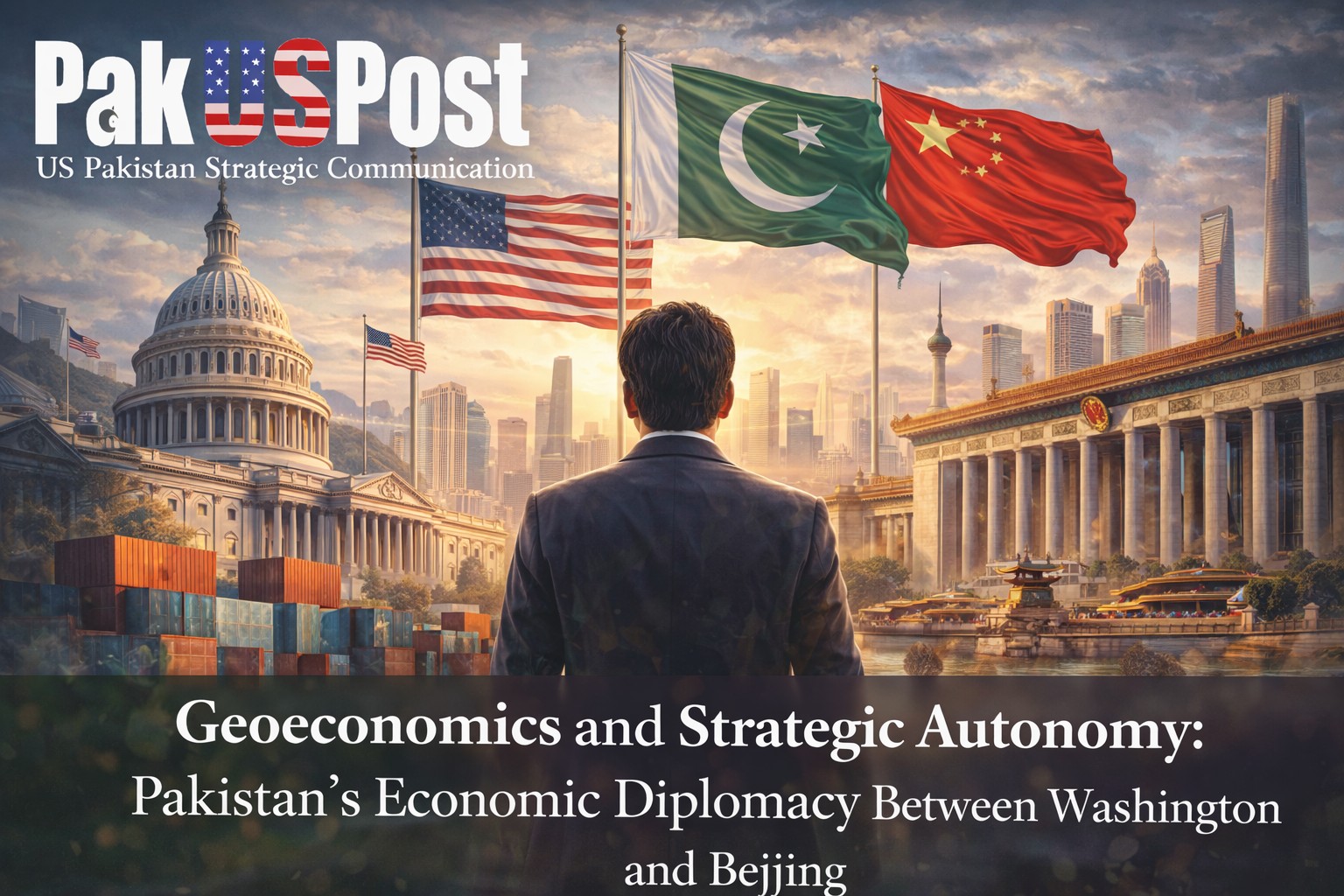
Geoeconomics and Strategic Autonomy: Pakistan’s Economic Diplomacy Between Washington and Beijing

The contemporary international system is increasingly characterized by the primacy of geoeconomics as a central instrument of statecraft, where trade policy, infrastructure investment, technological development, and financial instruments are deployed as deliberate tools of strategic influence. In this context, Pakistan occupies a highly

Economic Diplomacy in a Fragmenting Global Order: Pakistan–United States Strategic Convergence in the Age of Digital Trade and Geoeconomic Competition

The international political economy is presently undergoing a structural reconfiguration in which the distribution of economic power, technological capacity, and financial influence is no longer concentrated within a single hegemonic center. For much of the late twentieth century the global economic system operated