

Pakistan and America After the Age of Transaction

The long season in which Pakistan occupied Washington’s attention as a theatre of war, a corridor of access, and a reluctant but indispensable security subcontractor is over. Yet the end of that era has not settled the larger question of Pakistan’s place in
Energy Security, Oil Price Volatility, Pakistan Economic Stability, Inflation and Fiscal Pressure, Global Energy Markets
A sudden or gradual United States disengagement from the Middle East, combined with an expanded Iranian strategic footprint across key maritime chokepoints, would force Pakistan into an unusually compressed strategic environment where geopolitical, geo-strategic, economic, and financial risks converge rather than operate in

Iran Gulf Dominance and Pakistan Strategic Balancing Challenge
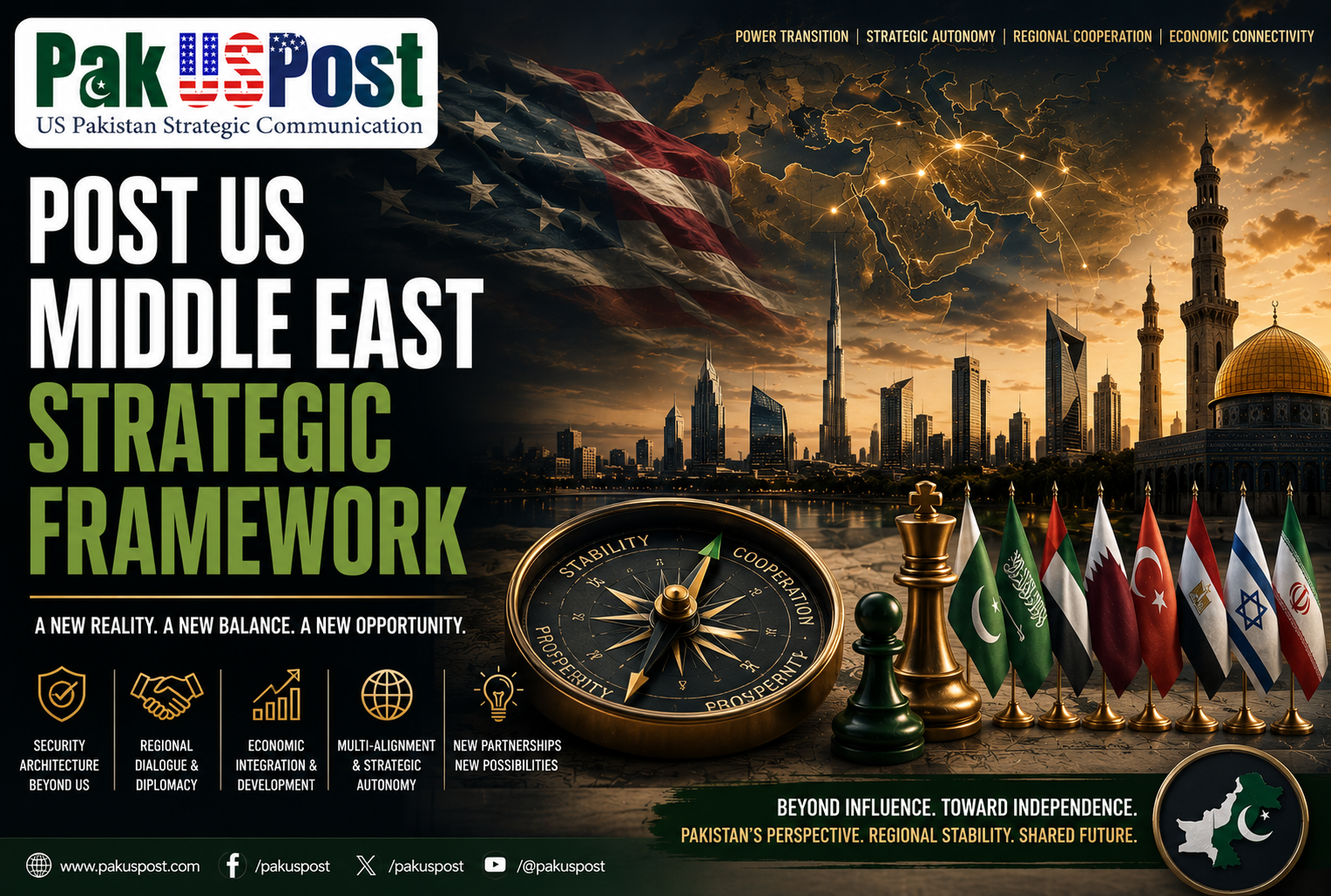
The hypothetical collapse of United States forward military presence in the Middle East, combined with a scenario in which Iran acquires effective influence over the Strait of Hormuz and extends its strategic reach toward Bab-el-Mandeb, would represent one of the most consequential geopolitical

Hormuz Crisis Could Redefine Pakistan Economic Trajectory
Few waterways in modern history possess the strategic significance of the Strait of Hormuz. Barely a few dozen kilometres’ wide at its narrowest point, this maritime corridor carries a substantial portion of the world’s seaborne energy trade and serves as the principal gateway

Pakistan Between Retreat And Regional Strategic Realignment
For more than seven decades, the Middle East has functioned as one of the principal pillars of American global power. Military bases stretching from the Gulf to the Eastern Mediterranean, naval dominance across vital sea lanes, security guarantees for Arab monarchies, and strategic
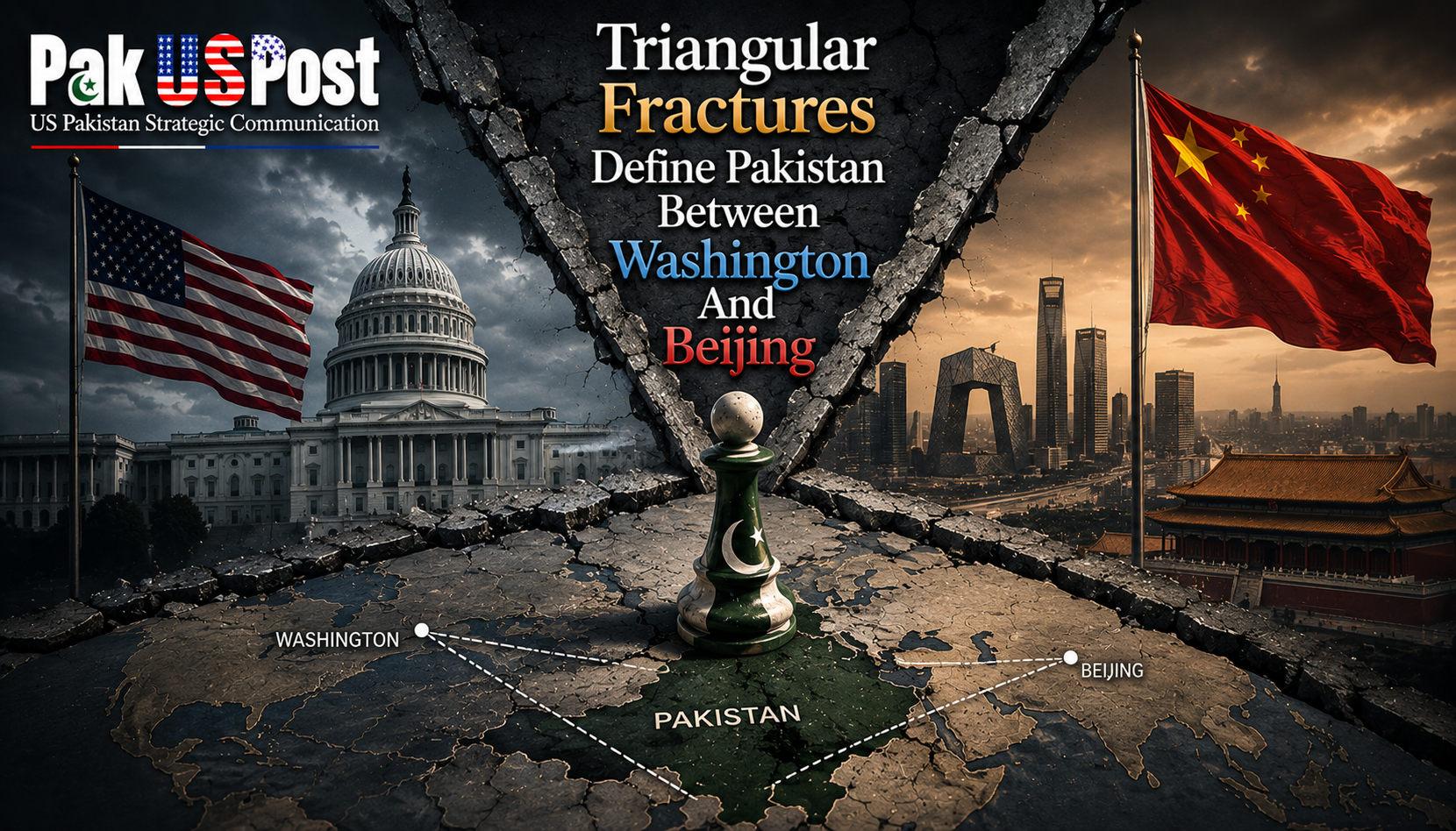
Triangular Fractures Define Pakistan Between Washington And Beijing
The strategic identity of the Pakistan in 2026 is increasingly being shaped not by bilateral diplomacy with the United States alone, but by its embedded position within an intensifying triangular configuration involving the China. This triadic structure is no longer a theoretical construct
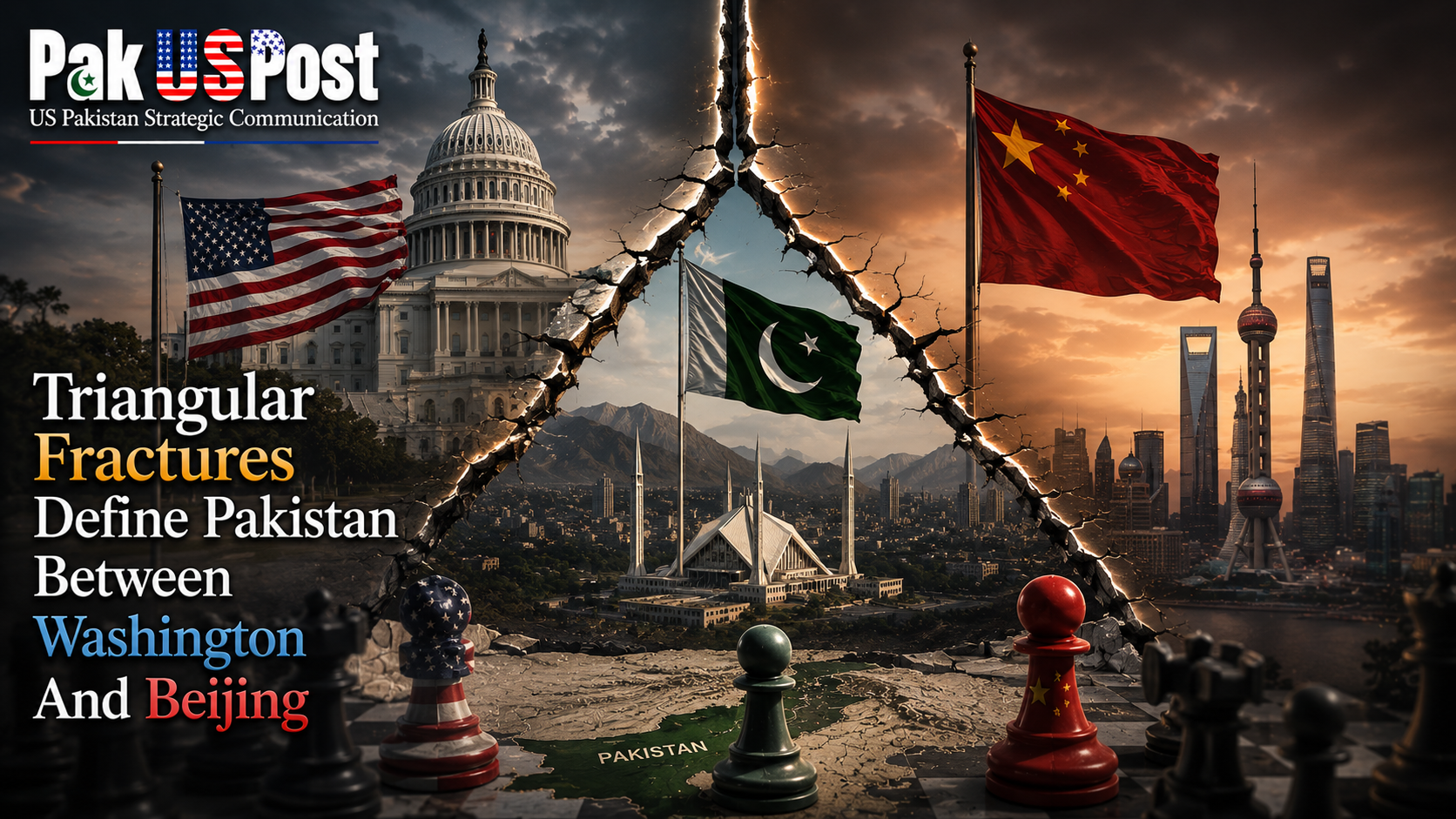
Triangular Fractures Define Pakistan Between Washington And Beijing
The strategic identity of the Pakistan in 2026 is increasingly being shaped not by bilateral diplomacy with the United States alone, but by its embedded position within an intensifying triangular configuration involving the China. This triadic structure is no longer a theoretical construct

Selective Relevance Reshapes Pakistan After America Abandons Afghan Battlefield
The withdrawal of the United States from Afghanistan did not merely conclude a military campaign. It dismantled the strategic architecture through which South Asia had been interpreted for more than two decades. The collapse of America’s longest war generated consequences extending far beyond

Mediating Ruins Through Calculated Ambiguity Across Fragmented Strategic Orders
The contemporary relationship between Pakistan and the United States is increasingly defined not through alliance permanence but through strategic improvisation inside an unstable international order that no longer possesses a singular center of gravity. The diplomatic choreography emerging between Washington and Islamabad in

Cognitive Geopolitics and Narrative Asymmetry in Pakistan United States Engagement
The contemporary evolution of Pakistan–United States relations is increasingly intelligible only through the prism of cognitive geopolitics, wherein perception, narrative construction, and epistemic framing acquire as much strategic significance as material capabilities. The bilateral equation is no longer reducible to diplomatic exchanges or