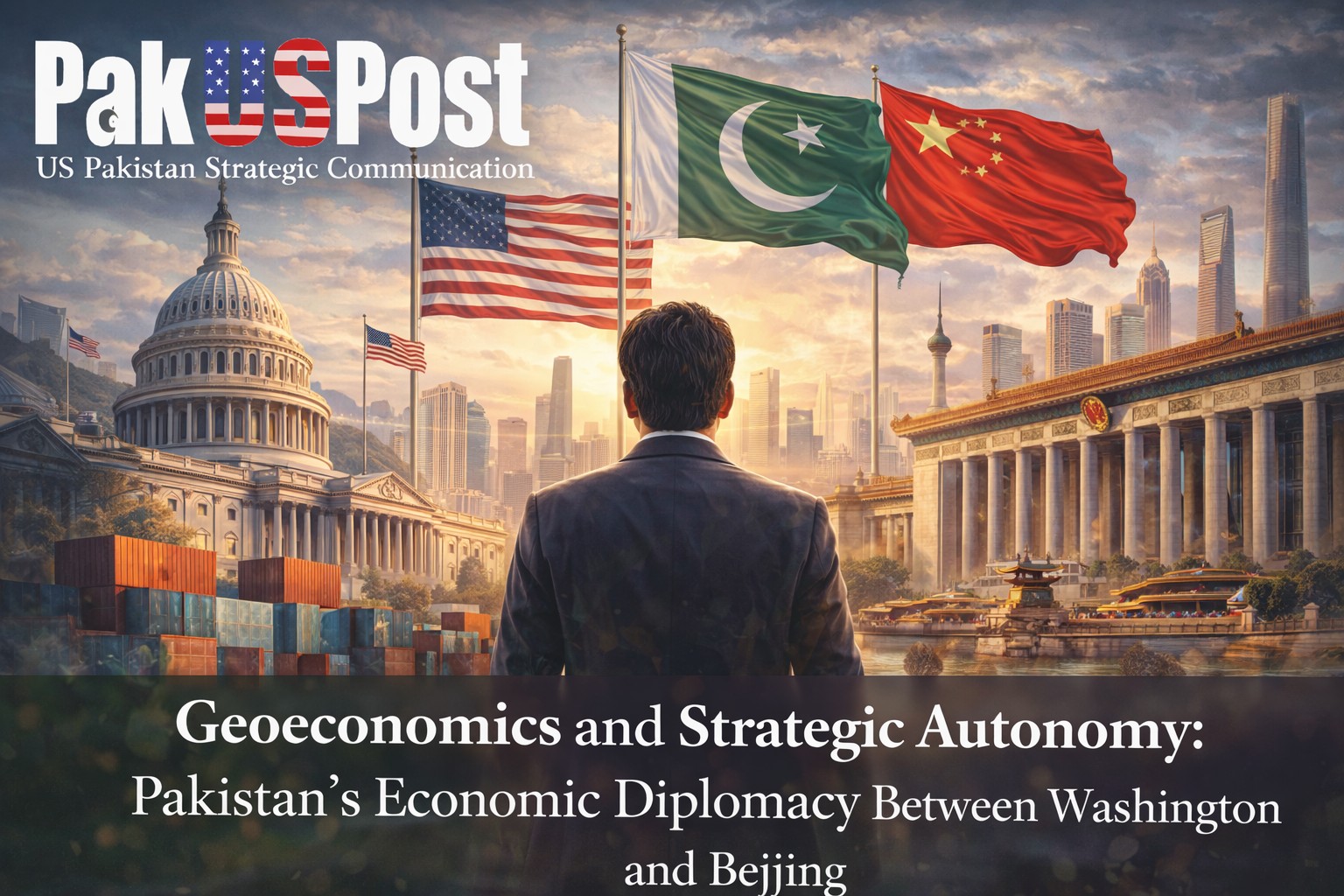

Economic Diplomacy and Technology Collaboration: Enhancing Pakistan–U.S. Engagement


In the contemporary era, strategic partnerships are no longer determined solely by military or geopolitical calculations; economic strength, technological capacity, and digital governance have emerged as decisive instruments of influence. For Pakistan, its relationship with the United States offers a unique opportunity to leverage economic diplomacy and technology collaboration to strengthen national development, regional influence, and international credibility. The challenge for policymakers is to convert potential into actionable strategy, aligning domestic reforms with global standards, securing U.S. cooperation, and enhancing Pakistan’s strategic autonomy in economic and technological spheres.
Pakistan’s current economic landscape presents both challenges and opportunities. While the country faces structural vulnerabilities such as fiscal deficits, energy constraints, and regulatory bottlenecks, it also possesses significant potential in sectors aligned with U.S. priorities, including digital services, renewable energy, e-commerce, and human capital-driven innovation. By integrating domestic economic reforms with targeted bilateral engagement, Pakistan can attract investment, access advanced technologies, and improve its competitive position in global markets. For policymakers, this is a strategic imperative: economic diplomacy must be as sophisticated and proactive as security cooperation to maximize national benefit.
The first step is the development of a cohesive economic-technology strategy that clearly articulates Pakistan’s comparative advantages, priority sectors, and reform agenda. This strategy should identify technology partnerships, trade facilitation measures, regulatory alignment opportunities, and investment incentives that make Pakistan an attractive and reliable partner for the United States. By presenting a structured, transparent framework, Islamabad can enhance investor confidence, streamline negotiations, and signal long-term policy commitment, thereby securing sustainable collaboration.
A critical area of opportunity lies in digital technology collaboration. U.S. firms lead in software, AI, cloud computing, and cybersecurity technologies. Pakistan’s growing IT workforce, expanding start-up ecosystem, and strategic location for regional digital hubs position it to benefit from technology transfers, joint ventures, and capacity-building initiatives. Policymakers should create incentives for U.S.-Pakistan joint ventures, including tax relief, intellectual property protections, and streamlined regulatory approvals, while ensuring that domestic talent benefits from knowledge transfer and skills development. By institutionalizing public-private partnerships in technology, Pakistan can establish itself as a regional innovation hub, enhancing economic resilience and attracting long-term strategic investment.
Renewable energy and climate technology represent another domain where Pakistan can align with U.S. priorities while advancing domestic development. Energy shortages, grid instability, and climate vulnerability pose constraints on economic growth, yet these challenges can be transformed into avenues for bilateral collaboration. Policymakers should negotiate frameworks for U.S. investment in solar, wind, and energy-efficiency projects, including technical assistance, financing structures, and joint research initiatives. Such collaboration not only addresses domestic energy security but positions Pakistan as a credible partner in global climate governance, a priority for U.S. foreign policy.
Trade and market access are equally critical. Pakistan must align its regulatory frameworks with U.S. standards to facilitate exports, reduce non-tariff barriers, and expand participation in supply chains. This requires legal reform, standards harmonization, and digital trade facilitation measures that make Pakistan’s goods and services competitive globally. Policymakers should focus on sectors where Pakistan can provide comparative advantage textiles, software services, pharmaceuticals, and renewable energy components—while ensuring that compliance mechanisms meet U.S. and international expectations.
Institutional capacity is central to operationalizing these initiatives. Pakistan’s economic and trade ministries, technology agencies, and investment boards must be empowered to coordinate efficiently, make evidence-based decisions, and negotiate effectively with U.S. counterparts. Embedding technology advisory units, data analytics divisions, and investment facilitation teams within government structures will enable Pakistan to respond dynamically to emerging opportunities, reduce bureaucratic delays, and enhance credibility in bilateral engagements.
Strategic communications and public diplomacy are equally vital. Policymakers must highlight Pakistan’s economic and technological contributions through think tanks, policy briefs, and international forums. Demonstrating the country’s commitment to digital governance, investment transparency, and market openness enhances Pakistan’s bargaining position with Washington and reinforces its image as a capable, forward-looking partner. Effective messaging strengthens confidence, attracts private-sector collaboration, and solidifies Pakistan’s place in U.S.-led economic and technological initiatives.
Timeline of Recent Developments (Economic and Technological Cooperation Context):
- January 2024: Pakistan hosts a bilateral innovation summit with U.S. technology investors, establishing structured collaboration frameworks for startups.
- July 2025: Strategic economic dialogue expands to include cybersecurity, AI, and digital trade facilitation; joint research initiatives formalized.
- February 2026: Pakistan finalizes sector-specific investment incentive packages, attracting multi-billion-dollar U.S. private sector commitments in technology and renewable energy.
Risk-Opportunity Matrix for Pakistan’s Economic and Technological Engagement with the U.S.:
| Dimension | Risks | Opportunities / Policy Levers | Operational Recommendations |
| Technology Collaboration | Over-reliance on U.S. tech could reduce autonomy; intellectual property risks. | Transfer of knowledge and skill development; joint ventures in AI, IT, and cybersecurity. | Create public-private partnership incentives and legal safeguards for IP and technology transfer. |
| Trade & Market Access | Non-compliance with U.S. regulatory standards could restrict exports. | Expand global market access for textiles, pharmaceuticals, and software services. | Align domestic standards with U.S. and international norms; implement digital trade facilitation policies. |
| Energy & Climate | Delayed project implementation could hinder credibility; financing gaps. | Collaboration in renewables and energy efficiency enhances domestic growth and U.S. engagement. | Negotiate financing frameworks, technical assistance agreements, and joint research initiatives. |
| Institutional Capacity | Fragmented bureaucracy and lack of inter-agency coordination could impede results. | Streamlined structures enable effective negotiation, project implementation, and monitoring. | Establish technology advisory units, investment facilitation teams, and data analytics divisions within agencies. |
| Strategic Narrative | Failure to communicate achievements may reduce investor and U.S. confidence. | Effective messaging enhances credibility and facilitates future collaboration. | Leverage think tanks, policy briefs, and international forums to publicize initiatives and economic reforms. |
| Risk Mitigation | Economic shocks, regulatory delays, or political instability could derail cooperation. | Proactive risk planning ensures continuity and strengthens negotiating position. | Develop contingency plans, phased investment schedules, and legal safeguards for bilateral agreements. |
| Multilateral Leverage | Misalignment with regional standards or reluctance to adopt best practices could reduce influence. | Lead in regional technology and trade initiatives to enhance credibility. | Initiate regional frameworks for digital trade, technology collaboration, and renewable energy projects. |
By adopting this integrated approach, Pakistan can convert economic diplomacy and technology collaboration into strategic tools that advance national development, enhance international credibility, and strengthen the bilateral relationship with the United States. Policymakers who embrace this framework will secure tangible economic and technological benefits, enhance Pakistan’s negotiating leverage, and ensure the country is recognized as a proactive, capable, and reliable partner in global economic and technological arenas.
A Public Service Message