
Climate Finance and Energy Dependency Paradox


The accelerating global transition towards decarbonisation has elevated climate finance into a central pillar of twenty first century economic diplomacy, reshaping the interface between development, technology transfer, and geopolitical influence. For climate vulnerable economies such as Pakistan, this evolving financial architecture presents both an unprecedented opportunity and a profound structural dilemma. On one hand, the scale of climate induced risks, ranging from glacial melt and monsoon volatility to chronic energy insecurity, necessitates external financial inflows to support adaptation and mitigation. On the other hand, the modalities through which climate finance is mobilised, allocated, and monitored increasingly embed new forms of conditionality that may deepen technological dependence and external policy influence rather than alleviate structural vulnerability.
The United States and other advanced economies have positioned climate finance as a strategic instrument within broader global governance frameworks, channelling resources through multilateral development banks, green investment funds, and bilateral climate initiatives. While these mechanisms are formally designed to support global public goods, they simultaneously reflect a governance logic in which access to capital is tied to compliance with environmental, institutional, and market oriented benchmarks. These benchmarks, although framed in universal sustainability terms, often privilege technological systems, regulatory standards, and financial models developed in advanced economies, thereby shaping the direction of energy transitions in recipient countries.
For Pakistan, the urgency of climate adaptation is not abstract but existential. The increasing frequency of extreme weather events, coupled with structural energy shortages and water stress, places the country at the frontline of global climate vulnerability. This vulnerability strengthens the case for large scale climate finance inflows to support renewable energy expansion, climate resilient infrastructure, and agricultural adaptation systems. Yet the critical policy question is whether such inflows can be absorbed in a manner that builds endogenous capacity or whether they risk locking Pakistan into externally dependent technological ecosystems.
The current structure of global green financing often prioritises project based funding models that rely heavily on imported technologies, foreign consultancy frameworks, and externally certified implementation mechanisms. In many cases, renewable energy projects, particularly in solar and wind sectors, are developed through imported hardware and foreign engineering expertise, with limited domestic industrial participation. While this accelerates deployment, it also constrains the development of indigenous manufacturing capabilities in critical green technologies. Over time, this dynamic can create a structural dependence on external suppliers for maintenance, upgrades, and technological evolution, thereby limiting true energy sovereignty.
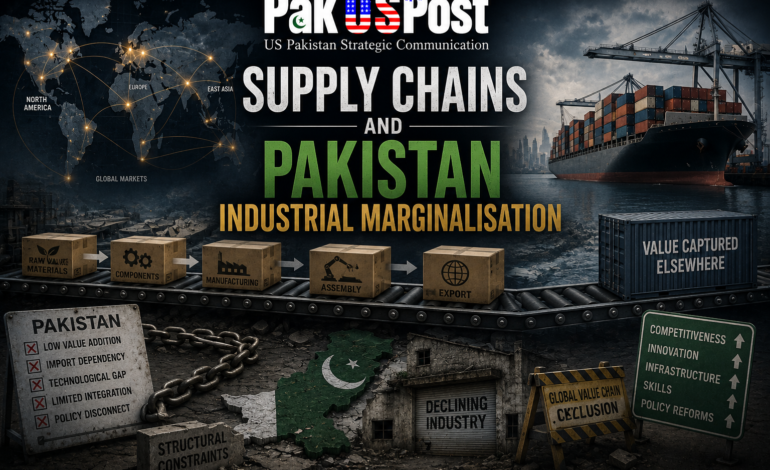
The energy transition discourse is increasingly dominated by narratives of green industrial transformation, where countries are expected not only to adopt clean energy systems but also to integrate into global green value chains. However, participation in these value chains is highly uneven. Countries with advanced technological ecosystems are positioned to capture high value segments such as battery manufacturing, grid intelligence systems, and advanced solar technologies, while developing economies often remain confined to installation, consumption, and basic assembly functions. Pakistan risks being situated within this lower tier unless deliberate industrial policy interventions are undertaken to move up the technological ladder.
A further layer of complexity arises from the financial architecture of climate funding itself. Many climate finance instruments are structured as blended finance, concessional loans, or risk mitigation facilities rather than direct grants. While these instruments reduce upfront fiscal burden, they also introduce long term repayment obligations and financial oversight mechanisms that may influence domestic fiscal priorities. In a macroeconomic context already characterised by fiscal constraints and external debt exposure, the expansion of climate related borrowing must be carefully calibrated to avoid exacerbating sovereign financial vulnerability under the guise of green transition.
The geopolitical dimension of climate finance is becoming increasingly visible as major powers seek to align environmental leadership with strategic influence. The United States, European Union, and emerging economies such as China are all actively competing to shape global green standards, supply chains, and financing norms. Within this competitive environment, climate finance becomes not only a developmental tool but also a mechanism for projecting regulatory influence and technological leadership. For Pakistan, navigating this landscape requires a nuanced strategy that avoids over reliance on any single external source while maximising access to diverse financing channels.
Energy transition pathways in Pakistan are particularly constrained by the structural dominance of fossil fuel based generation, energy import dependency, and distribution inefficiencies. While renewable energy potential is significant, particularly in solar and hydropower sectors, the integration of these resources into a stable and efficient energy grid requires substantial investment in transmission infrastructure, storage technologies, and grid management systems. These areas are precisely where technological dependency risks are most pronounced, as advanced grid technologies and storage systems are currently dominated by a limited number of global suppliers.
The policy challenge, therefore, is not merely to attract climate finance but to strategically embed it within a broader framework of energy sovereignty. This requires a deliberate shift from project centric financing to system level transformation planning, where domestic capacity building, technology transfer, and local manufacturing are integral components of climate investment agreements. Without such safeguards, climate finance risks reinforcing a dual structure in which Pakistan remains a consumer of green technologies rather than a producer or innovator within the global energy transition.
Institutional capacity is central to this transformation. Effective absorption of climate finance requires strong regulatory frameworks, transparent project evaluation systems, and technically skilled public institutions capable of negotiating complex financing arrangements. At present, gaps in institutional coordination and technical expertise limit Pakistan’s ability to fully leverage available climate funding in a strategic manner. Strengthening these capacities is essential not only for efficient fund utilisation but also for ensuring that climate investments align with national development priorities.
Agriculture, which remains highly vulnerable to climate variability, represents another critical frontier for climate finance deployment. Investments in climate smart agriculture, water management systems, and drought resistant crop technologies have the potential to significantly enhance resilience. However, here too the balance between imported solutions and indigenous innovation will determine whether climate adaptation strengthens or weakens long term self reliance.
Ultimately, the question confronting Pakistan is whether climate finance will function as a bridge towards sustainable autonomy or as a new layer of dependency within an already constrained economic structure. The answer depends on the strategic choices made at the intersection of energy policy, industrial development, and financial governance. If climate finance is absorbed passively, it may deepen technological reliance and external oversight. If, however, it is integrated into a coherent national strategy of energy transition and industrial upgrading, it could serve as a catalyst for structural transformation.
The global climate order is still in formation, and its rules are not yet fully consolidated. This transitional moment offers limited but significant space for policy agency. For Pakistan, the imperative is to move beyond reactive participation towards proactive shaping of its climate and energy future. Only by embedding sovereignty within sustainability can climate finance be transformed from a vector of dependency into an instrument of long term economic resilience and strategic autonomy.
A Public Service Message