
Manufactured Consensus Shapes Pakistan’s Foreign Policy Beyond Public Democratic Accountability

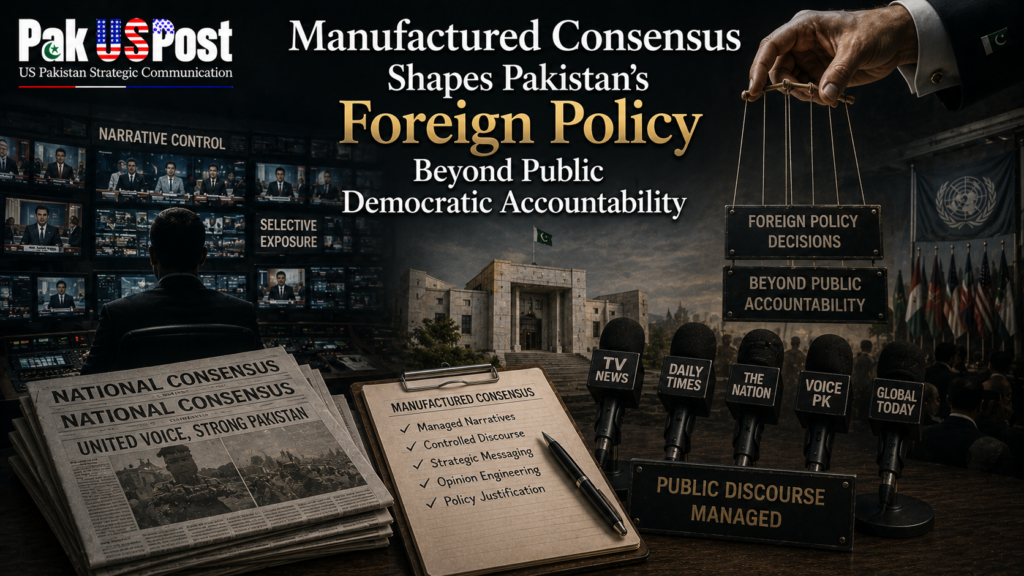
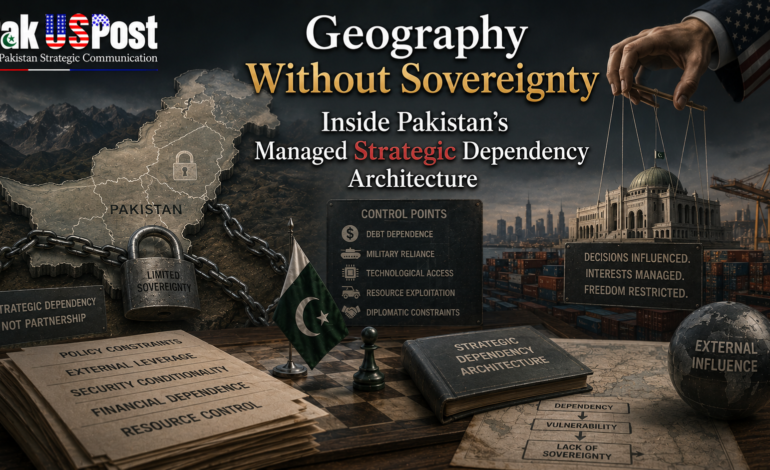
Pakistan’s foreign policy establishment increasingly operates within a carefully managed ecosystem of narrative construction where strategic communication, media securitization, elite consensus manufacturing, and institutional gatekeeping collectively shape the national understanding of external affairs. The deeper concern emerging within sophisticated policy circles is not merely that narratives are controlled, but that the architecture of narrative production itself has become inseparable from the preservation of elite strategic authority. In such an environment, foreign policy ceases to function as a transparent articulation of national interest and instead evolves into a curated psychological framework designed to maintain institutional legitimacy during periods of structural fragility.
The modern Pakistani state exists simultaneously within two competing realities. The first is the operational state confronting debt dependency, inflationary distress, diplomatic uncertainty, technological weakness, and governance fatigue. The second is the symbolic state projected through media ecosystems, strategic signaling, patriotic spectacle, and controlled geopolitical storytelling. Increasingly, the symbolic state dominates public perception while the operational state struggles beneath layers of managed optimism, securitized rhetoric, and emotional nationalism.
This divergence is not accidental. It reflects the gradual evolution of a strategic culture in which narrative management has become an instrument of state stabilization. The establishment understands that in a fragmented political environment, perception itself acquires security value. Public morale, institutional credibility, diplomatic posture, and strategic ambiguity all depend upon controlling interpretive frameworks surrounding national events. Consequently, foreign policy communication increasingly prioritizes psychological cohesion over analytical transparency.
This phenomenon has intensified under conditions of digital acceleration. The traditional monopoly once exercised through state broadcasting and controlled editorial structures has evolved into a far more complex ecosystem involving television panels, social media influence operations, algorithmic amplification, strategic leaks, cyber nationalism, retired security commentators, think tank networks, and emotionally engineered digital campaigns. Information no longer merely informs. It mobilizes, polarizes, disciplines, and psychologically conditions entire populations in real time.
Pakistan’s strategic institutions have adapted to this transformation with considerable sophistication. Official ambiguity is frequently supplemented through unofficial signaling. Television debates amplify preferred narratives without requiring formal state ownership. Selective disclosures shape public interpretation while preserving deniability. Digital outrage cycles marginalize dissenting perspectives before substantive debate can emerge. This creates what many analysts now describe as a managed perception architecture where national discourse appears pluralistic externally while remaining structurally constrained internally.
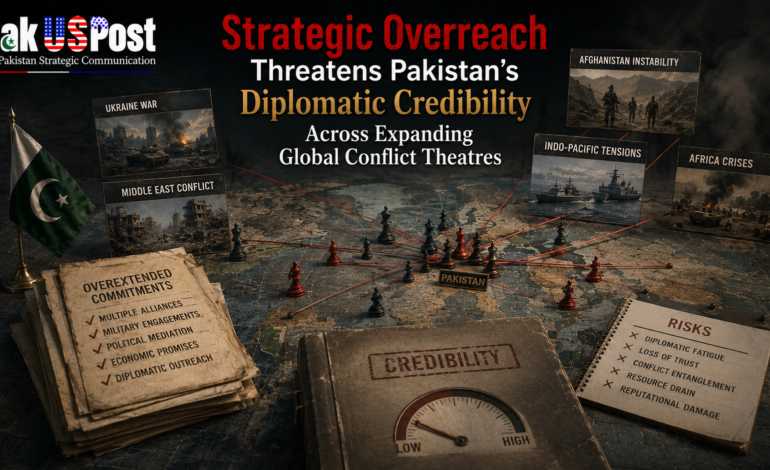
The implications for foreign policy are profound. Public understanding of relationships with Washington, Beijing, Tehran, Riyadh, New Delhi, and global financial institutions is increasingly filtered through emotionally charged binaries rather than nuanced strategic analysis. External actors are alternately portrayed as existential threats, indispensable allies, civilizational partners, or conspiratorial manipulators depending upon prevailing institutional requirements. Such framing simplifies complex geopolitical realities into psychologically consumable narratives.
The United States occupies a particularly complicated position within this framework. Anti American sentiment remains politically useful across multiple ideological constituencies, yet operational engagement with Washington continues through security coordination, intelligence cooperation, financial diplomacy, technological dependence, and regional crisis management. This duality produces a paradoxical discourse environment where hostility and dependence coexist simultaneously. Public rhetoric often emphasizes sovereignty and resistance, while institutional practice reflects pragmatic accommodation.
This contradiction is carefully managed through selective narrative calibration. Strategic cooperation is framed as necessity rather than alignment. Diplomatic engagement is presented as tactical rather than structural. Economic dependence is minimized rhetorically even while financial stabilization frequently depends upon institutions influenced by Washington. Such narrative balancing allows the state to preserve nationalist legitimacy without fully severing indispensable international relationships.
China, meanwhile, has been integrated into Pakistan’s strategic imagination through an entirely different narrative mechanism. Beijing is frequently represented as a civilizationally neutral partner offering developmental salvation without political conditionality. Corridor diplomacy was initially marketed domestically not merely as infrastructure investment but as historical transformation capable of repositioning Pakistan at the center of Eurasian connectivity. The narrative surrounding Chinese partnership became deeply aspirational, almost redemptive.
Yet this framing obscured significant structural realities. Debt sustainability concerns, security vulnerabilities, bureaucratic inconsistency, and unequal economic capacity complicated implementation. As projects slowed and expectations encountered operational limitations, strategic communication shifted toward emphasizing long term partnership and external sabotage narratives. Criticism of corridor management was frequently interpreted not as policy scrutiny but as hostility toward national interest itself.
This pattern reveals a larger institutional tendency. Foreign policy narratives within Pakistan often function less as platforms for democratic deliberation and more as mechanisms for maintaining strategic cohesion during periods of uncertainty. Complex policy debates are transformed into loyalty tests. Dissent risks association with disinformation, foreign influence, or insufficient patriotism. Consequently, analytical discourse narrows precisely when national complexity demands broader intellectual participation.
The media environment reinforces these dynamics. Commercial competition rewards sensationalism, emotional confrontation, and nationalist spectacle over technical analysis. Prime time discussions prioritize rhetorical aggression rather than policy depth. Strategic crises become theatrical performances designed to maximize audience engagement. Retired officials dominate interpretive authority because institutional proximity itself is treated as a substitute for independent expertise. The result is a securitized infotainment culture where geopolitical literacy remains shallow despite constant exposure to foreign policy content.
This securitization of media discourse carries hidden strategic risks. States that excessively rely upon symbolic nationalism may gradually lose the capacity for institutional self correction. Public expectations become disconnected from operational realities. Diplomacy becomes constrained by domestically manufactured narratives. Tactical compromises necessary for national interest become politically difficult because prior messaging framed flexibility as weakness. Governments eventually become prisoners of their own propaganda ecosystems.
The India dimension illustrates this danger clearly. Strategic competition with New Delhi remains a central organizing principle within Pakistan’s national security discourse. However, media framing frequently oscillates between existential alarmism and triumphalist defiance, leaving limited space for nuanced understanding of India’s economic transformation, technological advancement, diplomatic expansion, and institutional consolidation. Public discourse often privileges emotional confrontation over strategic assessment.
This imbalance creates a dangerous asymmetry. States capable of sober self evaluation generally outperform states dependent upon narrative reassurance. Strategic maturity requires acknowledging adversarial strengths alongside domestic vulnerabilities. Yet within emotionally securitized media environments, realism itself can become politically risky. The pressure to sustain morale may unintentionally weaken analytical accuracy.
The same problem increasingly affects discussions surrounding economic policy. International lenders are frequently portrayed either as predatory conspirators or unavoidable saviors, obscuring deeper structural issues involving taxation failure, elite capture, productivity weakness, energy inefficiency, and governance fragmentation. Narrative polarization prevents serious public engagement with reform complexities. Economic sovereignty is invoked rhetorically while meaningful structural transformation remains politically deferred.
The establishment’s concern regarding informational warfare further intensifies narrative control mechanisms. Policymakers correctly recognize that hostile actors exploit digital ecosystems to amplify polarization, undermine institutional trust, and manipulate public perception. However, defensive responses sometimes blur the distinction between legitimate counter disinformation efforts and broader suppression of critical discourse. Under such conditions, national security rationales risk expanding indefinitely into informational governance itself.
Artificial intelligence, algorithmic manipulation, and synthetic media technologies now introduce even greater complexity. The future battlespace increasingly involves cognitive influence operations capable of shaping mass perception without traditional military confrontation. Pakistan’s institutions understand this threat but remain unevenly prepared technologically. Foreign adversaries, domestic political factions, ideological networks, and commercial actors all compete simultaneously within the same informational ecosystem.
This fragmentation weakens consensus formation. Unlike previous eras where centralized messaging dominated, contemporary narratives emerge through decentralized digital interactions. Viral content frequently outruns institutional verification. Conspiracy theories gain traction rapidly because public trust in traditional authority structures has eroded. Emotional engagement consistently outperforms factual precision across digital platforms. Consequently, managing perception becomes exponentially more difficult even for states experienced in narrative engineering.
Another hidden risk involves elite insulation. Foreign policy discourse within Pakistan often remains concentrated among narrow institutional and metropolitan circles disconnected from broader socioeconomic realities. Strategic priorities are frequently articulated through security frameworks while public concerns center upon inflation, employment, electricity costs, healthcare deterioration, and educational decline. This disconnect gradually weakens national cohesion because ordinary citizens perceive geopolitical activism without corresponding domestic improvement.
The establishment recognizes this tension but often interprets economic dissatisfaction primarily through political stability lenses rather than structural governance analysis. Narrative management therefore becomes a mechanism for maintaining social patience during prolonged hardship. Nationalism functions psychologically as compensation for material insecurity. External threats provide emotional coherence when domestic institutions struggle to deliver socioeconomic confidence.
However, this strategy carries long term consequences. States cannot indefinitely sustain legitimacy through symbolic mobilization alone. Eventually, populations begin evaluating national narratives against lived realities. If the gap between projected strength and operational weakness becomes too visible, institutional credibility deteriorates rapidly. Public cynicism replaces patriotic trust. Information ecosystems fragment further. Conspiracy thinking intensifies. Governance itself becomes psychologically unstable.
Pakistan now approaches this threshold carefully. The state retains significant symbolic cohesion compared with many regional counterparts. The military establishment continues to command organizational authority. National identity remains emotionally resilient. Yet institutional trust exhibits signs of gradual erosion among younger demographics increasingly exposed to global digital comparisons. The youth population consumes international information streams beyond traditional gatekeeping structures. This limits the effectiveness of older narrative management techniques.
Diaspora influence adds another layer of complexity. Overseas Pakistani communities participate actively in digital political discourse while remaining partially insulated from domestic institutional pressures. Competing factions increasingly utilize diaspora networks to shape international perceptions, lobby foreign actors, and amplify internal political conflicts externally. Foreign policy narratives consequently become transnationalized, complicating state control further.
Meanwhile, international actors themselves engage increasingly in perception management within Pakistan. External powers fund media initiatives, cultivate intellectual networks, influence digital discourse, and shape elite opinion through academic partnerships, development programs, and strategic communication campaigns. Modern geopolitical competition operates as much through narrative ecosystems as through military or economic instruments. Pakistan therefore functions simultaneously as both producer and target of informational influence operations.
The hidden danger for policymakers is that excessive narrative securitization may gradually undermine adaptive capacity. Institutions insulated from criticism become strategically brittle. Decision making narrows. Alternative assessments disappear. Warning signals are ignored because they disrupt preferred narratives. Eventually, strategic surprise becomes more likely precisely because uncomfortable realities were systematically marginalized.
Historical precedents demonstrate this pattern repeatedly. States entering periods of decline often intensify symbolic rhetoric while suppressing institutional introspection. Narrative certainty compensates psychologically for operational anxiety. Yet such systems eventually encounter reality shocks impossible to manage through perception alone. Economic crises, military failures, diplomatic isolation, or technological disruption expose underlying weaknesses abruptly.
Pakistan’s challenge is avoiding this trajectory while preserving national cohesion amid genuine external threats. Complete informational openness is unrealistic within a competitive geopolitical environment. Every state engages in strategic communication. The critical issue is whether narrative management supports institutional adaptation or obstructs it. Effective strategic communication clarifies national priorities while preserving analytical flexibility. Dysfunctional narrative control prioritizes emotional reassurance over corrective realism.
For Islamabad’s policymakers, this requires recalibrating the relationship between media, security, and democratic discourse. National confidence should emerge from institutional competence rather than perpetual emotional mobilization. Independent expertise must be incorporated into strategic debate without automatic suspicion. Universities, economic analysts, technological specialists, and civilian scholars should participate meaningfully in foreign policy formulation rather than remaining peripheral to security dominated frameworks.
Strategic communication also requires modernization. Younger populations increasingly reject rigid propaganda structures yet remain vulnerable to algorithmic manipulation and disinformation. Credibility now depends less upon message control and more upon transparency, responsiveness, and factual consistency. States incapable of adapting to this informational transition risk losing authority across digital generations.
Pakistan’s establishment possesses significant experience managing complex geopolitical pressures. However, the informational environment of the twenty first century demands a different strategic mentality. Influence now depends upon credibility as much as coercion. Narrative durability requires institutional authenticity. Symbolic nationalism without material reform eventually produces exhaustion rather than cohesion.
The wider geopolitical environment further complicates these dynamics. Multipolar fragmentation intensifies information warfare globally. Competing powers increasingly weaponize media ecosystems to shape international alignments. Artificial intelligence accelerates manipulation capabilities. Digital polarization weakens democratic consensus across societies worldwide. Pakistan is therefore not uniquely vulnerable. Yet states already confronting institutional fragility face disproportionately higher risks from informational destabilization.
The ultimate strategic question concerns whether Pakistan can transition from narrative dependency toward institutional confidence. States secure in their capabilities generally tolerate broader debate because legitimacy rests upon performance rather than perception management alone. Insecure systems, by contrast, rely heavily upon symbolic control because operational weaknesses threaten authority structures directly.
Pakistan stands between these two models. Its institutions remain functional but strained. Its strategic importance remains significant but conditional. Its media ecosystem remains vibrant but polarized. Its population remains patriotic but increasingly skeptical. Under such conditions, narrative construction becomes both essential and dangerous simultaneously.
The policy imperative for the establishment is therefore not abandoning strategic communication but transforming its purpose. National narratives should cultivate resilience, realism, institutional trust, technological ambition, and developmental discipline rather than perpetual emotional confrontation. Geopolitical literacy must replace theatrical nationalism. Sovereignty should be measured through institutional capability rather than rhetorical intensity.
Otherwise, Pakistan risks governing perceptions while progressively losing control over underlying realities. In the modern geopolitical order, that may constitute the most dangerous vulnerability of all.
A Public Service Message