Israel Realignment and the Recalibration of Regional Security Doctrine

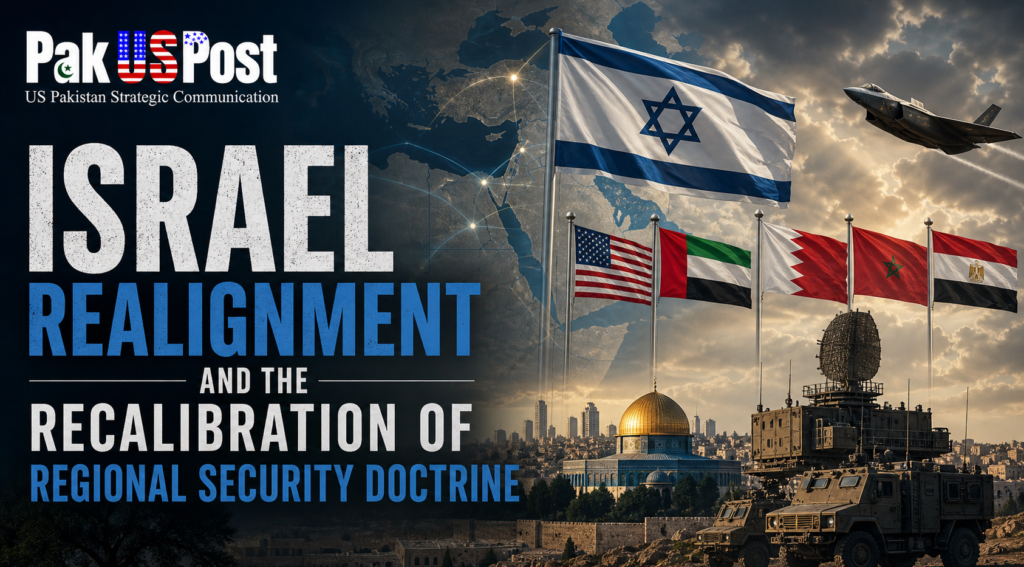
The consolidation of political rivals into a coordinated bloc opposing Benjamin Netanyahu represents more than a routine episode of electoral competition, it signals a deeper structural shift within Israel’s political and security architecture with far reaching implications for deterrence, alliance behaviour, and the evolving order of the Middle East. Israel has historically demonstrated a paradoxical stability in its strategic doctrine despite frequent political fragmentation, yet the present moment suggests that this balance may be entering a phase of recalibration in which domestic contestation begins to influence external security policy in more direct and visible ways.
At the core of this transformation lies a contest over the meaning and execution of security doctrine. The Netanyahu era has been defined by a model of assertive deterrence grounded in preemptive action, strategic ambiguity, and the use of overwhelming force to maintain dominance over adversaries. The emergence of a unified opposition bloc introduces the possibility of modifying this model toward a more institutionally constrained framework, where decision making becomes subject to greater internal scrutiny and political negotiation. This does not necessarily imply a shift away from military assertiveness, but it does suggest that the processes through which force is authorised and calibrated may become more complex and less centralised.
Military decision making in Israel operates within a system that combines civilian authority with significant operational autonomy for security institutions. However, strong political cohesion has traditionally allowed the executive to act with considerable flexibility during crises. A consolidated opposition bloc capable of exerting sustained pressure within parliament and public discourse may reduce this flexibility by increasing oversight and contestation. This could affect the timing, scale, and messaging of military operations, particularly in sensitive theatres such as Gaza and the northern border. In a region where perception shapes deterrence, even minor shifts in signalling can alter the calculations of both state and non-state actors.
The implications for deterrence posture are therefore layered and uncertain. On one level, increased political pluralism may strengthen institutional resilience by ensuring broader consensus for major decisions and preventing strategic overreach. On another level, visible internal divisions may be interpreted by adversaries as signs of vulnerability, potentially encouraging risk-taking behaviour. Actors aligned with Iran and groups such as Hezbollah closely monitor Israeli domestic developments, incorporating these signals into their strategic planning. The consolidation of opposition forces may therefore produce a dual effect, enhance internal accountability while complicate external deterrence narratives.
Regional security alignments are also likely to be influenced by this internal shift. Israel’s relations with Gulf states, particularly those established through recent normalisation agreements, have been based on shared strategic concerns and the perception of Israel as a stable and capable partner. Any perception of political instability could lead these partners to reassess the predictability of Israeli policy, even if underlying interests remain aligned. At the same time, changes in domestic political dynamics may create opportunities for diplomatic recalibration, potentially opening space for new forms of engagement or de escalation within the region.
The United States, as Israel’s principal security partner, remains central to this evolving equation. Washington’s regional strategy increasingly emphasises burden sharing and the integration of allied capabilities, aiming to maintain influence while reducing direct military commitments. Changes in Israeli political cohesion may complicate this approach, particularly if they introduce uncertainty into policy alignment or strategic priorities. For Pakistan United States policy discourse, this intersection is significant because it highlights how developments in one theatre can influence broader strategic calculations, including those related to alliance structures and regional stability.
Media narratives play a critical role in shaping perceptions of these developments. Western media outlets often frame the consolidation of opposition forces as evidence of democratic strength and institutional resilience, emphasising the capacity for political competition and renewal. In contrast, regional media ecosystems, particularly those critical of Israeli policy, tend to portray the same developments as indicators of internal division and weakening authority. Digital platforms amplify these competing narratives, as algorithmic systems prioritise content that reinforces existing viewpoints, thereby deepening informational fragmentation and complicating strategic communication.
The influence of social media further intensifies this dynamic by transforming political developments into real time global spectacles. Competing interpretations emerge rapidly, ranging from predictions of significant political transformation to assertions of continuity and stability. This environment creates challenges for policymakers, who must navigate not only traditional diplomatic channels but also a complex information landscape in which perception can shift quickly and unpredictably. The result is an interaction between policy and perception that is increasingly difficult to manage, as each influences the other in a continuous cycle.
For Pakistan United States analytical frameworks, the significance of Israel’s internal realignment lies in its broader implications for regional order and strategic alignment. Pakistan’s engagement with Middle Eastern geopolitics is shaped by its relationships with Gulf states and its position within the wider Islamic world. Although it does not maintain formal relations with Israel, developments within Israel still affect the strategic environment in which Pakistan operates, particularly through their impact on United States policy and regional alliance configurations. Understanding these dynamics is therefore essential for informed policy analysis and strategic planning.
The deeper question raised by this moment is whether Israel can sustain its long standing doctrine of decisive and rapid military action within a more pluralised political environment. The answer will depend on the adaptability of its institutions and the resilience of its strategic culture. Israel’s security establishment has historically demonstrated an ability to adjust to changing conditions, integrating new technologies and operational concepts. Whether this adaptability extends to managing increased political contestation remains a key issue that will shape future outcomes.
In conclusion, the consolidation of political rivals into a unified bloc opposing Benjamin Netanyahu represents a significant development with implications that extend beyond domestic politics into the realm of regional security. It introduces new variables into military decision making, reshapes deterrence perceptions, and interacts with broader geopolitical trends in ways that are still evolving. For Pakistan United States policy discourse, it underscores the importance of analysing internal political dynamics as integral components of international security, as the boundary between domestic politics and external strategy becomes increasingly interconnected.
A Public Service Message