Election Integrity Narratives Shape Sovereign Democratic Credibility And Strategic Partnerships

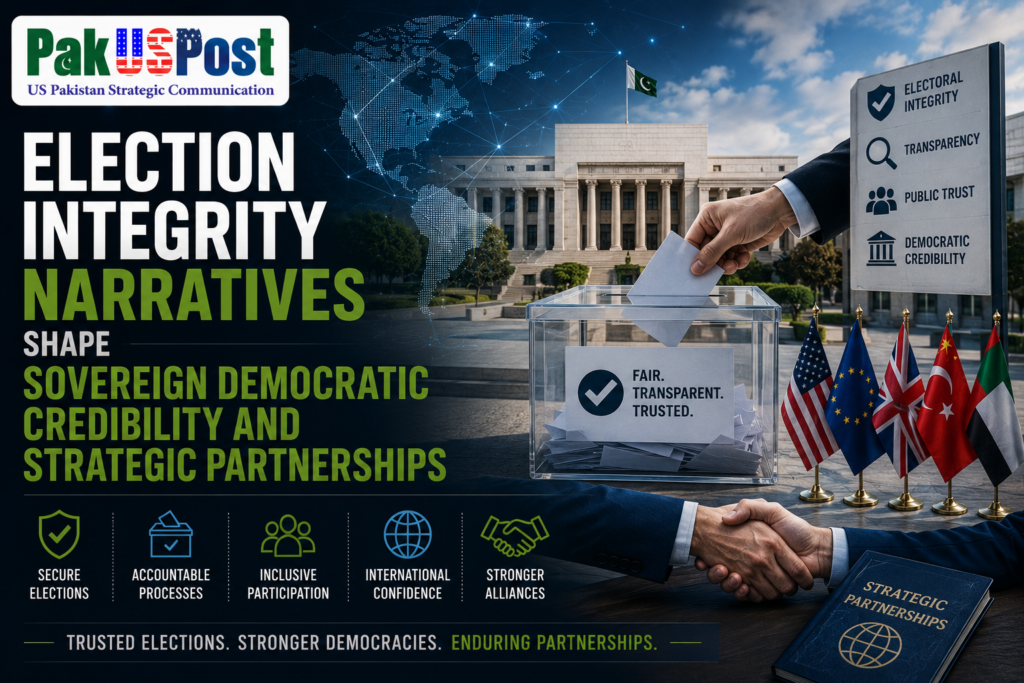
Democratic legitimacy has become one of the most influential currencies in contemporary international relations. Military strength remains indispensable, economic resilience continues to determine national endurance, and technological superiority increasingly defines competitive advantage, yet the credibility of electoral institutions has emerged as an equally significant component of diplomatic influence. Elections are no longer viewed merely as domestic constitutional exercises conducted within sovereign borders. They have evolved into internationally observed political events whose perceived credibility affects investment decisions, security partnerships, development cooperation, intelligence engagement, technology transfers, and broader diplomatic relationships. This transformation reflects the emergence of governance credibility as a strategic variable rather than a purely normative aspiration.
Election integrity narratives increasingly shape international perceptions through an interconnected ecosystem comprising election observation missions, governance benchmarking institutions, international media organisations, digital monitoring platforms, academic assessments, civil society networks, artificial intelligence enabled information analysis, and diplomatic reporting. These overlapping mechanisms collectively influence how governments are perceived by allies, competitors, international financial institutions, multinational corporations, and strategic partners. In many cases, international reactions are formed not only by electoral outcomes but also by the transparency, communication, procedural consistency, institutional responsiveness, and information environment surrounding electoral processes.
For Pakistan and the United States, this evolving landscape introduces both opportunities and complexities. Pakistan remains an important regional partner situated at the intersection of South Asia, Central Asia, the Middle East, and the broader Indo Pacific strategic environment. The United States continues to regard democratic resilience, institutional accountability, and governance stability as important components of long term partnership frameworks. Consequently, electoral credibility narratives increasingly influence bilateral discussions extending beyond democracy promotion into economic cooperation, defence engagement, technological collaboration, educational exchanges, development assistance, and broader geopolitical dialogue.
This relationship should not be understood through simplistic assumptions that external observation automatically determines domestic legitimacy. Constitutional authority originates from national legal frameworks, sovereign institutions, and the political choices of citizens. However, in an interconnected international system, perceptions surrounding institutional transparency inevitably influence diplomatic confidence. Governments therefore face the dual responsibility of protecting constitutional sovereignty while ensuring sufficient institutional openness to sustain international confidence.
Election observation itself has evolved considerably over recent decades. Traditional observation missions once focused primarily upon polling stations, ballot counting procedures, and administrative compliance during election days. Contemporary observation has expanded into comprehensive assessments covering legal frameworks, media access, campaign financing, digital communications, cybersecurity resilience, judicial independence, voter registration systems, political participation, information integrity, dispute resolution mechanisms, and institutional transparency throughout the electoral cycle.
This expanded framework reflects changing democratic expectations but also introduces new political sensitivities. Governance assessments increasingly incorporate qualitative judgments alongside procedural evaluation. International reports may therefore influence broader diplomatic narratives extending well beyond technical electoral administration. Such assessments become reference points within policy debates, legislative discussions, investment analyses, development programming, and strategic dialogue among international partners.
Digital transformation has further accelerated this evolution. Social media platforms distribute electoral narratives instantaneously across international audiences. Artificial intelligence enhances data collection, sentiment analysis, behavioural prediction, and information monitoring. Open source intelligence allows researchers, journalists, advocacy organisations, and foreign policy analysts to examine electoral developments using publicly available digital evidence. Satellite imagery, geospatial verification, metadata analysis, and digital authentication technologies increasingly contribute to broader governance assessments.
While technological transparency creates opportunities for accountability, it simultaneously increases vulnerability to misinformation, selective interpretation, manipulated content, coordinated influence operations, and information warfare. Electoral narratives now emerge within highly competitive information environments where authentic reporting competes alongside fabricated content, algorithmic amplification, foreign influence campaigns, and politically motivated disinformation. Governments therefore confront the challenge of managing not only electoral administration but also information credibility.
Pakistan has experienced this evolving information environment during successive electoral cycles. Domestic political competition increasingly unfolds across digital platforms where narratives rapidly shape public perceptions before official institutions complete verification processes. International audiences frequently encounter fragmented interpretations rather than comprehensive institutional explanations. Consequently, perception gaps sometimes emerge between constitutional procedures and external understanding.
This divergence illustrates why governance communication has become an essential component of national resilience. Strategic communication should not be confused with public relations or political messaging. Rather, it represents systematic institutional transparency grounded in factual reporting, procedural consistency, legal clarity, and timely information dissemination. Credible institutions communicate evidence rather than rhetoric. They reduce uncertainty through openness rather than defensive narratives.
For Pakistan, strengthening governance communication could significantly enhance sovereign institutional confidence without compromising constitutional independence. Electoral management bodies, judicial institutions, parliamentary committees, statistical agencies, and relevant constitutional authorities should consistently provide accessible explanations regarding procedures, legal standards, dispute resolution mechanisms, technological safeguards, and administrative decisions. Transparency reduces informational vacuums that external actors may otherwise fill with incomplete interpretations.
The United States similarly recognises that democratic credibility extends beyond election day. American institutions continue to confront debates concerning electoral administration, digital misinformation, political polarisation, campaign financing, judicial legitimacy, and public confidence. International observers increasingly examine democratic processes within established democracies alongside emerging political systems. Consequently, governance credibility has become a universal challenge rather than a distinction between developed and developing political systems.
This convergence creates opportunities for constructive Pakistan United States engagement centred upon institutional learning instead of political conditionality. Electoral administration, cybersecurity cooperation, digital resilience, judicial capacity building, legislative transparency, data protection, and civic technology represent areas where technical collaboration may strengthen governance without infringing constitutional sovereignty.
Diplomatic relationships increasingly incorporate governance benchmarking into broader strategic calculations. International financial institutions assess governance indicators when evaluating investment environments. Credit rating agencies incorporate political stability considerations into sovereign assessments. Multinational corporations examine regulatory predictability before committing capital. Development agencies evaluate institutional effectiveness when designing assistance programmes. Strategic partners consider governance resilience while planning long term cooperation.
These interconnections demonstrate why democratic credibility possesses tangible geopolitical consequences. Governance perceptions influence economic confidence, technological partnerships, defence cooperation, educational exchanges, tourism, scientific collaboration, and diplomatic influence. Electoral narratives therefore affect national interests extending far beyond domestic politics.
However, governance benchmarking should also recognise national diversity. Democratic institutions develop within unique constitutional traditions, historical experiences, legal cultures, demographic realities, and political contexts. Uniform measurement frameworks risk overlooking institutional complexity. Comparative assessments remain valuable, but methodological transparency and contextual understanding are equally essential for balanced evaluation.
Pakistan’s constitutional architecture reflects its own historical evolution. Electoral institutions operate within legal frameworks established through parliamentary legislation, constitutional provisions, judicial interpretation, and administrative practice. External assessments should therefore distinguish between technical observations, policy recommendations, political preferences, and constitutional realities. Respect for sovereignty remains fundamental to constructive international engagement.
Digital monitoring represents another rapidly expanding dimension of electoral credibility. Artificial intelligence systems increasingly analyse campaign messaging, detect coordinated online behaviour, monitor misinformation networks, identify automated accounts, and evaluate information flows. These capabilities support transparency but also generate concerns regarding privacy, algorithmic bias, methodological consistency, and external influence.
Governments should therefore develop indigenous analytical capabilities capable of independently evaluating digital information environments. National cyber institutions, academic research centres, statistical agencies, technology universities, and electoral authorities should collaborate to produce evidence based assessments using transparent methodologies. Domestic analytical capacity strengthens sovereign confidence while reducing dependence upon external interpretations.
Institutional transparency debates frequently become politically polarised despite serving broader national interests. Transparency does not weaken state authority. Properly designed transparency strengthens institutional legitimacy by demonstrating procedural consistency, legal accountability, administrative professionalism, and constitutional confidence. Strong institutions invite scrutiny because they possess confidence in established procedures.
Pakistan can reinforce this confidence through continuous institutional modernisation. Digital voter registration improvements, secure electoral technology, transparent procurement systems, independent auditing mechanisms, professional training programmes, judicial efficiency, data security standards, and enhanced public information systems collectively contribute to stronger democratic resilience. These reforms primarily benefit domestic governance while simultaneously improving international credibility.
International legitimacy should not be viewed as external approval replacing domestic constitutional authority. Rather, it reflects accumulated confidence generated through predictable institutional performance over time. Governments establish credibility by consistently applying legal standards, respecting constitutional procedures, communicating transparently, addressing administrative deficiencies, and demonstrating institutional maturity during political competition.
Pakistan United States engagement increasingly benefits from recognising this distinction. Democratic dialogue should emphasise institutional resilience instead of ideological competition. Technical exchanges concerning election technology, cybersecurity, judicial administration, legislative research, digital governance, public administration, artificial intelligence regulation, and information integrity offer mutually beneficial opportunities without compromising sovereign equality.
Governance communication also requires adaptation to contemporary media ecosystems. International audiences increasingly receive information through digital platforms operating according to algorithmic prioritisation rather than editorial judgment. False narratives often circulate more rapidly than official corrections. Governments therefore require proactive communication strategies capable of delivering timely, verifiable, multilingual, evidence based information across diverse communication channels.
Professional spokesperson systems, open data platforms, digital transparency portals, academic engagement, international media briefings, and independent institutional reporting contribute to more credible communication environments. Transparency should become routine administrative practice rather than reactive crisis management.
The strategic importance of perception management extends beyond electoral periods. International confidence develops through sustained institutional performance across governance sectors including judicial independence, regulatory consistency, fiscal transparency, anti corruption measures, public service delivery, digital security, statistical reliability, and constitutional continuity. Elections represent visible moments within broader governance ecosystems rather than isolated political events.
Emerging technologies will further transform electoral credibility assessments. Artificial intelligence generated synthetic media, deepfake videos, automated disinformation campaigns, quantum computing implications for cybersecurity, blockchain applications, biometric authentication systems, and predictive analytics will reshape future electoral environments. Governments should anticipate these developments through forward looking regulatory frameworks, technological investment, institutional preparedness, and international cooperation.
Pakistan possesses considerable opportunities to strengthen strategic resilience in this domain. Investment in indigenous digital technologies, cybersecurity research, election technology innovation, public administration modernisation, legal reform, statistical excellence, and governance analytics would enhance both domestic effectiveness and international confidence. Universities, research institutes, technology companies, constitutional bodies, and national security institutions should collaborate within comprehensive governance innovation frameworks.
The establishment also possesses an important institutional interest in preserving democratic credibility as a component of national resilience. Stable constitutional processes strengthen strategic continuity, reduce political uncertainty, improve economic confidence, and reinforce international partnerships. Institutional neutrality, procedural professionalism, and constitutional clarity contribute directly to national security by enhancing internal stability and external confidence.
The United States likewise benefits from engaging Pakistan through frameworks emphasising institutional partnership rather than episodic political assessment. Sustainable relationships depend upon mutual respect, strategic dialogue, technical cooperation, and recognition that resilient democratic institutions ultimately strengthen regional stability. Governance collaboration should therefore focus upon capacity enhancement instead of political symbolism.
Balanced diplomacy requires recognising legitimate international interest in governance developments while firmly protecting constitutional autonomy. These objectives are complementary rather than contradictory. Sovereign institutions gain international respect when they consistently demonstrate transparency, professionalism, legal predictability, and constitutional confidence.
Future democratic competition will increasingly occur within environments where information, technology, diplomacy, economics, and governance intersect. Electoral credibility will influence strategic partnerships as significantly as traditional geopolitical calculations. Nations capable of integrating institutional resilience with transparent communication will enjoy greater diplomatic flexibility and stronger international standing.
Pakistan should therefore pursue a comprehensive strategy centred upon constitutional confidence, institutional modernisation, technological preparedness, professional governance communication, independent analytical capacity, judicial efficiency, cybersecurity resilience, transparent electoral administration, and continuous democratic reform. These initiatives should originate from national priorities rather than external expectations.
Simultaneously, Pakistan United States dialogue should expand beyond conventional democracy debates toward practical cooperation in digital governance, cyber resilience, artificial intelligence regulation, election technology standards, institutional innovation, academic exchanges, and governance research. Such collaboration would reinforce mutual confidence while respecting sovereign constitutional frameworks.
The international system increasingly rewards nations capable of demonstrating credible governance through measurable institutional performance rather than rhetorical commitments. Electoral integrity narratives will continue influencing diplomatic relationships, investment decisions, strategic partnerships, and geopolitical influence. Managing these narratives effectively requires neither defensive isolation nor unconditional external accommodation. Instead, durable credibility emerges through confident constitutional institutions that communicate transparently, modernise continuously, uphold legal consistency, embrace technological innovation, and maintain sovereign ownership of democratic evolution. For Pakistan, such an approach offers the strongest foundation for preserving constitutional autonomy while enhancing international legitimacy, strengthening strategic engagement with the United States, and positioning democratic resilience as an enduring pillar of national security, diplomatic confidence, and long term statecraft.
A Public Service Message