
Algorithmic Governance and the Militarization of Social Media


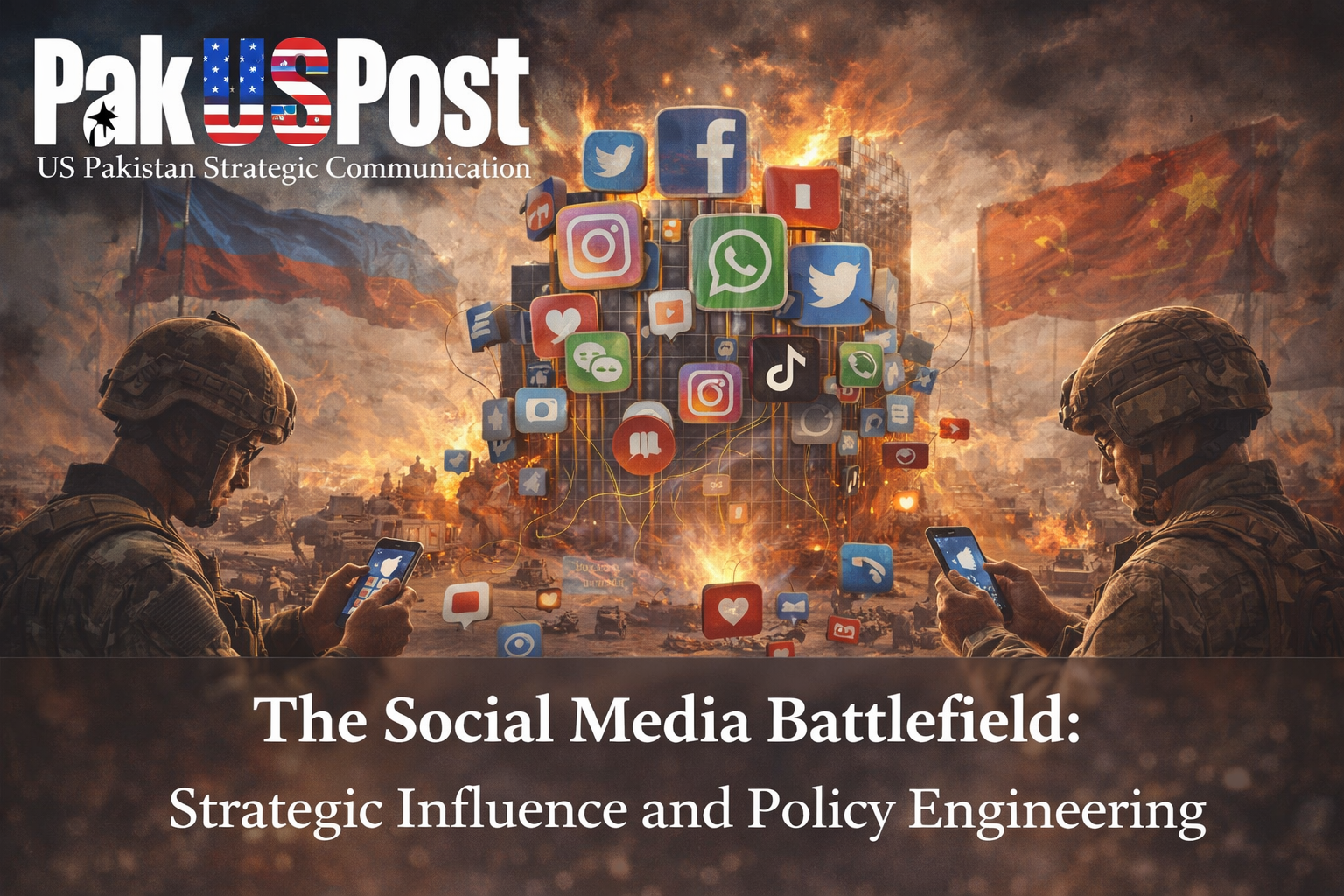
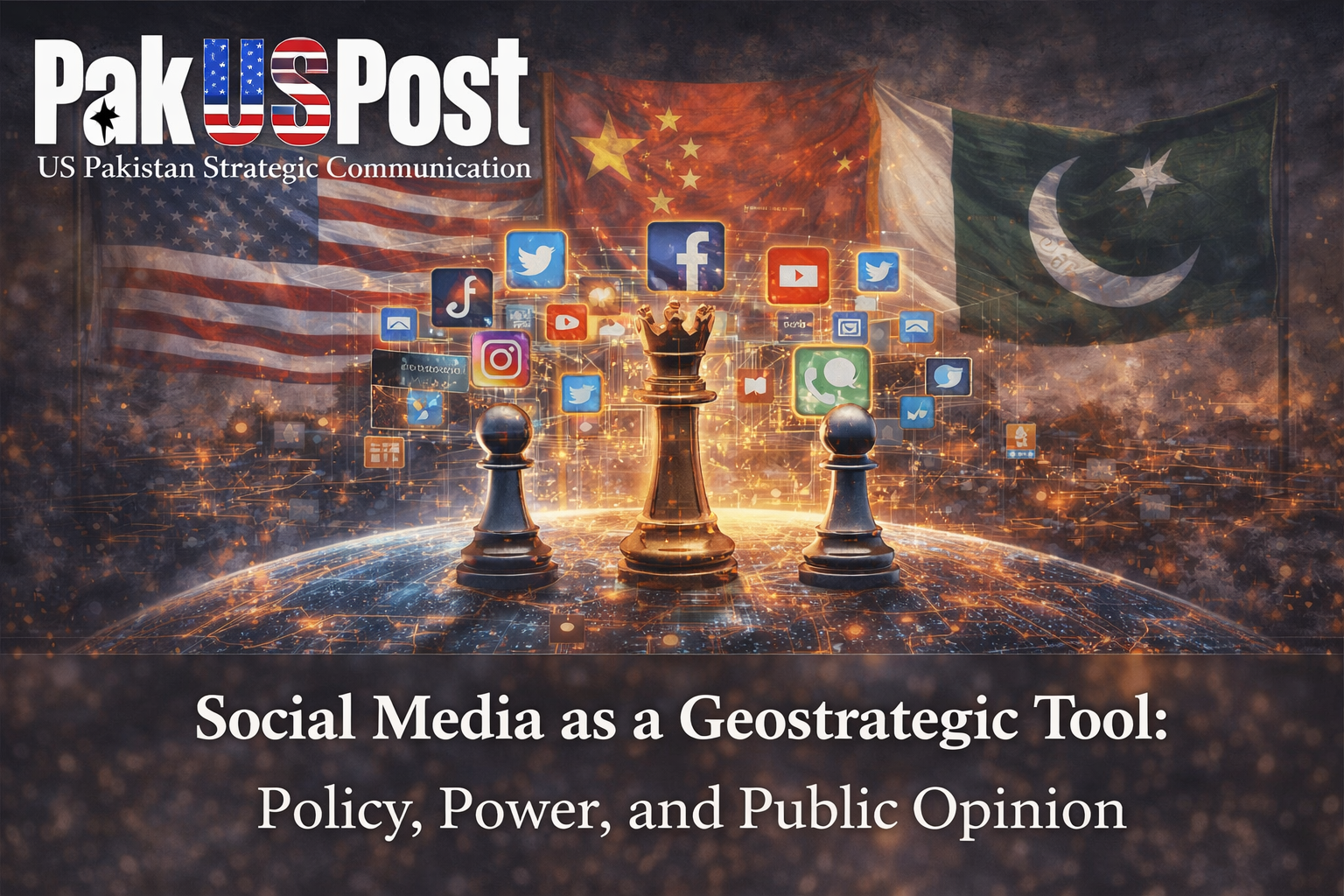
In the contemporary information environment, social media has emerged as a critical operational domain in which state actors, particularly the United States, deploy algorithmically mediated influence to advance strategic objectives, shape public perception, and maintain cognitive superiority in both domestic and international spheres. The integration of algorithmic governance with defense policy reflects a profound recognition that control over the flow of digital information has become as consequential as traditional military and diplomatic instruments. Social media platforms are no longer neutral conduits of expression but are increasingly structured environments in which engagement metrics, recommendation algorithms, and AI-driven content curation can be harnessed to amplify desired narratives, attenuate adversarial messages, and influence the perception of targeted populations across geopolitical boundaries. This complex interplay between technology, strategy, and policy situates social media at the core of a modernized concept of warfare, in which perception management, narrative dominance, and cognitive operations constitute essential elements of statecraft.
The militarization of social media is predicated on a deep understanding of the structural affordances of platforms and the psychological mechanics of audience engagement. United States defense doctrine recognizes the strategic utility of social media as an extension of cognitive domain operations, wherein information flows can be deliberately engineered to affect the attitudes, beliefs, and decision-making processes of both domestic and foreign audiences. Algorithmic amplification allows for the prioritization of content in accordance with strategic priorities, shaping discourse by determining which narratives achieve visibility and resonance. In this context, artificial intelligence and machine learning operate not merely as analytical tools but as instruments of operational power, enabling real-time assessment of engagement patterns, iterative refinement of messaging strategies, and precision targeting of influence campaigns to achieve maximum strategic effect. The integration of these technologies into Pentagon operations reflects a broader conceptual shift toward recognizing the digital environment as an active theater in which strategic advantage can be exercised and contested with immediacy and scale unmatched by traditional media channels.
Legislative oversight in the United States complements these doctrinal initiatives by codifying the strategic significance of digital information environments and creating mechanisms for alignment between private platforms and national security imperatives. Congress has passed legislation mandating the monitoring of foreign-controlled applications, requiring transparency in platform governance, and fostering interagency collaboration to counter disinformation. These measures create a regulatory architecture that institutionalizes algorithmic oversight, ensuring that private sector algorithms are not purely market-driven but also responsive to strategic objectives. Oversight hearings and reporting requirements further reinforce accountability, compelling technology companies to adapt platform policies in ways that reflect both legal compliance and strategic alignment. This integration of legislative policy with defense doctrine exemplifies a systematic approach to algorithmic governance, wherein technology, regulation, and strategic vision converge to operationalize social media as a deliberate instrument of state influence.
The operational execution of algorithmic governance in social media involves sophisticated coordination between human operators, automated systems, and AI-driven analytics to shape public discourse. Influence campaigns leverage data on engagement, sentiment, and audience demographics to refine content deployment, optimize reach, and maintain narrative consistency. The architecture of these campaigns extends beyond traditional messaging, incorporating feedback loops in which real-time audience response informs subsequent content curation and amplification strategies. Historical examples such as Operation Earnest Voice illustrate early experimentation with the integration of fictitious personas and coordinated posting to enhance narrative penetration. Contemporary operations are more sophisticated, employing machine learning to analyze user behavior, detect emerging discourse trends, and adjust messaging dynamically in response to shifting public sentiment. In effect, social media becomes a responsive operational environment in which algorithmic steering, content amplification, and targeted engagement constitute tools of modern strategic influence.
Pakistan operates in a highly complex and asymmetrical information environment, facing both the challenges of external narrative penetration and the opportunities presented by domestic digital innovation. The rapid expansion of social media use in the country has created both avenues for citizen engagement and vulnerabilities to strategic influence operations. The state has responded through a combination of regulatory, institutional, and civil society measures aimed at maintaining informational sovereignty while enabling strategic communication. Regulatory frameworks administered by the Pakistan Telecommunication Authority and related agencies establish legal standards for content moderation, data governance, and platform accountability, yet these frameworks must constantly adapt to the dynamic capabilities of algorithmically driven influence operations. Institutional mechanisms, including strategic communication units embedded within governmental and military agencies, coordinate messaging in response to real-time developments, counter disinformation campaigns, and frame national narratives in both domestic and international spheres. Civil society initiatives focusing on digital literacy, fact-checking, and responsible platform engagement complement state efforts, enhancing resilience against misinformation and enabling citizens to critically assess information in a complex media ecosystem.
The interaction between algorithmic governance and social media militarization generates profound ethical, legal, and societal considerations. The deployment of automated amplification, content suppression, and cognitive targeting raises questions regarding transparency, accountability, and the potential for manipulation of public opinion. Ethical debates center on the balance between strategic necessity and the protection of civil liberties, highlighting the tension between national security imperatives and the principles of free expression, democratic discourse, and open access to information. In Pakistan, these debates are particularly salient, as the regulation of digital platforms intersects with political sensitivities, social norms, and the broader objective of safeguarding national narratives. Globally, the tension between algorithmic optimization for strategic influence and the preservation of normative ethical standards reflects an ongoing challenge in which technological capability, policy authority, and societal values must be continuously negotiated.
The militarization of social media also has implications for digital diplomacy and transnational influence. The United States leverages structured campaigns to advance foreign policy objectives, promote normative democratic values, and counter extremist ideologies in international forums. These campaigns operate in parallel with traditional diplomatic initiatives, creating a hybridized approach to influence that integrates online narrative management with conventional statecraft. Pakistan, in turn, has sought to deploy digital diplomacy to defend its regional and international interests, amplify its narrative on contentious issues, and counter adversarial messaging that threatens the integrity of national positions. The interplay of structured influence campaigns between the United States and Pakistan illustrates that contemporary diplomacy increasingly occurs in digital theaters, where perception, narrative control, and strategic messaging are critical determinants of both public opinion and geopolitical positioning.
The rapid advancement of artificial intelligence, algorithmic personalization, and automated content dissemination has further intensified the stakes of algorithmic governance and social media militarization. Emerging technologies enable hyper-targeted messaging, predictive content optimization, and dynamic adaptation to user behavior, which in turn expands the scope and precision of strategic influence operations. For Pakistan, these developments present both opportunities for sophisticated narrative management and challenges in defending against transnational influence campaigns that exploit algorithmic vulnerabilities. Policy design, regulatory oversight, and institutional capacity must therefore evolve in parallel with technological innovation to ensure that social media environments remain resilient, sovereign, and aligned with national strategic priorities.
Analytically, understanding the militarization of social media requires engagement with interdisciplinary frameworks that encompass defense strategy, media studies, information science, and cognitive psychology. Algorithmic governance represents an intersection of these domains, where computational logic meets human cognition and strategic objectives converge with regulatory imperatives. Effective scholarship and policy design must account for the complex feedback loops inherent in social media ecosystems, the adaptive capacities of algorithmic architectures, and the transnational flows of influence that characterize contemporary information environments. By situating algorithmic governance within this broader strategic and ethical landscape, analysts can better assess the operational and normative consequences of social media militarization for both state and society.
In conclusion, algorithmic governance and the militarization of social media represent defining features of the contemporary strategic landscape, wherein technology, policy, and cognitive operations converge to shape the perception of populations, influence public discourse, and advance national objectives. The United States has institutionalized social media as an operational domain through the integration of Pentagon doctrine, legislative oversight, and strategic partnerships with technology platforms, reflecting a deliberate effort to harness algorithmic capabilities in the service of national strategy. Pakistan confronts this environment by deploying regulatory frameworks, institutional counter-narratives, and civil society initiatives aimed at defending informational sovereignty and shaping public understanding. The ethical, legal, and diplomatic dimensions of algorithmic governance demand careful consideration, as the manipulation of information flows carries profound implications for democratic norms, civil liberties, and global digital order. Ultimately, the militarization of social media underscores the centrality of narrative, perception, and algorithmic architecture in the projection of contemporary state power, highlighting the need for rigorous analysis, principled oversight, and adaptive policy strategies that reconcile strategic necessity with ethical responsibility in an increasingly complex informational ecosystem.
A Public Service Message