
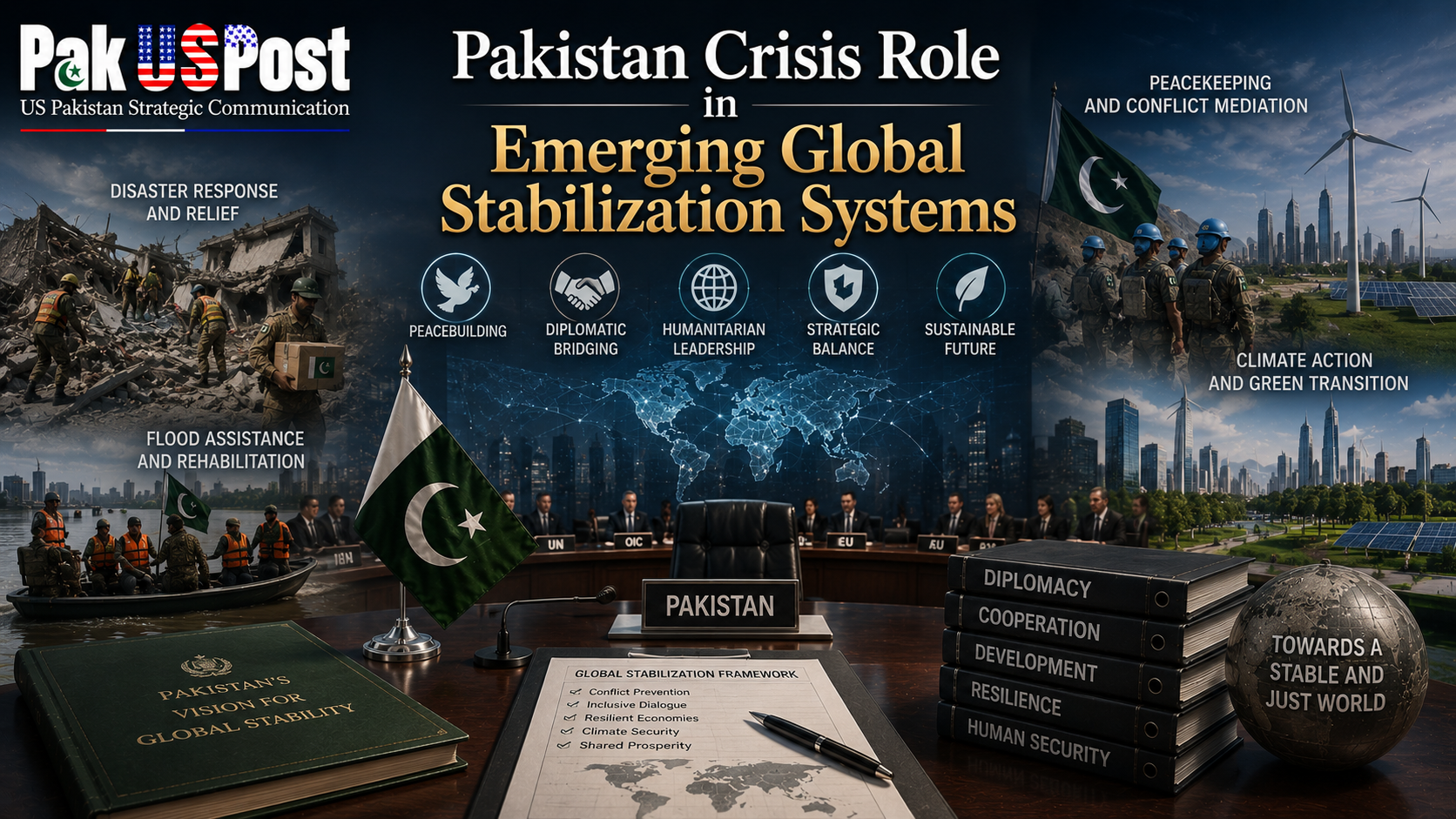
Pakistan Crisis Role in Emerging Global Stabilization Systems

By: Shafaqat Ali Qureshi In the evolving architecture of international security governance, the classical distinction between allies, adversaries, and neutral actors is increasingly giving way to a more fluid and operational categorization, in which states are evaluated according to their functional utility within
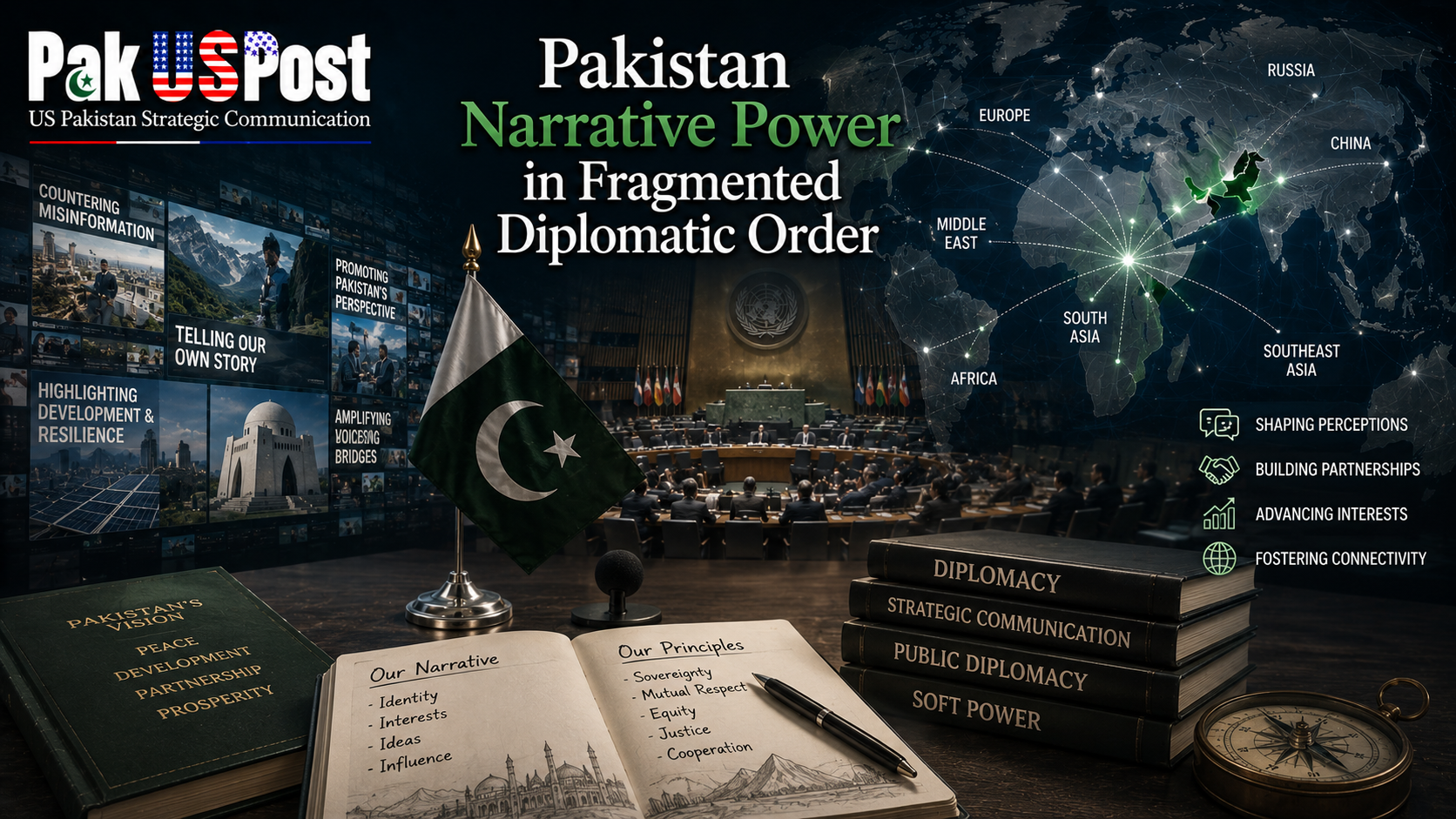
Pakistan Narrative Power in Fragmented Diplomatic Order
In the contemporary architecture of global politics, power is no longer monopolized by material capabilities alone, nor is it exclusively determined by military parity or economic scale. Instead, a subtler and more elusive domain has emerged, one that may be termed narrative power,
Middle Powers Rising: Is Pakistan Redefining Global Power Through Diplomacy?

The international system is no longer a rigid hierarchy dominated exclusively by great powers exercising unilateral influence across regions. It is increasingly a fluid and contested arena in which influence is dispersed, negotiated, and often contingent upon the ability to manage complexity rather
Ceasefire Capital: Pakistan’s Emerging Role in United States Middle East Crisis Management
The architecture of contemporary international relations is undergoing a subtle yet consequential transformation, wherein the rigid hierarchies of the past are being recalibrated by the functional necessity of mediation, access, and trust. In this evolving system, the ability to communicate across adversarial divides

Pakistan’s Foreign Policy Recalibration Amid Declining U.S. Credibility
The international order in the twenty-first century is increasingly characterized by uncertainty, fluidity, and the erosion of long-standing guarantees once assumed to be durable. The United States, historically the anchor of global security, economic stability, and geopolitical influence in the Middle East and