Digital Platforms Geopolitics and Strategic Sovereignty in Fragmenting World Order

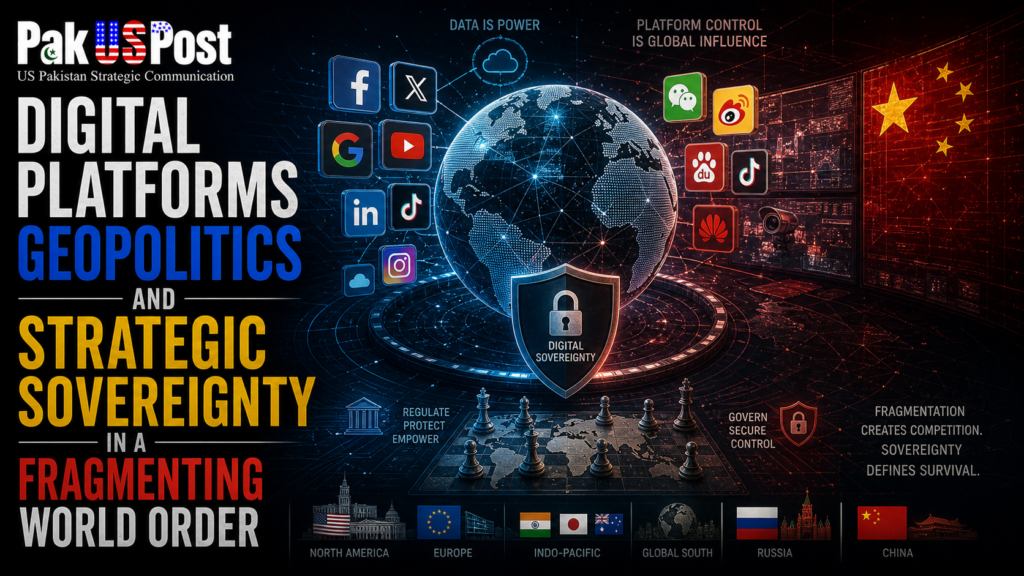
The contemporary global order is undergoing a profound structural transformation in which digital platforms have ceased to function as neutral infrastructures of communication and commerce and have instead become central instruments of geopolitical competition, strategic influence, and sovereign assertion. What was once celebrated as an open, borderless internet ecosystem is now increasingly characterized by fragmentation, regulatory divergence, and the reassertion of state authority over data, algorithms, and platform governance. In this evolving environment, digital platforms occupy a hybrid position: they are simultaneously corporate entities driven by market incentives and quasi-geopolitical actors embedded within the strategic calculations of states.
The restriction of foreign technology expansion, the tightening of cross-border data regimes, and the increasing tendency of major powers to block or scrutinize digital mergers and acquisitions reflect a deeper shift in how states conceptualize technological infrastructure. The case of China’s regulatory resistance to large-scale foreign platform expansion, particularly involving ecosystems associated with Meta and other global technology firms, is not an isolated policy decision but part of a broader strategic recalibration. It signals an emerging doctrine of technological sovereignty in which control over digital infrastructure is treated as equivalent to control over territorial and informational space.
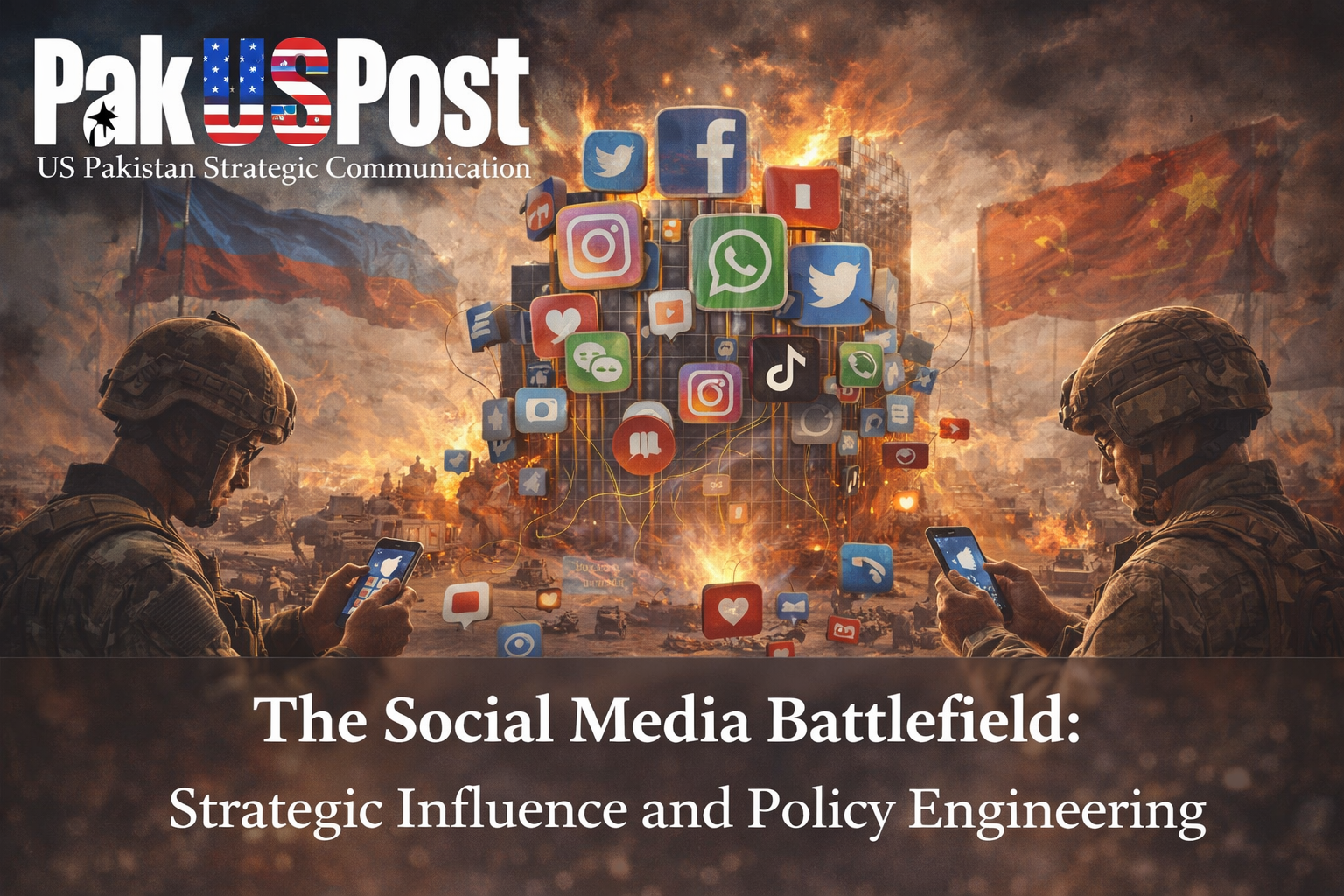
At the heart of this transformation lies the concept of platform geopolitics. Unlike traditional forms of geopolitical competition, which were anchored in territorial control, resource dominance, or military projection, platform geopolitics is rooted in the governance of information flows, algorithmic visibility, and data extraction architectures. Platforms today mediate not only communication but also perception, identity formation, political mobilization, and economic behavior. As a result, they have become critical nodes of power in the international system, shaping how societies understand themselves and how states are perceived externally.
The rise of platform geopolitics is closely tied to the increasing centrality of data as a strategic resource. Data is no longer merely a byproduct of digital interaction; it is a foundational input for artificial intelligence systems, predictive analytics, surveillance architectures, and targeted governance mechanisms. States now recognize that whoever controls data flows also controls the capacity to shape cognitive environments and strategic decision-making processes. This recognition has led to the emergence of competing regulatory regimes that seek to localize data storage, restrict transnational data transfers, and assert jurisdictional authority over digital ecosystems.
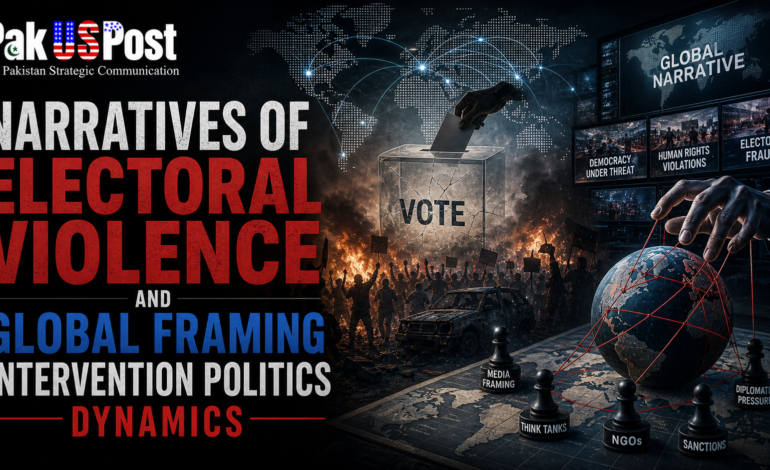
In this context, digital platforms such as Meta, Google, and others are no longer perceived solely as private corporations. They are increasingly understood as transnational epistemic infrastructures that structure how knowledge is produced, circulated, and legitimized. Their algorithmic systems determine visibility hierarchies, influence political discourse, and shape electoral environments. Consequently, states view them as extensions of soft power projection, capable of influencing public opinion, political stability, and even diplomatic alignments.
The strategic implications of this shift are particularly visible in the growing phenomenon of technological nationalism. States across different regions are adopting policies that prioritize domestic control over digital infrastructure, encourage the development of national platforms, and restrict foreign ownership or operational autonomy in sensitive data sectors. This trend is not confined to authoritarian systems but is increasingly evident in liberal democracies as well, where concerns over privacy, misinformation, and electoral integrity have prompted stricter regulatory interventions.
The result is a gradual but decisive fragmentation of the global digital ecosystem. Instead of a unified internet governed by common protocols and broadly shared norms, the world is moving toward a bifurcated or even multipolar digital order. In this emerging structure, different geopolitical blocs are constructing parallel digital architectures, each governed by distinct regulatory logics, technological standards, and informational boundaries. This fragmentation has profound implications for global communication, trade, innovation, and political coordination.
From a Pakistan–US analytical perspective, this transformation carries particular significance. Pakistan occupies a strategic position within the global digital periphery, where technological adoption, platform dependency, and regulatory capacity intersect in complex ways. The United States, as a leading originator of global platform infrastructure and digital innovation, remains a key reference point in shaping global digital norms. The interaction between these two contexts highlights the asymmetries embedded within platform geopolitics.
For Pakistan, reliance on global platforms introduces both opportunities and vulnerabilities. On one hand, platforms enable connectivity, economic participation, digital entrepreneurship, and integration into global information networks. On the other hand, they create dependencies on external infrastructures that are governed by regulatory and corporate decisions made outside national jurisdiction. This asymmetry becomes particularly significant in areas such as data sovereignty, content moderation, and algorithmic governance, where decisions taken in distant corporate or regulatory centers can have immediate domestic political and social consequences.
For the United States, platform geopolitics is closely tied to broader strategic competition, particularly in relation to China and other emerging digital powers. American technology firms are not only economic actors but also instruments of structural influence in global information systems. As such, regulatory and geopolitical responses to their expansion or restriction are often interpreted through the lens of strategic balance. This dual identity of platforms as both commercial and geopolitical entities complicates traditional understandings of trade, investment, and international cooperation.
The increasing entanglement of digital platforms with state sovereignty concerns has also led to the emergence of what can be described as informational security doctrine. Under this framework, states treat data flows, platform algorithms, and digital infrastructure as matters of national security rather than purely economic regulation. This shift has justified a range of interventions, including bans on foreign applications, forced data localization, algorithmic transparency requirements, and restrictions on cross-border digital mergers.
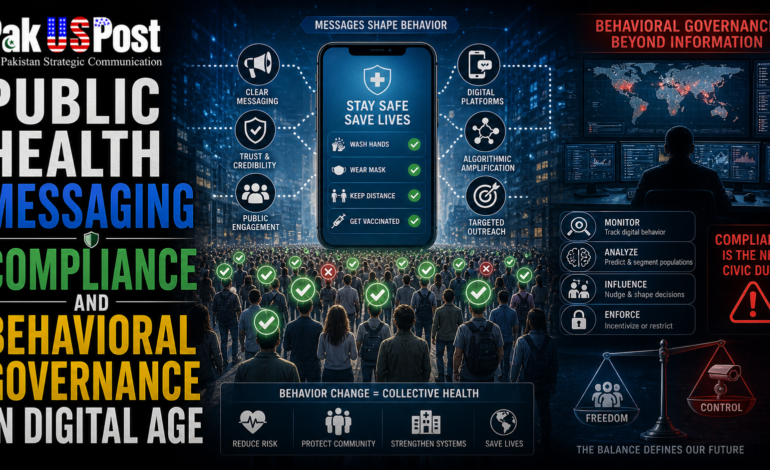
Such measures reflect growing anxiety over narrative sovereignty, a concept that extends beyond data ownership to include control over informational environments and cognitive framing. Platforms are not only channels of communication but also systems that structure what is visible, what is amplified, and what is marginalized in public discourse. As a result, they play a critical role in shaping political legitimacy, electoral outcomes, and social cohesion. States therefore perceive platform governance as directly linked to regime stability and societal control.
However, the move toward technological sovereignty is not without contradictions. While states seek greater control over digital infrastructure, they remain deeply dependent on global technological ecosystems for innovation, economic growth, and connectivity. This dependency creates a structural tension between autonomy and integration, where complete digital decoupling is neither feasible nor desirable, yet unregulated openness is perceived as strategically risky. The result is a hybrid governance model characterized by selective openness, conditional integration, and strategic decoupling in sensitive sectors.
In parallel, platform companies themselves are adapting to this fragmented environment by localizing operations, complying with divergent regulatory regimes, and developing region-specific governance architectures. This adaptive behavior reflects a pragmatic recognition that global uniformity in digital governance is increasingly untenable. However, it also raises concerns about the emergence of inconsistent user experiences, fragmented digital rights regimes, and uneven standards of privacy and expression across jurisdictions.
The political economy of platform geopolitics also reveals deeper structural inequalities. Countries in the Global South often lack the institutional capacity, technological infrastructure, or bargaining power to shape platform governance frameworks in their favor. As a result, they are frequently subject to externally determined regulatory structures that may not fully reflect domestic priorities or socio-political contexts. This asymmetry reinforces existing global hierarchies in the digital domain, even as technology is often portrayed as a democratizing force.
Within Pakistan–US relations, these dynamics manifest in subtle but important ways. Digital cooperation, cybersecurity dialogues, and technology transfer discussions are increasingly embedded within broader diplomatic frameworks. However, underlying these engagements is a persistent asymmetry in technological capability and infrastructural control. Addressing this imbalance requires not only bilateral cooperation but also a more nuanced understanding of how platform geopolitics reshapes sovereignty in the digital age.
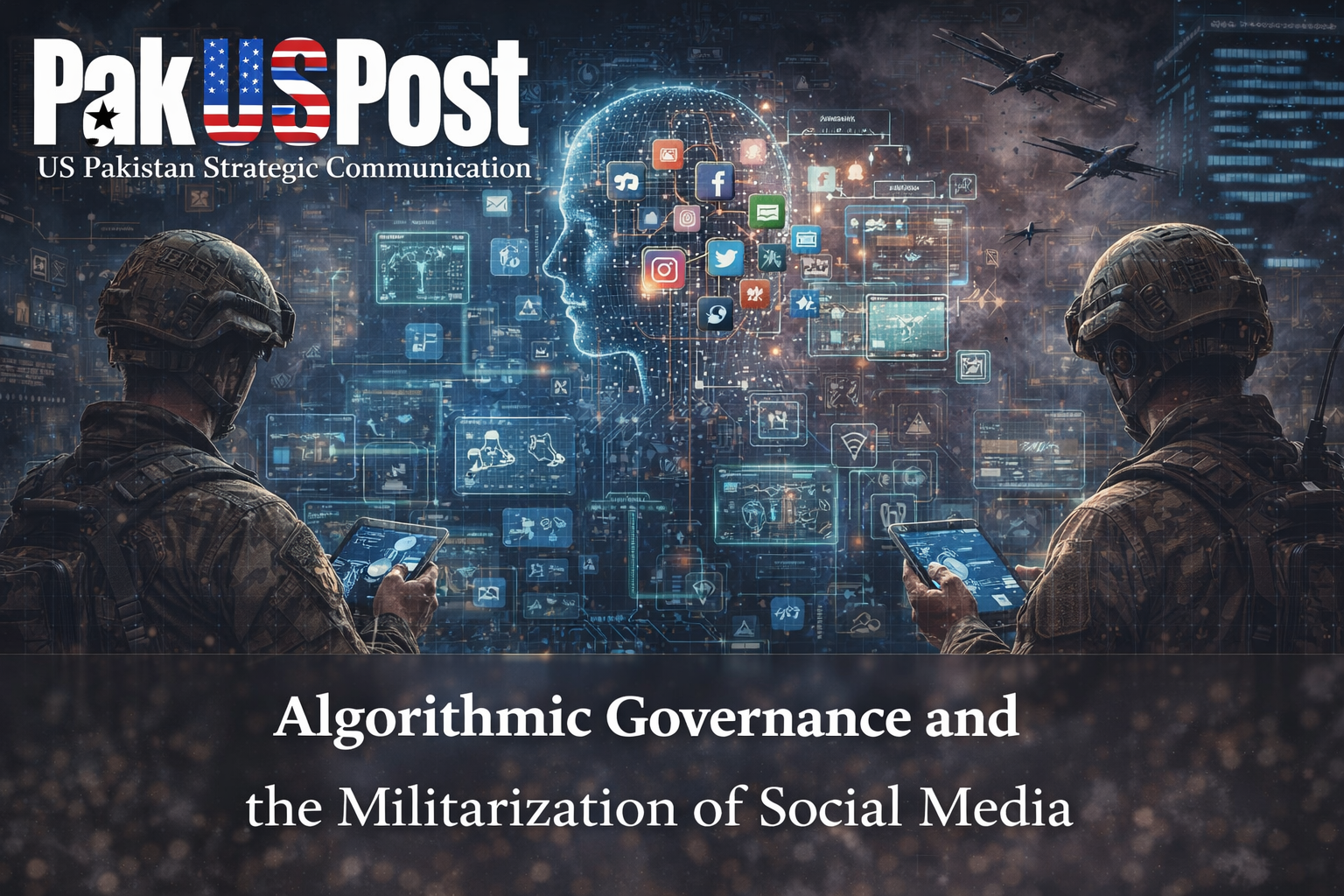
One of the most significant challenges arising from platform geopolitics is the governance of algorithmic systems. Algorithms determine information visibility, shape political discourse, and influence behavioral outcomes at scale. Yet their design, optimization, and deployment remain largely opaque to both users and regulators. This opacity creates governance gaps that are increasingly difficult for states to manage within traditional regulatory frameworks. Efforts to introduce algorithmic accountability mechanisms are often constrained by technical complexity, corporate resistance, and jurisdictional limitations.
The future trajectory of platform geopolitics is likely to be defined by three interrelated trends: increasing regulatory fragmentation, intensifying technological competition, and deepening integration of digital infrastructure into national security doctrines. Together, these trends suggest a world in which digital platforms will continue to function as both economic infrastructures and geopolitical instruments, shaping not only markets but also the strategic architecture of international relations.
In conclusion, the transformation of digital platforms into geopolitical actors represents one of the most consequential shifts in the contemporary global order. It challenges traditional distinctions between state and market, sovereignty and infrastructure, communication and power. For countries such as Pakistan, this transformation presents both strategic risks and opportunities, requiring careful navigation of dependency structures and emerging regulatory regimes. For the United States, it underscores the continued centrality of technological leadership in maintaining global influence, even as that leadership becomes increasingly contested.
Ultimately, platform geopolitics signals the end of the illusion of a neutral digital space. In its place emerges a contested, fragmented, and strategically charged digital environment in which control over information is inseparable from control over power itself.
A Public Service Message